Authors

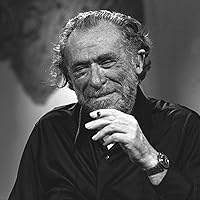
Henry Charles Bukowski (born as Heinrich Karl Bukowski) was a German-born American poet, novelist and short story writer. His writing was influenced by the social, cultural and economic ambience of his home city of Los Angeles.It is marked by an emphasis on the ordinary lives of poor Americans, the act of writing, alcohol, relationships with women and the drudgery of work. Bukowski wrote thousands of poems, hundreds of short stories and six novels, eventually publishing over sixty books Charles Bukowski was the only child of an American soldier and a German mother. At the age of three, he came with his family to the United States and grew up in Los Angeles. He attended Los Angeles City College from 1939 to 1941, then left school and moved to New York City to become a writer. His lack of publishing success at this time caused him to give up writing in 1946 and spurred a ten-year stint of heavy drinking. After he developed a bleeding ulcer, he decided to take up writing again. He worked a wide range of jobs to support his writing, including dishwasher, truck driver and loader, mail carrier, guard, gas station attendant, stock boy, warehouse worker, shipping clerk, post office clerk, parking lot attendant, Red Cross orderly, and elevator operator. He also worked in a dog biscuit factory, a slaughterhouse, a cake and cookie factory, and he hung posters in New York City subways. Bukowski published his first story when he was twenty-four and began writing poetry at the age of thirty-five. His first book of poetry was published in 1959; he went on to publish more than forty-five books of poetry and prose, including Pulp (1994), Screams from the Balcony (1993), and The Last Night of the Earth Poems (1992). He died of leukemia in San Pedro on March 9, 1994.

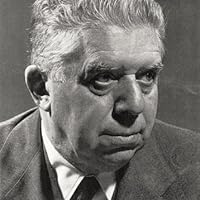
Giuseppe Ungaretti was an Italian modernist poet, journalist, essayist, critic and academic. A leading representative of the experimental trend known as ermetismo, he was one of the most prominent contributors to 20th century Italian literature. Influenced by symbolism, he was briefly aligned with futurism. Like many futurists, he took an irredentist position during World War I. Ungaretti debuted as a poet while fighting in the trenches, publishing one of his best-known pieces, L'allegria ("The Joy"). During the interwar period, Ungaretti was a collaborator of Benito Mussolini (whom he met during his socialist accession), as well as a foreign-based correspondent for Il Popolo d'Italia and La Gazzetta del Popolo. While briefly associated with the Dadaists, he developed ermetismo as a personal take on poetry. After spending several years in Brazil, he returned home during World War II, and was assigned a teaching post at the University of Rome, where he spent the final decades of his life and career. Ungaretti's Fascist past was the subject of controversy.