This book contains the following works arranged alphabetically by authors last names: - The Divine Comedy [Dante Alighieri] - Emma [Jane Austen] - Persuasion [Jane Austen] - Pride and Prejudice [Jane Austen] - Father Goriot [Honoré de Balzac] - Jane Eyre [Charlotte Brontë] - The Tenant of Wildfell Hall [Anne Brontë] - Wuthering Heights [Emily Brontë] - The Way of All Flesh [Samuel Butler] - Don Quixote [Miguel de Cervantes] - Heart of Darkness [Joseph Conrad] - Nostromo [Joseph Conrad] - Moll Flanders [Daniel Defoe] - Bleak House [Charles Dickens] - Great Expectations [Charles Dickens] - The Brothers Karamazov [Fyodor Dostoyevsky] - Crime and Punishment [Fyodor Dostoyevsky] - The Idiot [Fyodor Dostoyevsky] - The Adventures of Sherlock Holmes [Arthur Conan Doyle] - The Count of Monte Cristo [Alexandre Dumas] - Daniel Deronda [George Eliot] - Middlemarch [George Eliot] - Madame Bovary [Gustave Flaubert] - The Yellow Wallpaper [Charlotte Perkins Gilman] - Dead Souls [Nikolai Gogol] - Grimm's Fairy Tales [The Brothers Grimm] - The Iliad [Homer] - The Odyssey [Homer] - Les Misérables [Victor Hugo] - The Legend of Sleepy Hollow - Washington Irving - The Portray of a Lady [Henry James] - A Portrait of the Artist as a Young Man [James Joyce] - Sons and Lovers [D. H. Lawrence] - The Phantom of the Opera [Gaston Leroux] - The Call of the Wild [Jack London] - The Great God Pan [Arthur Machen] - Moby Dick [Herman Melville] - Swann's Way [Marcel Proust] - Frankenstein [Mary Shelley] - The Red and the Black [Stendhal] - The Strange Case Of Dr. Jekyll And Mr. Hyde [Robert Louis Stevenson] - Dracula [Bram Stoker] - The Art of War [Sun Tzu] - Gulliver's Travels [Jonathan Swift] - Vanity Fair [William Makepeace Thackeray] - Anna Karenina [Leo Tolstoy] - The Death of Ivan Ilyich [Leo Tolstoy] - War and Peace [Leo Tolstoy] - The Adventures of Huckleberry Finn [Mark Twain] - The Picture of Dorian Gray [Oscar Wilde]
Authors

Emily Jane Brontë was an English novelist and poet, now best remembered for her only novel Wuthering Heights, a classic of English literature. Emily was the second eldest of the three surviving Brontë sisters, being younger than Charlotte Brontë and older than Anne Brontë. She published under the masculine pen name Ellis Bell. Emily was born in Thornton, near Bradford in Yorkshire to Patrick Brontë and Maria Branwell. She was the younger sister of Charlotte Brontë and the fifth of six children. In 1824, the family moved to Haworth, where Emily's father was perpetual curate, and it was in these surroundings that their literary oddities flourished. In childhood, after the death of their mother, the three sisters and their brother Patrick Branwell Brontë created imaginary lands (Angria, Gondal, Gaaldine, Oceania), which were featured in stories they wrote. Little of Emily's work from this period survived, except for poems spoken by characters (The Brontës' Web of Childhood, Fannie Ratchford, 1941). In 1842, Emily commenced work as a governess at Miss Patchett's Ladies Academy at Law Hill School, near Halifax, leaving after about six months due to homesickness. Later, with her sister Charlotte, she attended a private school in Brussels. They later tried to open up a school at their home, but had no pupils. It was the discovery of Emily's poetic talent by Charlotte that led her and her sisters, Charlotte and Anne, to publish a joint collection of their poetry in 1846, Poems by Currer, Ellis, and Acton Bell. To evade contemporary prejudice against female writers, the Brontë sisters adopted androgynous first names. All three retained the first letter of their first names: Charlotte became Currer Bell, Anne became Acton Bell, and Emily became Ellis Bell. In 1847, she published her only novel, Wuthering Heights, as two volumes of a three volume set (the last volume being Agnes Grey by her sister Anne). Its innovative structure somewhat puzzled critics. Although it received mixed reviews when it first came out, the book subsequently became an English literary classic. In 1850, Charlotte edited and published Wuthering Heights as a stand-alone novel and under Emily's real name. Like her sisters, Emily's health had been weakened by the harsh local climate at home and at school. She caught a chill during the funeral of her brother in September, and, having refused all medical help, died on December 19, 1848 of tuberculosis, possibly caught from nursing her brother. She was interred in the Church of St. Michael and All Angels family capsule, Haworth, West Yorkshire, England.

This note regards Alexandre Dumas, père, the father of Alexandre Dumas, fils (son). For the son, see Alexandre Dumas fils. Alexandre Dumas, père (French for "father", akin to Senior in English), born Dumas Davy de la Pailleterie, was a French writer, best known for his numerous historical novels of high adventure which have made him one of the most widely read French authors in the world. Many of his novels, including The Count of Monte Cristo, The Three Musketeers, The Man in the Iron Mask, and The Vicomte de Bragelonne were serialized. Dumas also wrote plays and magazine articles, and was a prolific correspondent. Dumas was of Haitian descent and mixed-race. His father, General Thomas-Alexandre Dumas Davy de la Pailleterie, was born in the French colony of Saint-Domingue (present-day Haiti) to Alexandre Antoine Davy de la Pailleterie, a French nobleman, and Marie-Cessette Dumas, a black slave. At age 14 Thomas-Alexandre was taken by his father to France, where he was educated in a military academy and entered the military for what became an illustrious career. Dumas' father's aristocratic rank helped young Alexandre Dumas acquire work with Louis-Philippe, Duke of Orléans, then as a writer, finding early success. He became one of the leading authors of the French Romantic Movement, in Paris. Excerpted from Wikipedia.

Honoré de Balzac was a nineteenth-century French novelist and playwright. His magnum opus was a sequence of almost 100 novels and plays collectively entitled La Comédie humaine, which presents a panorama of French life in the years after the fall of Napoléon Bonaparte in 1815. Due to his keen observation of fine detail and unfiltered representation of society, Balzac is regarded as one of the founders of realism in European literature. He is renowned for his multi-faceted characters; even his lesser characters are complex, morally ambiguous and fully human. Inanimate objects are imbued with character as well; the city of Paris, a backdrop for much of his writing, takes on many human qualities. His writing influenced many famous authors, including the novelists Marcel Proust, Émile Zola, Charles Dickens, Gustave Flaubert, Henry James and Jack Kerouac, as well as important philosophers such as Friedrich Engels. Many of Balzac's works have been made into films, and they continue to inspire other writers. An enthusiastic reader and independent thinker as a child, Balzac had trouble adapting himself to the teaching style of his grammar school. His willful nature caused trouble throughout his life, and frustrated his ambitions to succeed in the world of business. When he finished school, Balzac was apprenticed as a legal clerk, but he turned his back on law after wearying of its inhumanity and banal routine. Before and during his career as a writer, he attempted to be a publisher, printer, businessman, critic, and politician. He failed in all of these efforts. La Comédie Humaine reflects his real-life difficulties, and includes scenes from his own experience. Balzac suffered from health problems throughout his life, possibly due to his intense writing schedule. His relationship with his family was often strained by financial and personal drama, and he lost more than one friend over critical reviews. In 1850, he married Ewelina Hańska, his longtime paramour; he passed away five months later.

Oscar Fingal O'Flahertie Wills Wilde was an Irish playwright, poet, and author of numerous short stories, and one novel. Known for his biting wit, and a plentitude of aphorisms, he became one of the most successful playwrights of the late Victorian era in London, and one of the greatest celebrities of his day. Several of his plays continue to be widely performed, especially The Importance of Being Earnest. As the result of a widely covered series of trials, Wilde suffered a dramatic downfall and was imprisoned for two years hard labour after being convicted of "gross indecency" with other men. After Wilde was released from prison he set sail for Dieppe by the night ferry. He never returned to Ireland or Britain, and died in poverty.

Nathaniel Hawthorne was a 19th century American novelist and short story writer. He is seen as a key figure in the development of American literature for his tales of the nation's colonial history. Shortly after graduating from Bowdoin College, Hathorne changed his name to Hawthorne. Hawthorne anonymously published his first work, a novel titled Fanshawe, in 1828. In 1837, he published Twice-Told Tales and became engaged to painter and illustrator Sophia Peabody the next year. He worked at a Custom House and joined a Transcendentalist Utopian community, before marrying Peabody in 1842. The couple moved to The Old Manse in Concord, Massachusetts, later moving to Salem, the Berkshires, then to The Wayside in Concord. The Scarlet Letter was published in 1850, followed by a succession of other novels. A political appointment took Hawthorne and family to Europe before returning to The Wayside in 1860. Hawthorne died on May 19, 1864, leaving behind his wife and their three children. Much of Hawthorne's writing centers around New England and many feature moral allegories with a Puritan inspiration. His work is considered part of the Romantic movement and includes novels, short stories, and a biography of his friend, the United States President Franklin Pierce.

Sir Arthur Ignatius Conan Doyle was born the third of ten siblings on 22 May 1859 in Edinburgh, Scotland. His father, Charles Altamont Doyle, a talented illustrator, was born in England of Irish descent, and his mother, born Mary Foley, was Irish. They were married in 1855. Although he is now referred to as "Conan Doyle", the origin of this compound surname (if that is how he meant it to be understood) is uncertain. His baptism record in the registry of St Mary's Cathedral in Edinburgh gives 'Arthur Ignatius Conan' as his Christian name, and simply 'Doyle' as his surname. It also names Michael Conan as his godfather. At the age of nine Conan Doyle was sent to the Roman Catholic Jesuit preparatory school, Hodder Place, Stonyhurst. He then went on to Stonyhurst College, leaving in 1875. From 1876 to 1881 he studied medicine at the University of Edinburgh. This required that he provide periodic medical assistance in the towns of Aston (now a district of Birmingham) and Sheffield. While studying, Conan Doyle began writing short stories. His first published story appeared in "Chambers' Edinburgh Journal" before he was 20. Following his graduation, he was employed as a ship's doctor on the SS Mayumba during a voyage to the West African coast. He completed his doctorate on the subject of tabes dorsalis in 1885. In 1885 Conan Doyle married Louisa (or Louise) Hawkins, known as "Touie". She suffered from tuberculosis and died on 4 July 1906. The following year he married Jean Elizabeth Leckie, whom he had first met and fallen in love with in 1897. Due to his sense of loyalty he had maintained a purely platonic relationship with Jean while his first wife was alive. Jean died in London on 27 June 1940. Conan Doyle fathered five children. Two with his first wife—Mary Louise (28 January 1889 – 12 June 1976), and Arthur Alleyne Kingsley, known as Kingsley (15 November 1892 – 28 October 1918). With his second wife he had three children—Denis Percy Stewart (17 March 1909 – 9 March 1955), second husband in 1936 of Georgian Princess Nina Mdivani (circa 1910 – 19 February 1987; former sister-in-law of Barbara Hutton); Adrian Malcolm (19 November 1910–3 June 1970) and Jean Lena Annette (21 December 1912–18 November 1997). Conan Doyle was found clutching his chest in the hall of Windlesham, his house in Crowborough, East Sussex, on 7 July 1930. He had died of a heart attack at age 71. His last words were directed toward his wife: "You are wonderful." The epitaph on his gravestone in the churchyard at Minstead in the New Forest, Hampshire, reads: STEEL TRUE BLADE STRAIGHT ARTHUR CONAN DOYLE KNIGHT PATRIOT, PHYSICIAN & MAN OF LETTERS Conan Doyle's house, Undershaw, located in Hindhead, south of London, where he had lived for a decade, had been a hotel and restaurant between 1924 and 2004. It now stands empty while conservationists and Conan Doyle fans fight to preserve it. A statue honours Conan Doyle at Crowborough Cross in Crowborough, where Conan Doyle lived for 23 years. There is also a statue of Sherlock Holmes in Picardy Place, Edinburgh, close to the house where Conan Doyle was born. Series: * Sherlock Holmes

George Gordon Byron (invariably known as Lord Byron), later Noel, 6th Baron Byron of Rochdale FRS was a British poet and a leading figure in Romanticism. Amongst Byron's best-known works are the brief poems She Walks in Beauty, When We Two Parted, and So, we'll go no more a roving, in addition to the narrative poems Childe Harold's Pilgrimage and Don Juan. He is regarded as one of the greatest British poets and remains widely read and influential, both in the English-speaking world and beyond. Byron's notabilty rests not only on his writings but also on his life, which featured upper-class living, numerous love affairs, debts, and separation. He was notably described by Lady Caroline Lamb as "mad, bad, and dangerous to know". Byron served as a regional leader of Italy's revolutionary organization, the Carbonari, in its struggle against Austria. He later travelled to fight against the Ottoman Empire in the Greek War of Independence, for which Greeks revere him as a national hero. He died from a fever contracted while in Messolonghi in Greece.

Joseph Conrad (born Józef Teodor Konrad Korzeniowski ) was a Polish-born English novelist who today is most famous for Heart of Darkness, his fictionalized account of Colonial Africa. Conrad left his native Poland in his middle teens to avoid conscription into the Russian Army. He joined the French Merchant Marine and briefly employed himself as a wartime gunrunner. He then began to work aboard British ships, learning English from his shipmates. He was made a Master Mariner, and served more than sixteen years before an event inspired him to try his hand at writing. He was hired to take a steamship into Africa, and according to Conrad, the experience of seeing firsthand the horrors of colonial rule left him a changed man. Joseph Conrad settled in England in 1894, the year before he published his first novel. He was deeply interested in a small number of writers both in French and English whose work he studied carefully. This was useful when, because a need to come to terms with his experience, lead him to write Heart of Darkness, in 1899, which was followed by other fictionalized explorations of his life. He has been lauded as one of the most powerful, insightful, and disturbing novelists in the English canon despite coming to English later in life, which allowed him to combine it with the sensibilities of French, Russian, and Polish literature.
Librarian Note: There is more than one author by this name in the Goodreads database. Charles Eliot, son of Harvard President Charles William Eliot and cousin of art historian Charles Eliot Norton, was a pioneering landscape architect.

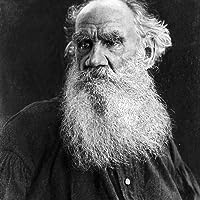
Lev Nikolayevich Tolstoy (Russian: Лев Николаевич Толстой; most appropriately used Liev Tolstoy; commonly Leo Tolstoy in Anglophone countries) was a Russian writer who primarily wrote novels and short stories. Later in life, he also wrote plays and essays. His two most famous works, the novels War and Peace and Anna Karenina, are acknowledged as two of the greatest novels of all time and a pinnacle of realist fiction. Many consider Tolstoy to have been one of the world's greatest novelists. Tolstoy is equally known for his complicated and paradoxical persona and for his extreme moralistic and ascetic views, which he adopted after a moral crisis and spiritual awakening in the 1870s, after which he also became noted as a moral thinker and social reformer. His literal interpretation of the ethical teachings of Jesus, centering on the Sermon on the Mount, caused him in later life to become a fervent Christian anarchist and anarcho-pacifist. His ideas on nonviolent resistance, expressed in such works as The Kingdom of God Is Within You, were to have a profound impact on such pivotal twentieth-century figures as Mohandas Gandhi and Martin Luther King, Jr.

Benjamin Jonson was an English Renaissance dramatist, poet and actor. A contemporary of William Shakespeare, he is best known for his satirical plays, particularly Volpone, The Alchemist, and Bartholomew Fair, which are considered his best, and his lyric poems. A man of vast reading and a seemingly insatiable appetite for controversy, Jonson had an unparalleled breadth of influence on Jacobean and Caroline playwrights and poets. A house in Dulwich College is named after him. See more at http://en.wikipedia.org/wiki/Ben\_Jonson


Charlotte Perkins Gilman, also known as Charlotte Perkins Stetson, was a prominent American sociologist, novelist, writer of short stories, poetry, and nonfiction, and a lecturer for social reform. She was a utopian feminist during a time when her accomplishments were exceptional for women, and she served as a role model for future generations of feminists because of her unorthodox concepts and lifestyle. Her best remembered work today is her semi-autobiographical short story, "The Yellow Wallpaper", which she wrote after a severe bout of post-partum depression. She was the daughter of Frederic B. Perkins.

People remember American writer Washington Irving for the stories " Rip Van Winkle " and " The Legend of Sleepy Hollow ," contained in The Sketch Book (1820). This author, essayist, biographer and historian of the early 19th century wrote newspaper articles under the pseudonym Jonathan Oldstyle to begin his literary career at the age of nineteen years. In 1809, he published The History of New York under his most popular public persona, Diedrich Knickerbocker. Historical works of Irving include a five volume biography of George Washington (after whom he was named) as well as biographies of Oliver Goldsmith, Muhammad, and several histories, dealing with subjects, such as Christopher Columbus, the Moors, and the Alhambra, of 15th-century Spain. John Tyler, president, appointed Irving to serve as the first Spanish speaking United States minister to Spain from 1842 to 1846.

Gustave Flaubert is counted among the greatest Western novelists. He was born in Rouen, Seine-Maritime, in the Haute-Normandie Region of France. Flaubert's curious modes of composition favored and were emphasized by these peculiarities. He worked in sullen solitude, sometimes occupying a week in the completion of one page, never satisfied with what he had composed, violently tormenting his brain for the best turn of a phrase, the most absolutely final adjective. It cannot be said that his incessant labors were not rewarded. His private letters show that he was not one of those to whom easy and correct language is naturally given; he gained his extraordinary perfection with the unceasing sweat of his brow. One of the most severe of academic critics admits that in all his works, and in every page of his works, Flaubert may be considered a model of style. That he was one of the greatest writers who ever lived in France is now commonly admitted, and his greatness principally depends upon the extraordinary vigour and exactitude of his style. Less perhaps than any other writer, not of France, but of modern Europe, Flaubert yields admission to the inexact, the abstract, the vaguely inapt expression which is the bane of ordinary methods of composition. He never allowed a cliché to pass him, never indulgently or wearily went on, leaving behind him a phrase which almost expressed his meaning. Being, as he is, a mixture in almost equal parts of the romanticist and the realist, the marvellous propriety of his style has been helpful to later writers of both schools, of every school. The absolute exactitude with which he adapts his expression to his purpose is seen in all parts of his work, but particularly in the portraits he draws of the figures in his principal romances. The degree and manner in which, since his death, the fame of Flaubert has extended, form an interesting chapter of literary history. The publication of Madame Bovary in 1857 had been followed by more scandal than admiration; it was not understood at first that this novel was the beginning of something new, the scrupulously truthful portraiture of life. Gradually this aspect of his genius was accepted, and began to crowd out all others. At the time of his death he was famous as a realist, pure and simple. Under this aspect Flaubert exercised an extraordinary influence over Émile de Goncourt, Alphonse Daudet and Zola. But even after the decline of the realistic school Flaubert did not lose prestige; other facets of his genius caught the light. It has been perceived that he was not merely realistic, but real; that his clairvoyance was almost boundless; that he saw certain phenomena more clearly than the best of observers had done. Flaubert is a writer who must always appeal more to other authors than to the world at large, because the art of writing, the indefatigable pursuit of perfect expression, were always before him, and because he hated the lax felicities of improvisation as a disloyalty to the most sacred procedures of the literary artist. He can be said to have made cynicism into an art-form, as evinced by this observation from 1846: To be stupid, and selfish, and to have good health are the three requirements for happiness; though if stupidity is lacking, the others are useless. His Oeuvres Complètes (8 vols., 1885) were printed from the original manuscripts, and included, besides the works mentioned already, the two plays, Le Candidat and Le Château des avurs. Another edition (10 vols.) appeared in 1873–1885. Flaubert's correspondence with George Sand was published in 1884 with an introduction by Guy de Maupassant. He has been admired or written about by almost every major literary personality of the 20th century, including philosophers such as Pierre Bourdieu. Georges Perec named Sentimental Education as one of his favou

There is more than one author with this name Herman Melville was an American novelist, short story writer, essayist, and poet. His first two books gained much attention, though they were not bestsellers, and his popularity declined precipitously only a few years later. By the time of his death he had been almost completely forgotten, but his longest novel, Moby Dick—largely considered a failure during his lifetime, and most responsible for Melville's fall from favor with the reading public—was rediscovered in the 20th century as one of the chief literary masterpieces of both American and world literature.

John Griffith Chaney (1876-1916), better known as Jack London, was an American novelist, journalist, and social activist. A pioneer of commercial fiction and American magazines, he was one of the first American authors to become an international celebrity and earn a large fortune from writing. He was also an innovator in the genre that would later become known as science fiction. His most famous works include The Call of the Wild and White Fang, both set in the Klondike Gold Rush, as well as the short stories, "To Build a Fire", "An Odyssey of the North", and "Love of Life". He also wrote about the South Pacific in stories such as "The Pearls of Parlay", and "The Heathen". London was part of the radical literary group, "The Crowd," in San Francisco and a passionate advocate of unionization, workers' rights, and socialism. He wrote several works dealing with these topics, such as his dystopian novel, The Iron Heel, his non-fiction exposé The People of the Abyss, War of the Classes, and Before Adam. London died November 22, 1916, in a sleeping porch in a cottage on his ranch. London's ashes were buried on his property, not far from the Wolf House. The grave is marked by a mossy boulder. The buildings and property were later preserved as Jack London State Historic Park, in Glen Ellen, California.

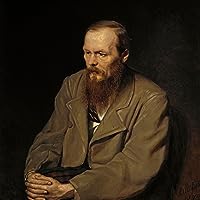
Fyodor Mikhailovich Dostoevsky was a Russian novelist, short story writer, essayist, and journalist. His literary works explore human psychology in the troubled political, social, and spiritual atmospheres of 19th-century Russia, and engage with a variety of philosophical and religious themes. His most acclaimed novels include Crime and Punishment (1866), The Idiot (1869), Demons (1872), and The Brothers Karamazov (1880). Many literary critics rate him as one of the greatest novelists in all of world literature, as multiple of his works are considered highly influential masterpieces. His 1864 novella Notes from Underground is considered to be one of the first works of existentialist literature. As such, he is also looked upon as a philosopher and theologian as well. (Russian: Фёдор Михайлович Достоевский) (see also Fiodor Dostoïevski)

Gaston Louis Alfred Leroux was a French journalist and author of detective fiction. In the English-speaking world, he is best known for writing the novel The Phantom of the Opera (Le Fantôme de l'Opéra, 1910), which has been made into several film and stage productions of the same name, such as the 1925 film starring Lon Chaney, and Andrew Lloyd Webber's 1986 musical. It was also the basis of the 1990 novel Phantom by Susan Kay. Leroux went to school in Normandy and studied law in Paris, graduating in 1889. He inherited millions of francs and lived wildly until he nearly reached bankruptcy. Then in 1890, he began working as a court reporter and theater critic for L'Écho de Paris. His most important journalism came when he began working as an international correspondent for the Paris newspaper Le Matin. In 1905 he was present at and covered the Russian Revolution. Another case he was present at involved the investigation and deep coverage of an opera house in Paris, later to become a ballet house. The basement consisted of a cell that held prisoners in the Paris Commune, which were the rulers of Paris through much of the Franco-Prussian war. He suddenly left journalism in 1907, and began writing fiction. In 1909, he and Arthur Bernède formed their own film company, Société des Cinéromans to simultaneously publish novels and turn them into films. He first wrote a mystery novel entitled Le mystère de la chambre jaune (1908; The Mystery of the Yellow Room), starring the amateur detective Joseph Rouletabille. Leroux's contribution to French detective fiction is considered a parallel to Sir Arthur Conan Doyle's in the United Kingdom and Edgar Allan Poe's in America. Leroux died in Nice on April 15, 1927, of a urinary tract infection.

Dante Alighieri, or simply Dante (May 14/June 13 1265 – September 13/14, 1321), is one of the greatest poets in the Italian language; with the comic story-teller, Boccaccio, and the poet, Petrarch, he forms the classic trio of Italian authors. Dante Alighieri was born in the city-state Florence in 1265. He first saw the woman, or rather the child, who was to become the poetic love of his life when he was almost nine years old and she was some months younger. In fact, Beatrice married another man, Simone di' Bardi, and died when Dante was 25, so their relationship existed almost entirely in Dante's imagination, but she nonetheless plays an extremely important role in his poetry. Dante attributed all the heavenly virtues to her soul and imagined, in his masterpiece The Divine Comedy, that she was his guardian angel who alternately berated and encouraged him on his search for salvation. Politics as well as love deeply influenced Dante's literary and emotional life. Renaissance Florence was a thriving, but not a peaceful city: different opposing factions continually struggled for dominance there. The Guelfs and the Ghibellines were the two major factions, and in fact that division was important in all of Italy and other countries as well. The Pope and the Holy Roman Emperor were political rivals for much of this time period, and in general the Guelfs were in favor of the Pope, while the Ghibellines supported Imperial power. By 1289 in the battle of Campaldino the Ghibellines largely disappeared from Florence. Peace, however, did not insue. Instead, the Guelf party divided between the Whites and the Blacks (Dante was a White Guelf). The Whites were more opposed to Papal power than the Blacks, and tended to favor the emperor, so in fact the preoccupations of the White Guelfs were much like those of the defeated Ghibellines. In this divisive atmosphere Dante rose to a position of leadership. in 1302, while he was in Rome on a diplomatic mission to the Pope, the Blacks in Florence seized power with the help of the French (and pro-Pope) Charles of Valois. The Blacks exiled Dante, confiscating his goods and condemning him to be burned if he should return to Florence. Dante never returned to Florence. He wandered from city to city, depending on noble patrons there. Between 1302 and 1304 some attempts were made by the exiled Whites to retrieve their position in Florence, but none of these succeeded and Dante contented himself with hoping for the appearance of a new powerful Holy Roman Emperor who would unite the country and banish strife. Henry VII was elected Emperor in 1308, and indeed laid seige to Florence in 1312, but was defeated, and he died a year later, destroying Dante's hopes. Dante passed from court to court, writing passionate political and moral epistles and finishing his Divine Comedy, which contains the Inferno, Purgatorio, and Paradiso. He finally died in Ravenna in 1321.

Charlotte Brontë was an English novelist, the eldest out of the three famous Brontë sisters whose novels have become standards of English literature. See also Emily Brontë and Anne Brontë. Charlotte Brontë was born in Thornton, Yorkshire, England, the third of six children, to Patrick Brontë (formerly "Patrick Brunty"), an Irish Anglican clergyman, and his wife, Maria Branwell. In April 1820 the family moved a few miles to Haworth, a remote town on the Yorkshire moors, where Patrick had been appointed Perpetual Curate. This is where the Brontë children would spend most of their lives. Maria Branwell Brontë died from what was thought to be cancer on 15 September 1821, leaving five daughters and a son to the care of her spinster sister Elizabeth Branwell, who moved to Yorkshire to help the family. In August 1824 Charlotte, along with her sisters Emily, Maria, and Elizabeth, was sent to the Clergy Daughters' School at Cowan Bridge in Lancashire, a new school for the daughters of poor clergyman (which she would describe as Lowood School in Jane Eyre). The school was a horrific experience for the girls and conditions were appalling. They were regularly deprived of food, beaten by teachers and humiliated for the slightest error. The school was unheated and the pupils slept two to a bed for warmth. Seven pupils died in a typhus epidemic that swept the school and all four of the Brontë girls became very ill - Maria and Elizabeth dying of tuberculosis in 1825. Her experiences at the school deeply affected Brontë - her health never recovered and she immortalised the cruel and brutal treatment in her novel, Jane Eyre. Following the tragedy, their father withdrew his daughters from the school. At home in Haworth Parsonage, Charlotte and the other surviving children—Branwell, Emily, and Anne—continued their ad-hoc education. In 1826 her father returned home with a box of toy soldiers for Branwell. They would prove the catalyst for the sisters' extraordinary creative development as they immediately set to creating lives and characters for the soldiers, inventing a world for them which the siblings called 'Angria'. The siblings became addicted to writing, creating stories, poetry and plays. Brontë later said that the reason for this burst of creativity was that: 'We were wholly dependent on ourselves and each other, on books and study, for the enjoyments and occupations of life. The highest stimulus, as well as the liveliest pleasure we had known from childhood upwards, lay in attempts at literary composition.' After her father began to suffer from a lung disorder, Charlotte was again sent to school to complete her education at Roe Head school in Mirfield from 1831 to 1832, where she met her lifelong friends and correspondents, Ellen Nussey and Mary Taylor. During this period (1833), she wrote her novella The Green Dwarf under the name of Wellesley. The school was extremely small with only ten pupils meaning the top floor was completely unused and believed to be supposedly haunted by the ghost of a young lady dressed in silk. This story fascinated Brontë and inspired the figure of Mrs Rochester in Jane Eyre. Brontë left the school after a few years, however she swiftly returned in 1835 to take up a position as a teacher, and used her wages to pay for Emily and Anne to be taught at the school. Teaching did not appeal to Brontë and in 1838 she left Roe Head to become a governess to the Sidgewick family—partly from a sense of adventure and a desire to see the world, and partly from financial necessity. Charlotte became pregnant soon after her wedding, but her health declined rapidly and, according to biographer Elizabeth Gaskell, she was attacked by "sensations of perpetual nausea and ever-recurring faintness." She died, with her unborn child, on 31 March 1855.

For other authors of this name, see Adam Smith. Wealth of Nations (1776) of Scottish political economist and philosopher Adam Smith laid the foundations of classical free-market theory. Despite the unknown exact date, authorities recorded his baptism on 16 June 1723 at Kirkcaldy. This pioneer among the key figures of the Enlightenment authored The Theory of Moral Sentiments . People consider the first modern work of economics as his magnum opus and widely cite this father. https://en.wikipedia.org/wiki/Adam\_Smith

German philologist and folklorist Jakob Ludwig Karl Grimm in 1822 formulated Grimm's Law, the basis for much of modern comparative linguistics. With his brother Wilhelm Karl Grimm (1786-1859), he collected Germanic folk tales and published them as Grimm's Fairy Tales (1812-1815). Indo-European stop consonants, represented in Germanic, underwent the regular changes that Grimm's Law describes; this law essentially states that Indo-European p shifted to Germanic f, t shifted to th, and k shifted to h. Indo-European b shifted to Germanic p, d shifted to t, and g shifted to k. Indo-European bh shifted to Germanic b, dh shifted to d, and gh shifted to g. This jurist and mythologist also authored the monumental German Dictionary and his Deutsche Mythologie . Adapted from Wikipedia.

Marcus Aurelius Antoninus Augustus (often referred to as "the wise") was Emperor of the Roman Empire from 161 to his death in 180. He was the last of the "Five Good Emperors", and is also considered one of the more important Stoic philosophers. His two decades as emperor were marked by near continual warfare. He was faced with a series of invasions from German tribes, and by conflicts with the Parthian Empire in the east. His reign also had to deal with an internal revolt in the east, led by Avidius Cassius. Marcus Aurelius' work Meditations, written in Greek while on campaign between 170 and 180, is still revered as a literary monument to a government of service and duty and has been praised for its "exquisite accent and its infinite tenderness."

After Napoleon III seized power in 1851, French writer Victor Marie Hugo went into exile and in 1870 returned to France; his novels include The Hunchback of Notre Dame (1831) and Les Misérables (1862). This poet, playwright, novelist, dramatist, essayist, visual artist, statesman, and perhaps the most influential, important exponent of the Romantic movement in France, campaigned for human rights. People in France regard him as one of greatest poets of that country and know him better abroad.

Howard Phillips Lovecraft, of Providence, Rhode Island, was an American author of horror, fantasy and science fiction. Lovecraft's major inspiration and invention was cosmic horror: life is incomprehensible to human minds and the universe is fundamentally alien. Those who genuinely reason, like his protagonists, gamble with sanity. Lovecraft has developed a cult following for his Cthulhu Mythos, a series of loosely interconnected fictions featuring a pantheon of human-nullifying entities, as well as the Necronomicon, a fictional grimoire of magical rites and forbidden lore. His works were deeply pessimistic and cynical, challenging the values of the Enlightenment, Romanticism and Christianity. Lovecraft's protagonists usually achieve the mirror-opposite of traditional gnosis and mysticism by momentarily glimpsing the horror of ultimate reality. Although Lovecraft's readership was limited during his life, his reputation has grown over the decades. He is now commonly regarded as one of the most influential horror writers of the 20th Century, exerting widespread and indirect influence, and frequently compared to Edgar Allan Poe. — Wikipedia

Anne Brontë was an English novelist and poet, the youngest member of the Brontë literary family. Anne's two novels, written in a sharp and ironic style, are completely different from the romanticism followed by her sisters, Emily Brontë and Charlotte Brontë. She wrote in a realistic, rather than a romantic style. Mainly because the re-publication of The Tenant of Wildfell Hall was prevented by Charlotte Brontë after Anne's death, she is less known than her sisters. However, her novels, like those of her sisters, have become classics of English literature. The daughter of a poor Irish clergyman in the Church of England, Anne Brontë lived most of her life with her family at the parish of Haworth on the Yorkshire moors. In Elizabeth Gaskell's biography, Anne's father remembered her as precocious, reporting that once, when she was four years old, in reply to his question about what a child most wanted, she answered: "age and experience". During her life Anne was particularly close to Emily. When Charlotte's friend Ellen Nussey visited Haworth in 1833, she reported that Emily and Anne were "like twins", "inseparable companions". Together they created imaginary world Gondal after they broke up from Charlotte and Branwell who created another imaginary world – Angria. For a couple of years she went to a boarding school. At the age of 19 she left Haworth and worked as a governess between 1839 and 1845. After leaving her teaching position, she fulfilled her literary ambitions. She wrote a volume of poetry with her sisters (Poems by Currer, Ellis, and Acton Bell, 1846) and two novels. Agnes Grey, based upon her experiences as a governess, was published in 1847. Her second and last novel, The Tenant of Wildfell Hall, which is considered to be one of the first sustained feminist novels, appeared in 1848 and was an instant, phenomenal success; within six weeks it was sold out. The Tenant of Wildfell Hall is perhaps the most shocking of the Brontës' novels. In seeking to present the truth in literature, Anne's depiction of alcoholism and debauchery was profoundly disturbing to 19th-century sensibilities. Helen Graham, the tenant of the title, intrigues Gilbert Markham and gradually she reveals her past as an artist and wife of the dissipated Arthur Huntingdon. The book's brilliance lies in its revelation of the position of women at the time, and its multi-layered plot. Her sister Emily's death on 19 December 1848 deeply affected Anne and her grief undermined her physical health. Over Christmas, Anne caught influenza. Her symptoms intensified, and in early January, her father sent for a Leeds physician, who diagnosed her condition as consumption, and intimated that it was quite advanced leaving little hope of recovery. Anne met the news with characteristic determination and self-control. Unlike Emily, Anne took all the recommended medicines, and responded to the advice she was given. That same month she wrote her last poem, " A dreadful darkness closes in", in which she deals with being terminally ill. In February 1849, Anne decided to make a return visit to Scarborough in the hope that the change of location and fresh sea air might initiate a recovery. However, it was clear that she had little strength left. Dying, Anne expressed her love and concern for Ellen and Charlotte, and seeing Charlotte's distress, whispered to her to "take courage". Conscious and calm, Anne died at about two o'clock in the afternoon, Monday, 28 May 1849.

620 BC - 564 BC Tradition considers Greek fabulist Aesop as the author of Aesop's Fables , including "The Tortoise and the Hare" and "The Fox and the Grapes." This credited ancient man told numerous now collectively known stories. None of his writings, if they ever existed, survive; despite his uncertain existence, people gathered and credited numerous tales across the centuries in many languages in a storytelling tradition that continues to this day. Generally human characteristics of animals and inanimate objects that speak and solve problems characterize many of the tales. One can find scattered details of his life in ancient sources, including Aristotle, Herodotus, and Plutarch. An ancient literary work, called The Aesop Romance tells an episodic, probably highly fictional version of his life, including the traditional description of him as a strikingly ugly slave (δοῦλος), whose cleverness acquires him freedom as an adviser to kings and city-states. Older spellings of his name included Esop(e) and Isope. A later tradition, dating from the Middle Ages, depicts Aesop as a black Ethiopian. Depictions of Aesop in popular culture over the last two and a half millennia included several works of art and his appearance as a character in numerous books, films, plays, and television programs. Abandoning the perennial image of Aesop as an ugly slave, the movie Night in Paradise (1946) cast Turhan Bey in the role, depicting Aesop as an advisor to Croesus, king; Aesop falls in love with a Persian princess, the intended bride of the king, whom Merle Oberon plays. Lamont Johnson also plays Aesop the Helene Hanff teleplay Aesop and Rhodope (1953), broadcast on hallmark hall of fame. Brazilian dramatist Guilherme Figueiredo published A raposa e as uvas ("The Fox and the Grapes"), a play in three acts about the life of Aesop, in 1953; in many countries, people performed this play, including a videotaped production in China in 2000 under the title Hu li yu pu tao or 狐狸与葡萄 . Beginning in 1959, animated shorts under the title Aesop and Son recurred as a segment in the television series Rocky and His Friends and The Bullwinkle Show, its successor. People abandoned the image of Aesop as ugly slave; Charles Ruggles voiced Aesop, a Greek citizen, who recounted for the edification of his son, Aesop Jr., who then delivered the moral in the form of an atrocious pun. In 1998, Robert Keeshan voiced him, who amounted to little more than a cameo in the episode "Hercules and the Kids" in the animated television series Hercules. In 1971, Bill Cosby played him in the television production Aesop's Fables. British playwright Peter Terson first produced the musical Aesop's Fables in 1983. In 2010, Mhlekahi Mosiea as Aesop staged the play at the Fugard theatre in Cape Town, South Africa.

William Makepeace Thackeray was an English novelist, satirist, and journalist, best known for his keen social commentary and his novel Vanity Fair (1847–1848). His works often explored themes of ambition, hypocrisy, and the moral failings of British society, making him one of the most significant literary figures of the Victorian era. Born in Calcutta, British India, he was sent to England for his education after his father’s death. He attended Charterhouse School, where he developed a distaste for the rigid school system, and later enrolled at Trinity College, Cambridge. However, he left without earning a degree, instead traveling in Europe and pursuing artistic ambitions. After losing much of his inheritance due to bad investments, Thackeray turned to writing for a living. He contributed satirical sketches, essays, and stories to periodicals such as Fraser’s Magazine and Punch, gradually building a reputation for his sharp wit and keen observational skills. His breakthrough came with Vanity Fair, a panoramic satire of English society that introduced the enduring character of Becky Sharp, a resourceful and amoral social climber. Thackeray’s later novels, including Pendennis (1848–1850), The History of Henry Esmond (1852), and The Newcomes (1853–1855), continued to explore the lives of the English upper and middle classes, often focusing on the contrast between personal virtue and social ambition. His historical novel Henry Esmond was particularly praised for its detailed 18th-century setting and complex characterization. In addition to his fiction, Thackeray was a noted public speaker and essayist, delivering lectures on the English humorists of the 18th century and on The Four Georges, a critical look at the British monarchy. Despite his literary success, he lived with personal struggles, including the mental illness of his wife, Isabella, which deeply affected him. He remained devoted to his two daughters and was known for his kindness and generosity among his friends and colleagues. His works remain widely read, appreciated for their incisive humor, rich characterizations, and unflinching critique of social pretensions.

The Betrothed (1825-1827), novel of Italian writer Alessandro Manzoni, greatly influenced fiction and served as the basis for several operas and films. Work of this famous poet generally ranks among the masterpieces of world literature. This fundamental milestone in the development of the modern, unified language also symbolized the Risorgimento for its patriotic message. https://en.wikipedia.org/wiki/Alessan...

In the Western classical tradition, Homer (Greek: Ὅμηρος) is considered the author of The Iliad and The Odyssey, and is revered as the greatest of ancient Greek epic poets. These epics lie at the beginning of the Western canon of literature, and have had an enormous influence on the history of literature. When he lived is unknown. Herodotus estimates that Homer lived 400 years before his own time, which would place him at around 850 BCE, while other ancient sources claim that he lived much nearer to the supposed time of the Trojan War, in the early 12th century BCE. Most modern researchers place Homer in the 7th or 8th centuries BCE. The formative influence of the Homeric epics in shaping Greek culture was widely recognized, and Homer was described as the teacher of Greece. Homer's works, which are about fifty percent speeches, provided models in persuasive speaking and writing that were emulated throughout the ancient and medieval Greek worlds. Fragments of Homer account for nearly half of all identifiable Greek literary papyrus finds.

Marcel Proust was a French novelist, best known for his 3000 page masterpiece À la recherche du temps perdu (Remembrance of Things Past or In Search of Lost Time), a pseudo-autobiographical novel told mostly in a stream-of-consciousness style. Born in the first year of the Third Republic, the young Marcel, like his narrator, was a delicate child from a bourgeois family. He was active in Parisian high society during the 80s and 90s, welcomed in the most fashionable and exclusive salons of his day. However, his position there was also one of an outsider, due to his Jewishness and homosexuality. Towards the end of 1890s Proust began to withdraw more and more from society, and although he was never entirely reclusive, as is sometimes made out, he lapsed more completely into his lifelong tendency to sleep during the day and work at night. He was also plagued with severe asthma, which had troubled him intermittently since childhood, and a terror of his own death, especially in case it should come before his novel had been completed. The first volume, after some difficulty finding a publisher, came out in 1913, and Proust continued to work with an almost inhuman dedication on his masterpiece right up until his death in 1922, at the age of 51. Today he is widely recognized as one of the greatest authors of the 20th Century, and À la recherche du temps perdu as one of the most dazzling and significant works of literature to be written in modern times.

David Herbert Richards Lawrence was an English writer of the 20th century, whose prolific and diverse output included novels, short stories, poems, plays, essays, travel books, paintings, translations, literary criticism, and personal letters. His collected works represent an extended reflection upon the dehumanizing effects of modernity and industrialisation. In them, Lawrence confronts issues relating to emotional health and vitality, spontaneity, human sexuality and instinct. Lawrence's opinions earned him many enemies and he endured official persecution, censorship, and misrepresentation of his creative work throughout the second half of his life, much of which he spent in a voluntary exile he called his "savage pilgrimage." At the time of his death, his public reputation was that of a pornographer who had wasted his considerable talents. E. M. Forster, in an obituary notice, challenged this widely held view, describing him as "the greatest imaginative novelist of our generation." Later, the influential Cambridge critic F. R. Leavis championed both his artistic integrity and his moral seriousness, placing much of Lawrence's fiction within the canonical "great tradition" of the English novel. He is now generally valued as a visionary thinker and a significant representative of modernism in English literature. http://en.wikipedia.org/wiki/D.H.\_Law...

Sun Tzu (孫子; pinyin: Sūnzǐ) is a honorific title bestowed upon Sūn Wu (孫武 c. 544-496 BC), the author of The Art of War (孫子兵法), an immensely influential ancient Chinese book on military strategy. Sun Tzu believed in the use of the military sciences to effect outcomes that would result in peace. In the author's name, Sūn Wu, the character wu, meaning "military", is the same as the character in wu shu, or martial art. Sun Wu also has a courtesy name, Chang Qing (Cháng Qīng).

Librarian Note: There is more than one author by this name in the Goodreads database. Samuel Langhorne Clemens, better known by his pen name Mark Twain, was an American author and humorist. He is noted for his novels Adventures of Huckleberry Finn (1885), called "the Great American Novel", and The Adventures of Tom Sawyer (1876). Twain grew up in Hannibal, Missouri, which would later provide the setting for Huckleberry Finn and Tom Sawyer. He apprenticed with a printer. He also worked as a typesetter and contributed articles to his older brother Orion's newspaper. After toiling as a printer in various cities, he became a master riverboat pilot on the Mississippi River, before heading west to join Orion. He was a failure at gold mining, so he next turned to journalism. While a reporter, he wrote a humorous story, "The Celebrated Jumping Frog of Calaveras County," which proved to be very popular and brought him nationwide attention. His travelogues were also well-received. Twain had found his calling. He achieved great success as a writer and public speaker. His wit and satire earned praise from critics and peers, and he was a friend to presidents, artists, industrialists, and European royalty. However, he lacked financial acumen. Though he made a great deal of money from his writings and lectures, he squandered it on various ventures, in particular the Paige Compositor, and was forced to declare bankruptcy. With the help of Henry Huttleston Rogers, however, he eventually overcame his financial troubles. Twain worked hard to ensure that all of his creditors were paid in full, even though his bankruptcy had relieved him of the legal responsibility. Born during a visit by Halley's Comet, he died on its return. He was lauded as the "greatest American humorist of his age", and William Faulkner called Twain "the father of American literature". Excerpted from Wikipedia. AKA: Μαρκ Τουαίν (Greek)

Miguel de Cervantes y Cortinas, later Saavedra was a Spanish novelist, poet, and playwright. His novel Don Quixote is often considered his magnum opus, as well as the first modern novel. It is assumed that Miguel de Cervantes was born in Alcalá de Henares. His father was Rodrigo de Cervantes, a surgeon of cordoban descent. Little is known of his mother Leonor de Cortinas, except that she was a native of Arganda del Rey. In 1569, Cervantes moved to Italy, where he served as a valet to Giulio Acquaviva, a wealthy priest who was elevated to cardinal the next year. By then, Cervantes had enlisted as a soldier in a Spanish Navy infantry regiment and continued his military life until 1575, when he was captured by Algerian corsairs. He was then released on ransom from his captors by his parents and the Trinitarians, a Catholic religious order. He subsequently returned to his family in Madrid. In Esquivias (Province of Toledo), on 12 December 1584, he married the much younger Catalina de Salazar y Palacios (Toledo, Esquivias –, 31 October 1626), daughter of Fernando de Salazar y Vozmediano and Catalina de Palacios. Her uncle Alonso de Quesada y Salazar is said to have inspired the character of Don Quixote. During the next 20 years Cervantes led a nomadic existence, working as a purchasing agent for the Spanish Armada and as a tax collector. He suffered a bankruptcy and was imprisoned at least twice (1597 and 1602) for irregularities in his accounts. Between 1596 and 1600, he lived primarily in Seville. In 1606, Cervantes settled in Madrid, where he remained for the rest of his life. Cervantes died in Madrid on April 23, 1616. -Copied from Wikipedia

Henry James, OM (1843-1916), son of theologian Henry James Sr., brother of the philosopher and psychologist William James and diarist Alice James, was an American-born author, one of the founders and leaders of a school of realism in fiction. He spent much of his life in England and became a British subject shortly before his death. He is primarily known for a series of major novels in which he portrayed the encounter of America with Europe. His plots centered on personal relationships, the proper exercise of power in such relationships, and other moral questions. His method of writing from the point of view of a character within a tale allowed him to explore the phenomena of consciousness and perception, and his style in later works has been compared to impressionist painting. James insisted that writers in Great Britain and America should be allowed the greatest freedom possible in presenting their view of the world, as French authors were. His imaginative use of point of view, interior monologue and unreliable narrators in his own novels and tales brought a new depth and interest to realistic fiction, and foreshadowed the modernist work of the twentieth century. An extraordinarily productive writer, in addition to his voluminous works of fiction he published articles and books of travel writing, biography, autobiography, and criticism,and wrote plays, some of which were performed during his lifetime with moderate success. His theatrical work is thought to have profoundly influenced his later novels and tales.

Mary Ann Evans, known by her pen name George Eliot, was an English novelist, poet, journalist, translator and one of the leading writers of the Victorian era. She was born in 1819 at a farmstead in Nuneaton, Warwickshire, England, where her father was estate manager. Mary Ann, the youngest child and a favorite of her father's, received a good education for a young woman of her day. Influenced by a favorite governess, she became a religious evangelical as an adolescent. Her first published work was a religious poem. Through a family friend, she was exposed to Charles Hennell's "An Inquiry into the Origins of Christianity". Unable to believe, she conscientiously gave up religion and stopped attending church. Her father shunned her, sending the broken-hearted young dependent to live with a sister until she promised to reexamine her feelings. Her intellectual views did not, however, change. She translated Das Leben Jesu, a monumental task, without signing her name to the 1846 work. After her father's death in 1849, Mary Ann traveled, then accepted an unpaid position with The Westminster Review. Despite a heavy workload, she translated The Essence of Christianity, the only book ever published under her real name. That year, the shy, respectable writer scandalized British society by sending notices to friends announcing she had entered a free "union" with George Henry Lewes, editor of The Leader, who was unable to divorce his first wife. They lived harmoniously together for the next 24 years, but suffered social ostracism and financial hardship. She became salaried and began writing essays and reviews for The Westminster Review. Renaming herself "Marian" in private life and adopting the penname "George Eliot," she began her impressive fiction career, including: Adam Bede (1859), The Mill on the Floss (1860), Silas Marner (1861), Romola (1863), and Middlemarch (1871). Themes included her humanist vision and strong heroines. Her poem, "O May I Join the Choir Invisible" expressed her views about non supernatural immortality: "O may I join the choir invisible/ Of those immortal dead who live again/ In minds made better by their presence. . ." D. 1880. Her 1872 work Middlemarch has been described by Martin Amis and Julian Barnes as the greatest novel in the English language. More: http://en.wikipedia.org/wiki/George\_E... http://www.bbc.co.uk/history/historic... http://www.britannica.com/EBchecked/t... http://www.victorianweb.org/victorian... http://www.biography.com/people/georg... http://www.pbs.org/wgbh/masterpiece/d...

John Woolman was a North American merchant, tailor, journalist, and itinerant Quaker preacher, and an early abolitionist in the colonial era. Based in Mount Holly, New Jersey, he traveled through frontier areas of British North America to preach Quaker beliefs, and advocate against slavery and the slave trade, cruelty to animals, economic injustices and oppression, and conscription. Beginning in 1755 with the outbreak of the French and Indian War, he urged tax resistance to deny support to the military. In 1772, Woolman traveled to England, where he urged Quakers to support abolition of slavery. Woolman published numerous essays, especially against slavery. He kept a journal throughout his life; it was published posthumously, entitled The Journal of John Woolman (1774). Included in Volume I of the Harvard Classics since 1909, it is considered a prominent American spiritual work. The Journal has been continuously in print since 1774, published in numerous editions; the most recent scholarly edition was published in 1989. Librarian note: There is more than one author in the Goodreads database with this name. John^Woolman

Sir Thomas Browne (1605–1682) was an English polymath and author of works on various subjects, including science, medicine, religion and esoteric. Browne's writings display a deep curiosity towards the natural world, influenced by the scientific revolution of Baconian enquiry. Browne's literary works are permeated by references to Classical and Biblical sources as well as the idiosyncrasies of his own personality. Although often described as suffering from melancholia, his writings are also characterised by wit and subtle humour, while his literary style is varied, according to genre, resulting in a rich, unique prose which ranges from rough notebook observations to polished Baroque eloquence. After graduating M.A. from Broadgates Hall, Oxford (1629), he studied medicine privately and worked as an assistant to an Oxford doctor. He then attended the Universities of Montpellier and Padua, and in 1633 he was graduated M.D. at Leiden. Browne's medical education in Europe also earned him incorporation as M.D. from Oxford, and in 1637 he moved to Norwich, where he lived and practiced medicine until his death in 1682. While Browne seems to have had a keen intellect and was interested in many subjects, his life was outwardly uneventful, although during the Civil War he declared his support for King Charles I and received a knighthood from King Charles II in 1671.

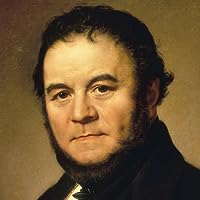
Henri-Marie Beyle, better known by his pen name Stendhal, was a 19th-century French writer. Known for his acute analysis of his characters' psychology, he is considered one of the earliest and foremost practitioners of realism in his two novels Le Rouge et le Noir (The Red and the Black, 1830) and La Chartreuse de Parme (The Charterhouse of Parma, 1839).

Francis Bacon, 1st Viscount St Alban, QC (1560-1626) was an English philosopher, statesman, scientist, jurist, orator, essayist, and author. He served both as Attorney General and Lord Chancellor of England. After his death, he remained extremely influential through his works, especially as philosophical advocate and practitioner of the scientific method during the scientific revolution. Bacon has been called the creator of empiricism. His works established and popularised inductive methodologies for scientific inquiry, often called the Baconian method, or simply the scientific method. His demand for a planned procedure of investigating all things natural marked a new turn in the rhetorical and theoretical framework for science, much of which still surrounds conceptions of proper methodology today. Bacon was knighted in 1603 (being the first scientist to receive a knighthood), and created Baron Verulam in 1618 and Viscount St. Alban in 1621. Bacon's ideas were influential in the 1630s and 1650s among scholars, in particular Sir Thomas Browne, who in his encyclopaedia Pseudodoxia Epidemica (1646–72) frequently adheres to a Baconian approach to his scientific enquiries. During the Restoration, Bacon was commonly invoked as a guiding spirit of the Royal Society founded under Charles II in 1660. During the 18th-century French Enlightenment, Bacon's non-metaphysical approach to science became more influential than the dualism of his French contemporary René Descartes, and was associated with criticism of the ancien regime. In 1733 Voltaire "introduced him as the "father" of the scientific method" to a French audience, an understanding which had become widespread by 1750. In the 19th century his emphasis on induction was revived and developed by William Whewell, among others. He has been reputed as the "Father of Experimental Science". Bacon is also considered because of his introduction of science in England to be the philosophical influence behind the dawning of the Industrial age. In his works, Bacon stated "the explanation of which things, and of the true relation between the nature of things and the nature of the mind, is as the strewing and decoration of the bridal chamber of the mind and the universe, out of which marriage let us hope there may spring helps to man, and a line and race of inventions that may in some degree subdue and overcome the necessities and miseries of humanity" meaning he hoped that through the understanding of mechanics using the Scientific Method, society will create more mechanical inventions that will to an extent solve the problems of Man. This changed the course of science in history, from a experimental state, as it was found in medieval ages, to an experimental and inventive state – that would have eventually led to the mechanical inventions that made possible the Industrial Revolutions of the following centuries. He also wrote a long treatise on Medicine, History of Life and Death, with natural and experimental observations for the prolongation of life. For one of his biographers, the historian William Hepworth Dixon, Bacon's influence in modern world is so great that every man who rides in a train, sends a telegram, follows a steam plough, sits in an easy chair, crosses the channel or the Atlantic, eats a good dinner, enjoys a beautiful garden, or undergoes a painless surgical operation, owes him something. Francis Bacon's philosophy is displayed in the vast and varied writings he left, which might be divided in three great branches: Scientific works – in which his ideas for an universal reform of knowledge into scientific methodology and the improvement of mankind's state using the Scientific method are presented. Literary works – in which he presents his moral philosophy. Juridical works – in which his reforms in English Law are proposed. Librarian Note: There is more than one author in the Goodreads database with thi