Margins




548 Market St PMB 65688, San Francisco California 94104-5401 USA
© 2026 Paratext Inc. All rights reserved
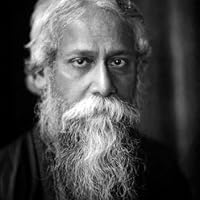
A Pirali Brahmin from Calcutta with ancestral gentry roots in Jessore, Tagore wrote poetry as an eight-year-old. [10] At the age of sixteen, he released his first substantial poems under the pseudonym Bhānusiṃha ("Sun Lion"), which were seized upon by literary authorities as long-lost classics.[11][12] By 1877 he graduated to his first short stories and dramas, published under his real name. As a humanist, universalist internationalist, and ardent anti-nationalist, [13] he denounced the British Raj and advocated independence from Britain. As an exponent of the Bengal Renaissance, he advanced a vast canon that comprised paintings, sketches and doodles, hundreds of texts, and some two thousand songs; his legacy endures also in the institution he founded, Visva-Bharati University. [14][15][16][17][18] Tagore modernised Bengali art by spurning rigid classical forms and resisting linguistic strictures. His novels, stories, songs, dance-dramas, and essays spoke to topics political and personal. Gitanjali (Song Offerings ), Gora ( Fair-Faced ) and Ghare-Baire (The Home and the World ) are his best-known works, and his verse, short stories, and novels were acclaimed—or panned—for their lyricism, colloquialism, naturalism, and unnatural contemplation. His compositions were chosen by two nations as national anthems: India's Jana Gana Mana and Bangladesh 's Amar Shonar Bangla . The Sri Lankan national anthem was inspired by his work.