



A Man's Requirements (in Short Poetry Collection 056 ) I Love me Sweet, with all thou art, Feeling, thinking, seeing; Love me in the lightest part, Love me in full being. II Love me with thine open youth In its frank surrender; With the vowing of thy mouth, With its silence tender. III Love me with thine azure eyes, Made for earnest grantings; Taking colour from the skies, Can Heaven's truth be wanting? IV Love me with their lids, that fall Snow-like at first meeting; Love me with thine heart, that all Neighbours then see beating. V Love me with thine hand stretched out Freely—Love me with thy loitering foot, — Hearing one behind it. VI Love me with thy voice, that turns Sudden faint above me; Love me with thy blush that burns When I murmur 'Love me!' VII Love me with thy thinking soul, Break it to love-sighing; Love me with thy thoughts that roll On through living—dying. VIII Love me in thy gorgeous airs, When the world has crowned thee; Love me, kneeling at thy prayers, With the angels round thee. IX Love me pure, as muses do, Up the woodlands Love me gaily, fast and true, As a winsome lady. X Through all hopes that keep us brave, Farther off or nigher, Love me for the house and grave, And for something higher. XI Thus, if thou wilt prove me, Dear, Woman's love no fable, I will love thee—half a year—As a man is able.
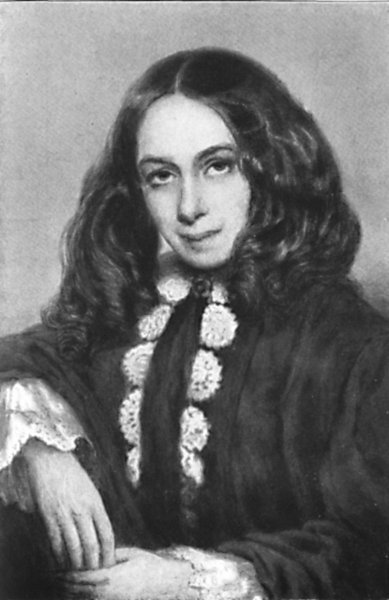
Author

Elizabeth Barrett Browning was one of the most respected poets of the Victorian era. Born in County Durham, the eldest of 12 children, Browning was educated at home. She wrote poetry from around the age of six and this was compiled by her mother, comprising what is now one of the largest collections extant of juvenilia by any English writer. At 15 Browning became ill, suffering from intense head and spinal pain for the rest of her life, rendering her frail. She took laudanum for the pain, which may have led to a lifelong addiction and contributed to her weak health. In the 1830s Barrett's cousin John Kenyon introduced her to prominent literary figures of the day such as William Wordsworth, Mary Russell Mitford, Samuel Taylor Coleridge; Alfred, Lord Tennyson, and Thomas Carlyle. Browning's first adult collection The Seraphim and Other Poems was published in 1838. During this time she contracted a disease, possibly tuberculosis, which weakened her further. Living at Wimpole Street, in London, Browning wrote prolifically between 1841 and 1844, producing poetry, translation and prose. She campaigned for the abolition of slavery and her work helped influence reform in child labour legislation. Her prolific output made her a rival to Tennyson as a candidate for poet laureate on the death of Wordsworth. Browning's volume Poems (1844) brought her great success. During this time she met and corresponded with the writer Robert Browning, who admired her work. The courtship and marriage between the two were carried out in secret, for fear of her father's disapproval. Following the wedding she was disinherited by her father and rejected by her brothers. The couple moved to Italy in 1846, where she would live for the rest of her life. They had one son, Robert Barrett Browning, whom they called Pen. Towards the end of her life, her lung function worsened, and she died in Florence in 1861. A collection of her last poems was published by her husband shortly after her death. Browning was brought up in a strongly religious household, and much of her work carries a Christian theme. Her work had a major influence on prominent writers of the day, including the American poets Edgar Allan Poe and Emily Dickinson. She is remembered for such poems as "How Do I Love Thee?" (Sonnet 43, 1845) and Aurora Leigh (1856).