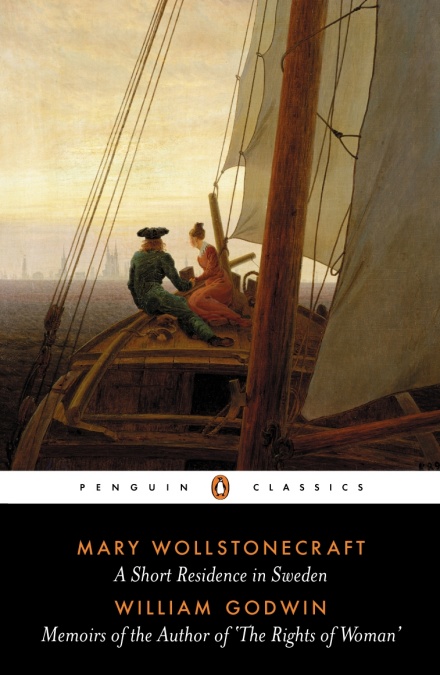
In these two closely linked works - a travel book and a biography of its author - we witness a moving encounter between two of the most daring and original minds of the late eighteenth century: A Short Residence in Sweden is the record of Wollstonecraft's last journey in search of happiness, into the remote and beautiful backwoods of Scandinavia. The quest for a lost treasure ship, the pain of a wrecked love affair, memories of the French Revolution, and the longing for some Golden Age, all shape this vivid narrative, which Richard Holmes argues is one of the neglected masterpieces of early English Romanticism. Memoirs is Godwin's own account of Wollstonecraft's life, written with passionate intensity a few weeks after her tragic death. Casting aside literary convention, Godwin creates an intimate portrait of his wife, startling in its candour and psychological truth. Received with outrage by friends and critics alike, and virtually suppressed for a century, it can now be recognized as one of the landmarks in the development of modern biography.
Authors

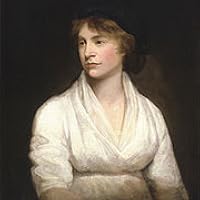
Mary Wollstonecraft was an eighteenth century British writer, philosopher, and feminist. Among the general public and specifically among feminists, Wollstonecraft's life has received much more attention than her writing because of her unconventional, and often tumultuous, personal relationships. After two ill-fated affairs, with Henry Fuseli and Gilbert Imlay, Wollstonecraft married the philosopher William Godwin, one of the forefathers of the anarchist movement; they had one daughter, Mary Shelley, the author of Frankenstein. Wollstonecraft died at the age of thirty-eight due to complications from childbirth, leaving behind several unfinished manuscripts. During her brief career, she wrote novels, treatises, a travel narrative, a history of the French Revolution, a conduct book, and a children's book. Wollstonecraft is best known for A Vindication of the Rights of Woman (1792), in which she argues that women are not naturally inferior to men, but appear to be only because they lack education. She suggests that both men and women should be treated as rational beings and imagines a social order founded on reason. After Wollstonecraft's death, Godwin published a Memoir (1798) of her life, revealing her unorthodox lifestyle, which inadvertently destroyed her reputation for a century. However, with the emergence of the feminist movement at the turn of the twentieth century, Wollstonecraft's advocacy of women's equality and critiques of conventional femininity became increasingly important. Today Wollstonecraft is regarded as one of the founding feminist philosophers, and feminists often cite both her life and work as important influences. Information courtesy of Wikipedia.org