


Margins
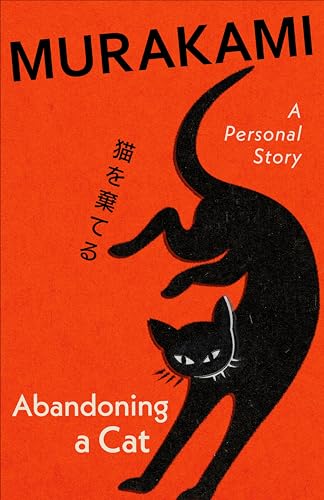
Abandoning a Cat book cover
Abandoning a Cat
2026
First Published
1
Number of Pages

A moving reflection on the author's father - plus a cat! - this is a beautiful short work of family history from one of our most beloved, iconic writers. Originally published in the New Yorker in 2019, and now presented in a full, unabridged form, Abandoning a Cat is a poignant, self-reflective work by Haruki Murakami. Here he writes about his father, the son of a priest who might have become a priest himself had a clerical error not sent him into the second world war. Murakami's father wrote accomplished haiku and eventually became a teacher. As Haruki grew older and became an adult and then a writer, he and his father found they had little in common. They were later estranged for twenty years, only reconciling on his father's deathbed. This haunting personal essay is a reflection on what it means to be a father and what it means to be a son - on what it means to be loved and to be abandoned - and also on a particular moment of Japanese history, through the aftermath of the second world war on into the present. Murakami fans may find common themes from beloved novels such as Kafka on the Shore and The Wind-Up Bird Chronicle - but will also be surprised by the raw honesty of this beautiful autobiographical piece. 'Haunting' New York Times

Author

Haruki Murakami
Haruki Murakami
Author · 176 books

Murakami Haruki (Japanese: 村上 春樹) is a popular contemporary Japanese writer and translator. His work has been described as 'easily accessible, yet profoundly complex'. He can be located on Facebook at: https://www.facebook.com/harukimuraka... Since childhood, Murakami has been heavily influenced by Western culture, particularly Western music and literature. He grew up reading a range of works by American writers, such as Kurt Vonnegut and Richard Brautigan, and he is often distinguished from other Japanese writers by his Western influences. Murakami studied drama at Waseda University in Tokyo, where he met his wife, Yoko. His first job was at a record store, which is where one of his main characters, Toru Watanabe in Norwegian Wood, works. Shortly before finishing his studies, Murakami opened the coffeehouse 'Peter Cat' which was a jazz bar in the evening in Kokubunji, Tokyo with his wife. Many of his novels have themes and titles that invoke classical music, such as the three books making up The Wind-Up Bird Chronicle: The Thieving Magpie (after Rossini's opera), Bird as Prophet (after a piano piece by Robert Schumann usually known in English as The Prophet Bird), and The Bird-Catcher (a character in Mozart's opera The Magic Flute). Some of his novels take their titles from songs: Dance, Dance, Dance (after The Dells' song, although it is widely thought it was titled after the Beach Boys tune), Norwegian Wood (after The Beatles' song) and South of the Border, West of the Sun (the first part being the title of a song by Nat King Cole).

548 Market St PMB 65688, San Francisco California 94104-5401 USA
© 2026 Paratext Inc. All rights reserved