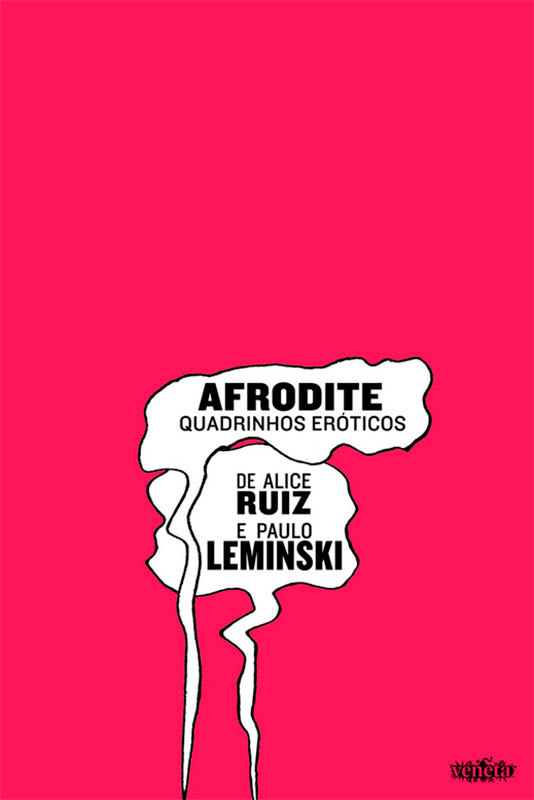



Em 1978, em plena Ditadura Militar, um grupo de desenhistas e poetas reuniu-se em Curitiba para produzir histórias em quadrinhos eróticas. Entre eles, estavam quadrinistas veteranos como Flávio Colin, Júlio Shimamoto, Claudio Seto e, nos roteiros, o casal de poetas Paulo Leminski e Alice Ruiz, que enfrentaram a censura com histórias cheias de um erotismo libertário, feminista e escandaloso. Essas histórias em quadrinhos foram um grande sucesso nas bancas de todo o país, até que a censura apertou o cerco contra sua editora, a Grafipar. Então foram esquecidas. Agora, mais de trinta anos depois, eles são reunidas em um só livro para nos surpreender com sua ousadia. Acabamento Brochura Altura 21.00 cm Ano da edição 2015 Cód. Barras 9788563137432 I.S.B.N. 9788563137432 Idioma Português Largura 15.50 cm Marca Veneta Número da edição 1 Número de Páginas 112 Peso 1.000 Kg Produto sob encomenda Não Profundidade 1.00 cm

Authors

Alice Ruiz é uma poeta e tradutora brasileira. Começou a escrever na adolescência, mas durante muitos anos divulgou seus poemas apenas em revistas e jornais. Publicou seu primeiro livro aos 34 anos de idade. Foi casada com o também poeta Paulo Leminski, com quem teve três filhos. Em 2009, recebeu o Prêmio Jabuti pelo livro Dois em Um. Também publica sob o nome Alice Ruiz S.

Paulo Leminski Filho (Curitiba, August 24, 1944 – Curitiba, June 7, 1989) was a Brazilian poet and writer. He took pride in being of mixed Polish and African descent. His first small-press collection came out in the late 1970s. Although he never finished college, by the 1980s he knew Japanese, French, and English well enough to do translations. His most noted renderings are of Alfred Jarry, James Joyce, John Fante, John Lennon, Samuel Beckett, and Yukio Mishima. He also helped to produce a number of albums and was said to have taught judo. Leminski was a prolific poet, wrote experimental prose / essays, occasionally wrote songs, and was a cultural agitator. He was the leading voice of his generation, having followed different paths of Brazilian lyric from the early 1960s through the late 1980s. His style of poetry has been compared to that of American poet e. e. cummings (song writer / singer Luciana Souza on the Tom Schanbel show on KCRW 89.9 fm 06/24/2009). He contributed to the journal Invenção, while still a teen and would maintain a strong sense of visuality and layout in his poetic output. Some of Leminski's poetry of the late 1970s/early 1980s has been linked to the controversial labe of poesia marginal. But his dedication to resolution in language set him apart. His collections Caprichos & Relaxos (1983) and Distraídos venceremos (1987) are landmarks. In the latter, his rigor and intertextual urges are clear. A neo-baroque narrative, Catatau (1975), has become a cult book. His home town Curitiba has sponsored a yearly celebration of his legacy and cultural vibrancy in Brazil. The event's name Perhappiness is taken from a one-liner by the poet.