



![Além do princípio de prazer [Jenseits des Lustprinzips] book cover](https://images-na.ssl-images-amazon.com/images/S/compressed.photo.goodreads.com/books/1672179861i/56405125.jpg)
Há um antes e um depois na história da psicanálise. O divisor de águas é justamente o Além do princípio de prazer, o ensaio mais fascinante e mais desconcertante da obra de Freud. Nele, são introduzidos conceitos que marcaram época, como Eros e pulsão de morte. Numa argumentação vertiginosa, Freud analisa experiências aparentemente desconexas, como o jogo de uma criança pequena de lançar objetos longe e às vezes recuperá-los, os sonhos traumáticos de neuróticos de guerra, ou a impressão de estarmos repetindo cegamente um destino que nos escapa, etc. Esses fenômenos são analisados minuciosamente por Freud e culminam com a revisão de um dos fundamentos teóricos mais centrais da psicanálise, a primazia do princípio de prazer como regulador do funcionamento psíquico. Esta é a primeira edição crítica bilíngue de um texto de Freud no Brasil. Em 1995, foram encontrados dois manuscritos inéditos do texto, um deles contendo apenas seis capítulos. Descobrimos, desconcertados, que antes mesmo de formular os conceitos de Eros e de pulsão de morte, Freud já havia cruzado o limiar para além do princípio de prazer. Assim como a edição crítica alemã, publicada pela primeira vez em 2013, a presente edição traz todas as seis variantes do texto, apresentadas de forma simples e intuitiva. Acompanha ainda um extenso dossiê intitulado “Para ler o Além do princípio de prazer”, que contém um dicionário de autores e obras citadas, abordando as fontes psicanalíticas, filosóficas, científicas e literárias mencionadas por Freud.
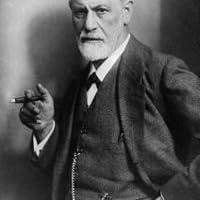
Authors

Dr. Sigismund Freud (later changed to Sigmund) was a neurologist and the founder of psychoanalysis, who created an entirely new approach to the understanding of the human personality. He is regarded as one of the most influential—and controversial—minds of the 20th century. In 1873, Freud began to study medicine at the University of Vienna. After graduating, he worked at the Vienna General Hospital. He collaborated with Josef Breuer in treating hysteria by the recall of painful experiences under hypnosis. In 1885, Freud went to Paris as a student of the neurologist Jean Charcot. On his return to Vienna the following year, Freud set up in private practice, specialising in nervous and brain disorders. The same year he married Martha Bernays, with whom he had six children. Freud developed the theory that humans have an unconscious in which sexual and aggressive impulses are in perpetual conflict for supremacy with the defences against them. In 1897, he began an intensive analysis of himself. In 1900, his major work 'The Interpretation of Dreams' was published in which Freud analysed dreams in terms of unconscious desires and experiences. In 1902, Freud was appointed Professor of Neuropathology at the University of Vienna, a post he held until 1938. Although the medical establishment disagreed with many of his theories, a group of pupils and followers began to gather around Freud. In 1910, the International Psychoanalytic Association was founded with Carl Jung, a close associate of Freud's, as the president. Jung later broke with Freud and developed his own theories. After World War One, Freud spent less time in clinical observation and concentrated on the application of his theories to history, art, literature and anthropology. In 1923, he published 'The Ego and the Id', which suggested a new structural model of the mind, divided into the 'id, the 'ego' and the 'superego'. In 1933, the Nazis publicly burnt a number of Freud's books. In 1938, shortly after the Nazis annexed Austria, Freud left Vienna for London with his wife and daughter Anna. Freud had been diagnosed with cancer of the jaw in 1923, and underwent more than 30 operations. He died of cancer on 23 September 1939.