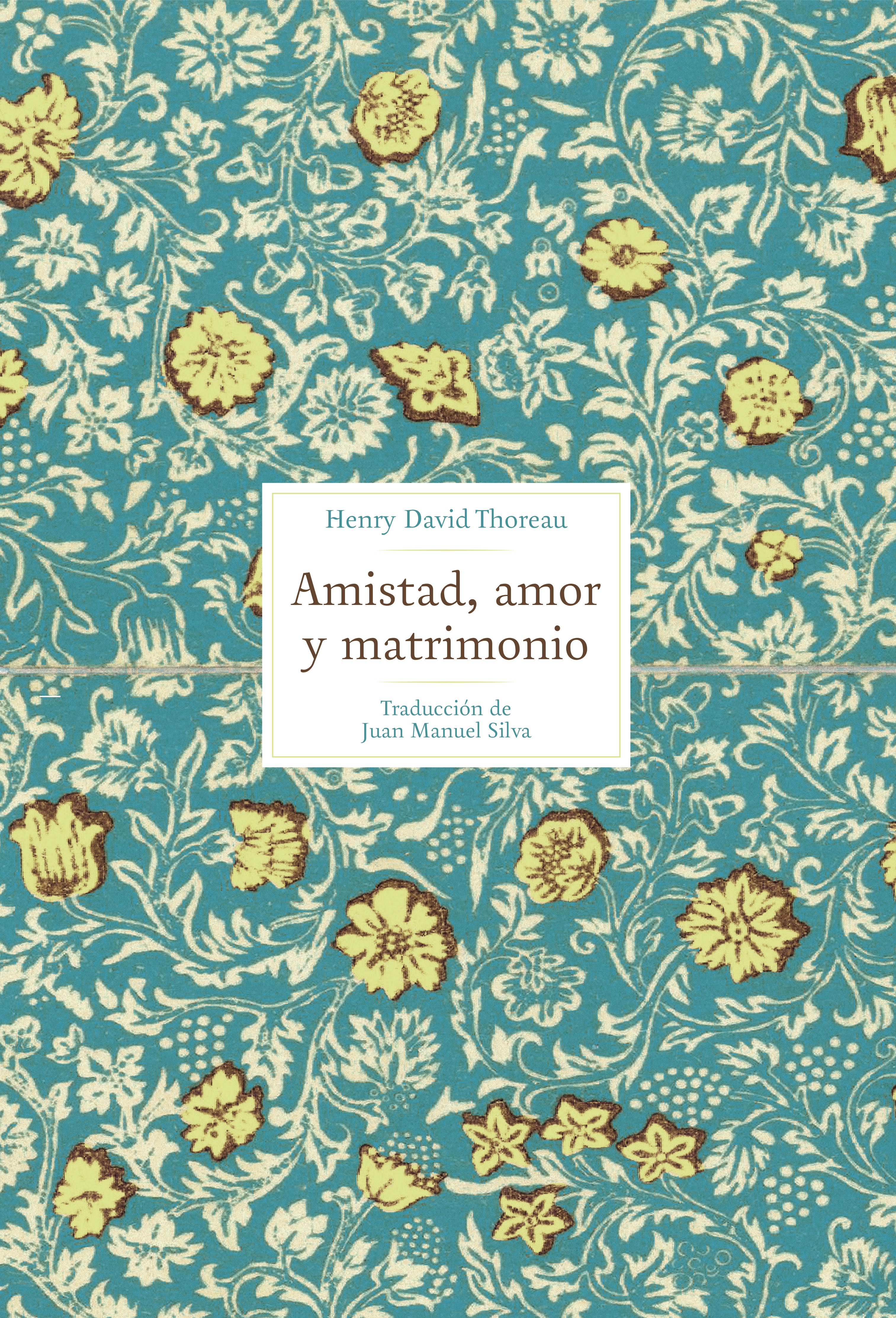



Este libro que tienes en tus manos, de Henry David Thoreau, se publicó en 1910 y permanecía desde entonces inédito en nuestro idioma. Y quién sabe por qué. Es uno de los ensayos más particulares del norteamericano, en el que indaga detalladamente en los tres temas que le dan título al libro: la amistad, el amor y el matrimonio. Con la cuidada escritura que lo caracteriza, Thoreau se adentra en los misterios de las relaciones humanas, en los conflictos, los fracasos y los puntos de encuentro que descubre a partir de su propia experiencia. “En los intercambios humanos la tragedia comienza no cuando hay malentendidos con palabras, sino cuando no entendemos el silencio”, anota en un momento, con sabiduría, el autor de Walden, y lo cierto es que los lectores que avancen por estas páginas serán invitados a reflexionar sobre los vínculos afectivos, sus necesidades y problemas. En estos tiempos en que se han cuestionado las formas en que nos relacionamos, Amistad, amor y matrimonio plantea una voz fundamental en esta discusión tan contemporánea, y demuestra que el proyecto literario y filosófico de Thoreau está más vigente que nunca.
Author

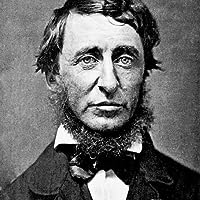
Henry David Thoreau (born David Henry Thoreau) was an American author, naturalist, transcendentalist, tax resister, development critic, philosopher, and abolitionist who is best known for Walden, a reflection upon simple living in natural surroundings, and his essay, Civil Disobedience, an argument for individual resistance to civil government in moral opposition to an unjust state. Thoreau's books, articles, essays, journals, and poetry total over 20 volumes. Among his lasting contributions were his writings on natural history and philosophy, where he anticipated the methods and findings of ecology and environmental history, two sources of modern day environmentalism. In 1817, Henry David Thoreau was born in Massachusetts. He graduated from Harvard University in 1837, taught briefly, then turned to writing and lecturing. Becoming a Transcendentalist and good friend of Emerson, Thoreau lived the life of simplicity he advocated in his writings. His two-year experience in a hut in Walden, on land owned by Emerson, resulted in the classic, Walden: Life in the Woods (1854). During his sojourn there, Thoreau refused to pay a poll tax in protest of slavery and the Mexican war, for which he was jailed overnight. His activist convictions were expressed in the groundbreaking On the Duty of Civil Disobedience (1849). In a diary he noted his disapproval of attempts to convert the Algonquins "from their own superstitions to new ones." In a journal he noted dryly that it is appropriate for a church to be the ugliest building in a village, "because it is the one in which human nature stoops to the lowest and is the most disgraced." (Cited by James A. Haught in 2000 Years of Disbelief.) When Parker Pillsbury sought to talk about religion with Thoreau as he was dying from tuberculosis, Thoreau replied: "One world at a time." Thoreau's philosophy of nonviolent resistance influenced the political thoughts and actions of such later figures as Leo Tolstoy, Mohandas K. Gandhi, and Martin Luther King, Jr. D. 1862. More: http://plato.stanford.edu/entries/tho... http://thoreau.eserver.org/ http://en.wikipedia.org/wiki/Henry\_Da... http://transcendentalism-legacy.tamu.... http://www.biography.com/people/henry...