Margins
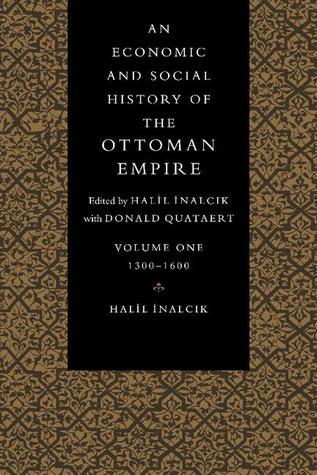
An Economic and Social History of the Ottoman Empire, 1300–1914 2 Volume Paperback Set book cover
An Economic and Social History of the Ottoman Empire, 1300–1914 2 Volume Paperback Set
1997
First Published
4.22
Average Rating
1052
Number of Pages
This major contribution to Ottoman history is now published in paperback in two the original single hardback volume (1994) has been widely acclaimed as a landmark in the study of one of the most enduring and influential empires of modern times. The authors provide a richly detailed account of the social and economic history of the Ottoman region, from the origins of the Empire around 1300 to the eve of its destruction during World War One. The breadth of range and the fullness of coverage make these two volumes essential for an understanding of contemporary developments in both the Middle East and the post-Soviet Balkan world. The text of volume one is by Halil Inalcik, covering the period 1300-1600. The second volume, written by Suraiya Faroqhi, Bruce McGowan, Donald Quataert and Sevket Pamuk, continues the story to 1914. Each volume examines developments in population, trade, transport, manufacturing, land tenure and the economy, and extensive apparatus and bibliographic information is provided for students and others wishing to pursue the subject in more detail. Both volumes will be fundamental to any future discussion of any aspect of Ottoman history.

Avg Rating
4.22
Number of Ratings
9
5 STARS
44%
4 STARS
33%
3 STARS
22%
2 STARS
0%
1 STARS
0%
goodreads

Authors

Suraiya Faroqhi
Suraiya Faroqhi
Author · 13 books

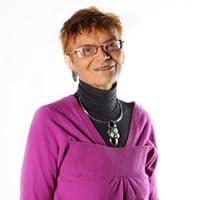
Suraiya Faroqhi was born in Berlin to a German mother and Indian father in 1941. She studied at Hamburg University and she came to Istanbul through a university exchange program when she was 21. At Istanbul University, she became a student of Ömer Lütfi Barkan. She completed her master's degree in Hamburg and between 1968-1970 she studied English Language Teaching at Indiana University-Bloomington. After her post-doctorate, she worked as English Lecturer at METU. She retired from METU in 1987 and from München Ludwig Maximillan Universität in 2005. A turning point in her life came in 1962-63, when she took the opportunity to go to Istanbul University on a fellowship as an exchange student. Subsequently she became a student of Ömer Lüfti Barkan, one of the founding fathers of Ottoman history and an editor of Annales. When she first read Fernand Braudel at Barkan’s insistence, she “had the feeling that’s the sort of thing I wanted to do.” She wrote her doctoral thesis at Hamburg on a set of documents that a late 16th-century vizier submitted to his sultan discussing Ottoman politics at the time.[1] She is regarded as one of the most important economic and social historians of the Ottoman Empire working today. Professor Faroqhi has written substantially on Ottoman urban history, arts and crafts, and on the hitherto underrepresented world of the ordinary people in the empire. She is well known for her distinctive approach to Ottoman everyday life and public culture. She has published numerous books and articles in the field of pre- modern Ottoman history.

Halil Inalcik
Halil Inalcik
Author · 27 books

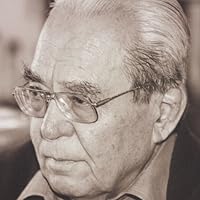
He was born in Istanbul to a Crimean Tatar family, which left Crimea for Constantinople in 1905. His birthday is unknown but İnalcık chose 26 May 1916 for his birthday. He attended Balıkesir Teacher Training School, and then Ankara University, Faculty of Language, History and Geography, Department of History where he graduated from in 1940. He completed his PhD in 1943 in the same department. His PhD thesis was on the Bulgarian question in the late Ottoman Empire. He entered the same school as an assistant, then he became assistant professor in 1946 and after his return from lecturing in the University of London for a while, he became a professor in the same department in 1952. He lectured in various universities in the United States as a guest professor. In 1972, he was invited by the University of Chicago. Between 1972 and 1993 he taught Ottoman history at the University of Chicago. In 1994, he returned to Turkey and founded history department at Bilkent University where he is still teaching. In 1993, he donated his valuable collection of books, journals and off-prints on the history of Ottoman Empire to the library of Bilkent University. He has been member president of many international foundations. He is a member of the Serbian Academy of Sciences and Arts in Department of Historical Sciences. He is also a member of the Institute of Turkish Studies.

548 Market St PMB 65688, San Francisco California 94104-5401 USA
© 2026 Paratext Inc. All rights reserved