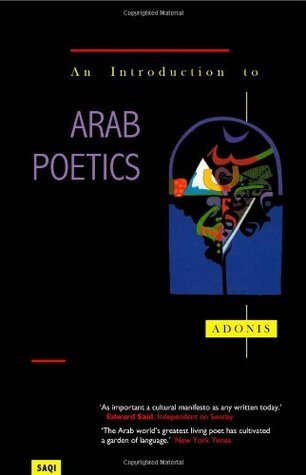
Poetry is the quintessence of Arab culture. In this book, one of the foremost Arab poets reinterprets a rich and ancient heritage. He examines the oral tradition of pre-Islamic Arabian poetry, as well as the relationship between Arabic poetry and the Qur’an, and between poetry and thought. Adonis also assesses the challenges of modernism and the impact of western culture on the Arab poetic tradition. Stimulating in their originality, eloquent in their treatment of a wide range of poetry and criticism, these reflections open up fresh perspectives on one of the world’s greatest – and least explored – literatures. Adonis is widely considered among the greatest living Arab poets. Born in Syria in 1930, he settled in Lebanon in the 1950s, where he became a central figure in the Arab world’s new poetic movement. In 1956 he helped establish the literary magazine Shi‘r, and in 1968 founded its successor, the equally prestigious Mawakif. Both played a seminal role in the revival of the Arabic literary tradition. Adonis is the author of several classic works that have led to a rigorous reassessment of the Arab cultural heritage.
Author
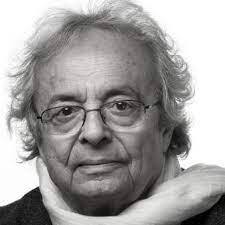
Adonis was born Ali Ahmed Said in the village of Al Qassabin in Syria, in 1930, to a family of farmers, the oldest of six children. At the age of nineteen, he adopted the name Adonis (also spelled Adunis), after the Greek god of fertility, with the hopes that the new name would result in newspaper publication of his poems. Although his family could not afford to send Adonis to school, his father taught him to read poetry and the Qu'ran, and memorize poems while he worked in the fields. When he was fourteen, Adonis read a poem to the president of Syria who was visiting a nearby town. The impressed president offered to grant a request, to which the young Adonis responded that he wanted to attend school. The president quickly made arrangements for Adonis to attend a French-run high school, after which he studied philosophy at Damascus University. In 1956, after a year-long imprisonment for political activities, Adonis fled Syria for Beirut, Lebanon. He joined a vibrant community of artists, writers, and exiles in Beirut, and co-founded and edited Sh'ir, and later Muwaqaf, both progressive journals of poetry and politics. He studied at St. Joseph University in Beirut and obtained his Doctorat d'Etat in 1973. Considered one of the Arab world's greatest living poets, Adonis is the author of numerous collections, including Mihyar of Damascus (BOA Editions, 2008), A Time Between Ashes and Roses (Syracuse University Press, 2004); If Only the Sea Could Sleep (2003); The Pages of Day and Night (2001); Transformations of the Lover (1982); The Book of the Five Poems (1980); The Blood of Adonis (1971), winner of the Syria-Lebanon Award of the International Poetry Forum; Songs of Mihyar the Damascene (1961), Leaves in the Wind (1958), and First Poems (1957). He is also an essayist, an editor of anthologies, a theoretician of poetics, and the translator of several works from French into Arabic. Over the course of his career, Adonis has fearlessly experimented with form and content, pioneering the prose poem in Arabic, and taking a influential, and sometimes controversial role in Arab modernism. In a 2002 interview in the New York Times, Adonis declared: '"There is no more culture in the Arab world. It's finished. Culturally speaking, we are a part of Western culture, but only as consumers, not as creators." Adonis' awards and honors include the first ever International Nâzim Hikmet Poetry Award, the Syria-Lebanon Best Poet Award, and the Highest Award of the International Poem Biennial in Brussels. He was elected as Stephen Mallarme Academy Member in Paris in 1983. He has taught at the Lebanese University as a professor of Arabic literature, at Damascus University, and at the Sorbonne. He has been a Lebanese citizen since 1961 and currently lives in Paris.
- See more at: http://www.poets.org/poet.php/prmPID/...