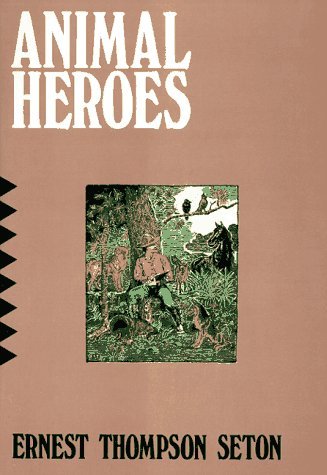
First published in 1905, "Animal Heroes" is a fantastic collection of short animal stories written and illustrated by Ernest Thompson Seton. These wonderful, exciting, and endearing children's stories are perfect bedtime reading for animal-loving kids, and they are not to be missed by adoring fans and collectors of Seton's marvellous work. Contents: "The Slum Cat," "Arnaux: The Chronicle of the Homing Pigeon," "Badlands Billy," "The Wolfthat Won," "The Boy and the Lynx," "Little Warhorse," "The History of a Jackrabbit," "Snap: The Story of a Bull-terrier," "The Winnipeg Wolf," "The Legend of the White Reindeer," etc. Ernest Thompson Seton (1860 - 1946) was an English-born Canadian author and wildlife artist who founded the Woodcraft Indians in 1902. He was also among the founding members of the Boy Scouts of America, established in 1910. He wrote profusely on this subject, the most notable of his scouting literature including "The Birch Bark Roll" and the "Boy Scout Handbook." Many vintage books such as this are becoming increasingly scarce and expensive. We are republishing this book now in an affordable, modern, high-quality edition complete with a specially-commissioned new biography of the author. Eight stories detailing the struggle for existence of such animals as a slum cat, a homing pigeon, a wolf, a lynx, and a reindeer.
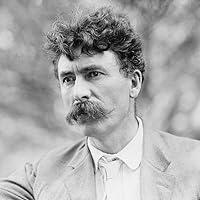
Author

Ernest Thompson Seton was a Scots-Canadian (and naturalized U.S. citizen) who became a noted author, wildlife artist, founder of the Woodcraft Indians, and one of the founding pioneers of the Boy Scouts of America (BSA). Seton also heavily influenced Lord Baden-Powell, the founder of Scouting. His notable books related to Scouting include The Birch Bark Roll and The Boy Scout Handbook. He is responsible for the strong influence of American Indian culture in the BSA. He was born Ernest Evan Thompson in South Shields, County Durham (now part of South Tyneside, Tyne and Wear), England of Scottish parents and his family emigrated to Canada in 1866. As a youth, he retreated to the woods to draw and study animals as a way of avoiding his abusive father. He won a scholarship in art to the Royal Academy in London, England. He later rejected his father and changed his name to Ernest Thompson Seton. He believed that Seton had been an important name in his paternal line. He developed a fascination with wolves while working as a naturalist for Manitoba. He became successful as a writer, artist and naturalist, and moved to New York City to further his career. Seton later lived at Wyndygoul, an estate that he built in Cos Cob, a section of Greenwich, Connecticut. After experiencing vandalism by the local youth, Seton invited them to his estate for a weekend where he told stories of the American Indians and of nature. He formed the Woodcraft Indians in 1902 and invited the local youth to join. The stories became a series of articles written for the Ladies Home Journal and were eventually collected in the The Birch Bark Roll of the Woodcraft Indians in 1906. He was married twice. The first marriage was to Grace Gallatin in 1896. Their only daughter, Ann, was born in 1904 and died in 1990. Ann, who later changed her first name, became a best-selling author of historical and biographical novels as Anya Seton. According to her introduction to the novel Green Darkness, both of her parents were practicing Theosophists. Ernest and Grace divorced in 1935, and Ernest soon married Julia M. Buttree. Julia would write works by herself and with Ernest. They did not have any children, but did adopt an infant daughter, Beulah (Dee) Seton (later Dee Seton Barber), in 1938. Dee Seton Barber died in 2006.