Authors

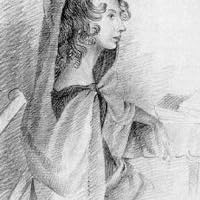
Anne Brontë was an English novelist and poet, the youngest member of the Brontë literary family. Anne's two novels, written in a sharp and ironic style, are completely different from the romanticism followed by her sisters, Emily Brontë and Charlotte Brontë. She wrote in a realistic, rather than a romantic style. Mainly because the re-publication of The Tenant of Wildfell Hall was prevented by Charlotte Brontë after Anne's death, she is less known than her sisters. However, her novels, like those of her sisters, have become classics of English literature. The daughter of a poor Irish clergyman in the Church of England, Anne Brontë lived most of her life with her family at the parish of Haworth on the Yorkshire moors. In Elizabeth Gaskell's biography, Anne's father remembered her as precocious, reporting that once, when she was four years old, in reply to his question about what a child most wanted, she answered: "age and experience". During her life Anne was particularly close to Emily. When Charlotte's friend Ellen Nussey visited Haworth in 1833, she reported that Emily and Anne were "like twins", "inseparable companions". Together they created imaginary world Gondal after they broke up from Charlotte and Branwell who created another imaginary world – Angria. For a couple of years she went to a boarding school. At the age of 19 she left Haworth and worked as a governess between 1839 and 1845. After leaving her teaching position, she fulfilled her literary ambitions. She wrote a volume of poetry with her sisters (Poems by Currer, Ellis, and Acton Bell, 1846) and two novels. Agnes Grey, based upon her experiences as a governess, was published in 1847. Her second and last novel, The Tenant of Wildfell Hall, which is considered to be one of the first sustained feminist novels, appeared in 1848 and was an instant, phenomenal success; within six weeks it was sold out. The Tenant of Wildfell Hall is perhaps the most shocking of the Brontës' novels. In seeking to present the truth in literature, Anne's depiction of alcoholism and debauchery was profoundly disturbing to 19th-century sensibilities. Helen Graham, the tenant of the title, intrigues Gilbert Markham and gradually she reveals her past as an artist and wife of the dissipated Arthur Huntingdon. The book's brilliance lies in its revelation of the position of women at the time, and its multi-layered plot. Her sister Emily's death on 19 December 1848 deeply affected Anne and her grief undermined her physical health. Over Christmas, Anne caught influenza. Her symptoms intensified, and in early January, her father sent for a Leeds physician, who diagnosed her condition as consumption, and intimated that it was quite advanced leaving little hope of recovery. Anne met the news with characteristic determination and self-control. Unlike Emily, Anne took all the recommended medicines, and responded to the advice she was given. That same month she wrote her last poem, " A dreadful darkness closes in", in which she deals with being terminally ill. In February 1849, Anne decided to make a return visit to Scarborough in the hope that the change of location and fresh sea air might initiate a recovery. However, it was clear that she had little strength left. Dying, Anne expressed her love and concern for Ellen and Charlotte, and seeing Charlotte's distress, whispered to her to "take courage". Conscious and calm, Anne died at about two o'clock in the afternoon, Monday, 28 May 1849.

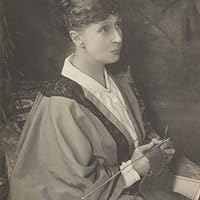
Alice Christiana Gertrude (Thompson) Meynell (22 September 1847 - 27 November 1922) was an English writer, editor, critic, and suffragist, now best remembered as a poet. She was born in Barnes, Richmond, London, to Thomas James Thompson and Christiana (Weller) Thompson. The family moved around England, Switzerland, and France, but she was brought up mostly in Italy, where a daughter of Thomas from his first marriage had settled. Her father was a friend of Charles Dickens. Preludes (1875) was her first poetry collection, illustrated by her elder sister Elizabeth (the artist Elizabeth Southerden (née Thompson) Butler, 1850-1933, whose husband was Lieutenant General Sir William Francis Butler). The work was warmly praised by John Ruskin, although it received little public notice. Ruskin especially singled out the sonnet Renunciation for its beauty and delicacy. After Alice, the entire Thompson family converted to the Roman Catholicicim (1868 to 1880) and her writings migrated to subjects of religious matters. This eventually led her to the Catholic newspaper publisher and editor Wilfrid Meynell (1852 - 1948) in 1876. A year later (1877) she and Meynell married and they settled in Kensington. They became proprietor and editor of The Pen, the Weekly Register, Merry England, and other magazines. Alice and Wilfrid had a family of eight children: Sebastian, Monica, Everard, Madeleine, Viola, Vivian (who died at three months), Olivia, and Francis. Viola Meynell (1885-1956) became a prolific author in her own right and their youngest child Sir Francis Meynell (1891-1975) was a poet as well as an accomplished printer at Nonesuch Press. Alice was much involved in editorial work on publications with her husband, and in her own writing, poetry and prose. She wrote regularly for The World, The Spectator, The Magazine of Art, The Scots Observer, The Tablet, The Art Journal, the National Observer, edited by W. E. Henley the Pall Mall Gazette, and The Saturday Review. The British poet Francis Thompson, down and out in London and trying to recover from the opium addiction that had overtaken him, sent the couple a manuscript. His poems were first published in Wilfred's Merrie England, and the Meynells became a supporter of Thompson. His 1893 book Poems was a Meynell production and initiative. Another supporter of Thompson was the poet Coventry Patmore. Alice had a deep friendship with Patmore, lasting several years, which led to his becoming obsessed with her, forcing her to break with him. At the end of the nineteenth century, in conjunction with uprisings against the British (among them in India and South Africa, plus involvement suppressing the bloody Muslim conquest lead by Muhammad Ahmed in the Sudan and the Boxer Rebellion in China), many European scholars, writers, and artists, especially Catholics, began to question Europe’s colonial imperialism. This issue led Alice, Wilfrid, Elizabeth, and others in their circle to speak out for the oppressed. Alice became a leading figure in the Women Writers' Suffrage League, which was founded by Cicely Hamilton and active 1908 to 1919. Her prose essays were remarkable for their fineness of culture and peculiar restraint of style. After a series of illnesses, including migraine and depression, she died 27 November 1922. Her remains were laid to rest at Kensal Green Catholic Cemetery, London, England.
- information mostly from Wikipedia

Charlotte Mary Mew was a modernist British poet. Mew's father, architect Frederick Mew, died in 1898 without making adequate provision for his family; two of her siblings suffered from mental illness, and were committed to institutions, and three others died in early childhood leaving Charlotte, her mother and her sister, Anne. Charlotte and Anne made a pact never to marry for fear of passing on insanity to their children. In 1894, Mew succeeded in getting a short story into The Yellow Book, but wrote very little poetry at this time. Her first collection of poetry, The Farmer's Bride, was published in 1916. Mew gained the patronage of several literary figures, notably Thomas Hardy, who called her the best woman poet of her day, Virginia Woolf, who said she was "very good and quite unlike anyone else," and Siegfried Sassoon. She obtained a small Civil List pension with the aid of Cockerell, Hardy, John Masefield and Walter de la Mare. This helped ease her financial difficulties. After the death of her sister, she descended into a deep depression, and was admitted to a nursing home where she eventually committed suicide by drinking Lysol. Mew is buried in Hampstead Cemetery.

Charlotte Brontë was an English novelist, the eldest out of the three famous Brontë sisters whose novels have become standards of English literature. See also Emily Brontë and Anne Brontë. Charlotte Brontë was born in Thornton, Yorkshire, England, the third of six children, to Patrick Brontë (formerly "Patrick Brunty"), an Irish Anglican clergyman, and his wife, Maria Branwell. In April 1820 the family moved a few miles to Haworth, a remote town on the Yorkshire moors, where Patrick had been appointed Perpetual Curate. This is where the Brontë children would spend most of their lives. Maria Branwell Brontë died from what was thought to be cancer on 15 September 1821, leaving five daughters and a son to the care of her spinster sister Elizabeth Branwell, who moved to Yorkshire to help the family. In August 1824 Charlotte, along with her sisters Emily, Maria, and Elizabeth, was sent to the Clergy Daughters' School at Cowan Bridge in Lancashire, a new school for the daughters of poor clergyman (which she would describe as Lowood School in Jane Eyre). The school was a horrific experience for the girls and conditions were appalling. They were regularly deprived of food, beaten by teachers and humiliated for the slightest error. The school was unheated and the pupils slept two to a bed for warmth. Seven pupils died in a typhus epidemic that swept the school and all four of the Brontë girls became very ill - Maria and Elizabeth dying of tuberculosis in 1825. Her experiences at the school deeply affected Brontë - her health never recovered and she immortalised the cruel and brutal treatment in her novel, Jane Eyre. Following the tragedy, their father withdrew his daughters from the school. At home in Haworth Parsonage, Charlotte and the other surviving children—Branwell, Emily, and Anne—continued their ad-hoc education. In 1826 her father returned home with a box of toy soldiers for Branwell. They would prove the catalyst for the sisters' extraordinary creative development as they immediately set to creating lives and characters for the soldiers, inventing a world for them which the siblings called 'Angria'. The siblings became addicted to writing, creating stories, poetry and plays. Brontë later said that the reason for this burst of creativity was that: 'We were wholly dependent on ourselves and each other, on books and study, for the enjoyments and occupations of life. The highest stimulus, as well as the liveliest pleasure we had known from childhood upwards, lay in attempts at literary composition.' After her father began to suffer from a lung disorder, Charlotte was again sent to school to complete her education at Roe Head school in Mirfield from 1831 to 1832, where she met her lifelong friends and correspondents, Ellen Nussey and Mary Taylor. During this period (1833), she wrote her novella The Green Dwarf under the name of Wellesley. The school was extremely small with only ten pupils meaning the top floor was completely unused and believed to be supposedly haunted by the ghost of a young lady dressed in silk. This story fascinated Brontë and inspired the figure of Mrs Rochester in Jane Eyre. Brontë left the school after a few years, however she swiftly returned in 1835 to take up a position as a teacher, and used her wages to pay for Emily and Anne to be taught at the school. Teaching did not appeal to Brontë and in 1838 she left Roe Head to become a governess to the Sidgewick family—partly from a sense of adventure and a desire to see the world, and partly from financial necessity. Charlotte became pregnant soon after her wedding, but her health declined rapidly and, according to biographer Elizabeth Gaskell, she was attacked by "sensations of perpetual nausea and ever-recurring faintness." She died, with her unborn child, on 31 March 1855.

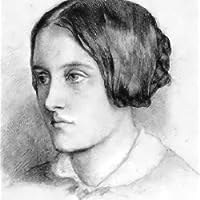
Christina Georgina Rossetti, sister of Dante Gabriel Rossetti, wrote lyrical religious works and ballads, such as "Up-hill" (1861). Frances Polidori Rossetti bore this most important women poet writing in nineteenth-century England to Gabriele Rossetti. Despite her fundamentally religious temperament, closer to that of her mother, this youngest member of a remarkable family of poets, artists, and critics inherited many of her artistic tendencies from her father. Dante made seemingly quite attractive if not beautiful but somewhat idealized sketches of Christina as a teenager. In 1848, James Collinson, one of the minor pre-Raphaelite brethren, engaged her but reverted to Roman Catholicism and afterward ended the engagement. When failing health and eyesight forced the professor into retirement in 1853, Christina and her mother started a day school, attempting to support the family, but after a year or so, gave it away. Thereafter, a recurring illness, diagnosed as sometimes angina and sometimes tuberculosis, interrupted a very retiring life that she led. From the early 1860s, she in love with Charles Cayley, but according to her brother William, refused to marry him because "she enquired into his creed and found he was not a Christian." Milk-and-water Anglicanism was not to her taste. Lona Mosk Packer argues that her poems conceal a love for the painter William Bell Scott, but there is no other evidence for this theory, and the most respected scholar of the Pre-Raphaelite movement disputes the dates on which Packer thinks some of the more revealing poems were written. All three Rossetti women, at first devout members of the evangelical branch of the Church of England, were drawn toward the Tractarians in the 1840s. They nevertheless retained their evangelical seriousness: Maria eventually became an Anglican nun, and Christina's religious scruples remind one of Dorothea Brooke in George Eliot's Middlemarch : as Eliot's heroine looked forward to giving up riding because she enjoyed it so much, so Christina gave up chess because she found she enjoyed winning; pasted paper strips over the antireligious parts of Swinburne's Atalanta in Calydon (which allowed her to enjoy the poem very much); objected to nudity in painting, especially if the artist was a woman; and refused even to go see Wagner's Parsifal, because it celebrated a pagan mythology. After rejecting Cayley in 1866, according one biographer, Christina (like many Victorian spinsters) lived vicariously in the lives of other people. Although pretty much a stay-at-home, her circle included her brothers' friends, like Whistler, Swinburne, F.M. Brown, and Charles Dodgson (Lewis Carroll). She continued to write and in the 1870s to work for the Society for Promoting Christian Knowledge. She was troubled physically by neuralgia and emotionally by Dante's breakdown in 1872. The last 12 years of her life, after his death in 1882, were quiet ones. She died of cancer.

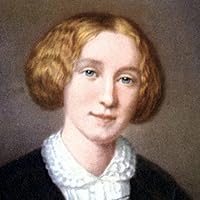
Mary Ann Evans, known by her pen name George Eliot, was an English novelist, poet, journalist, translator and one of the leading writers of the Victorian era. She was born in 1819 at a farmstead in Nuneaton, Warwickshire, England, where her father was estate manager. Mary Ann, the youngest child and a favorite of her father's, received a good education for a young woman of her day. Influenced by a favorite governess, she became a religious evangelical as an adolescent. Her first published work was a religious poem. Through a family friend, she was exposed to Charles Hennell's "An Inquiry into the Origins of Christianity". Unable to believe, she conscientiously gave up religion and stopped attending church. Her father shunned her, sending the broken-hearted young dependent to live with a sister until she promised to reexamine her feelings. Her intellectual views did not, however, change. She translated Das Leben Jesu, a monumental task, without signing her name to the 1846 work. After her father's death in 1849, Mary Ann traveled, then accepted an unpaid position with The Westminster Review. Despite a heavy workload, she translated The Essence of Christianity, the only book ever published under her real name. That year, the shy, respectable writer scandalized British society by sending notices to friends announcing she had entered a free "union" with George Henry Lewes, editor of The Leader, who was unable to divorce his first wife. They lived harmoniously together for the next 24 years, but suffered social ostracism and financial hardship. She became salaried and began writing essays and reviews for The Westminster Review. Renaming herself "Marian" in private life and adopting the penname "George Eliot," she began her impressive fiction career, including: Adam Bede (1859), The Mill on the Floss (1860), Silas Marner (1861), Romola (1863), and Middlemarch (1871). Themes included her humanist vision and strong heroines. Her poem, "O May I Join the Choir Invisible" expressed her views about non supernatural immortality: "O may I join the choir invisible/ Of those immortal dead who live again/ In minds made better by their presence. . ." D. 1880. Her 1872 work Middlemarch has been described by Martin Amis and Julian Barnes as the greatest novel in the English language. More: http://en.wikipedia.org/wiki/George\_E... http://www.bbc.co.uk/history/historic... http://www.britannica.com/EBchecked/t... http://www.victorianweb.org/victorian... http://www.biography.com/people/georg... http://www.pbs.org/wgbh/masterpiece/d...

Emily Jane Brontë was an English novelist and poet, now best remembered for her only novel Wuthering Heights, a classic of English literature. Emily was the second eldest of the three surviving Brontë sisters, being younger than Charlotte Brontë and older than Anne Brontë. She published under the masculine pen name Ellis Bell. Emily was born in Thornton, near Bradford in Yorkshire to Patrick Brontë and Maria Branwell. She was the younger sister of Charlotte Brontë and the fifth of six children. In 1824, the family moved to Haworth, where Emily's father was perpetual curate, and it was in these surroundings that their literary oddities flourished. In childhood, after the death of their mother, the three sisters and their brother Patrick Branwell Brontë created imaginary lands (Angria, Gondal, Gaaldine, Oceania), which were featured in stories they wrote. Little of Emily's work from this period survived, except for poems spoken by characters (The Brontës' Web of Childhood, Fannie Ratchford, 1941). In 1842, Emily commenced work as a governess at Miss Patchett's Ladies Academy at Law Hill School, near Halifax, leaving after about six months due to homesickness. Later, with her sister Charlotte, she attended a private school in Brussels. They later tried to open up a school at their home, but had no pupils. It was the discovery of Emily's poetic talent by Charlotte that led her and her sisters, Charlotte and Anne, to publish a joint collection of their poetry in 1846, Poems by Currer, Ellis, and Acton Bell. To evade contemporary prejudice against female writers, the Brontë sisters adopted androgynous first names. All three retained the first letter of their first names: Charlotte became Currer Bell, Anne became Acton Bell, and Emily became Ellis Bell. In 1847, she published her only novel, Wuthering Heights, as two volumes of a three volume set (the last volume being Agnes Grey by her sister Anne). Its innovative structure somewhat puzzled critics. Although it received mixed reviews when it first came out, the book subsequently became an English literary classic. In 1850, Charlotte edited and published Wuthering Heights as a stand-alone novel and under Emily's real name. Like her sisters, Emily's health had been weakened by the harsh local climate at home and at school. She caught a chill during the funeral of her brother in September, and, having refused all medical help, died on December 19, 1848 of tuberculosis, possibly caught from nursing her brother. She was interred in the Church of St. Michael and All Angels family capsule, Haworth, West Yorkshire, England.

Elizabeth Barrett Browning was one of the most respected poets of the Victorian era. Born in County Durham, the eldest of 12 children, Browning was educated at home. She wrote poetry from around the age of six and this was compiled by her mother, comprising what is now one of the largest collections extant of juvenilia by any English writer. At 15 Browning became ill, suffering from intense head and spinal pain for the rest of her life, rendering her frail. She took laudanum for the pain, which may have led to a lifelong addiction and contributed to her weak health. In the 1830s Barrett's cousin John Kenyon introduced her to prominent literary figures of the day such as William Wordsworth, Mary Russell Mitford, Samuel Taylor Coleridge; Alfred, Lord Tennyson, and Thomas Carlyle. Browning's first adult collection The Seraphim and Other Poems was published in 1838. During this time she contracted a disease, possibly tuberculosis, which weakened her further. Living at Wimpole Street, in London, Browning wrote prolifically between 1841 and 1844, producing poetry, translation and prose. She campaigned for the abolition of slavery and her work helped influence reform in child labour legislation. Her prolific output made her a rival to Tennyson as a candidate for poet laureate on the death of Wordsworth. Browning's volume Poems (1844) brought her great success. During this time she met and corresponded with the writer Robert Browning, who admired her work. The courtship and marriage between the two were carried out in secret, for fear of her father's disapproval. Following the wedding she was disinherited by her father and rejected by her brothers. The couple moved to Italy in 1846, where she would live for the rest of her life. They had one son, Robert Barrett Browning, whom they called Pen. Towards the end of her life, her lung function worsened, and she died in Florence in 1861. A collection of her last poems was published by her husband shortly after her death. Browning was brought up in a strongly religious household, and much of her work carries a Christian theme. Her work had a major influence on prominent writers of the day, including the American poets Edgar Allan Poe and Emily Dickinson. She is remembered for such poems as "How Do I Love Thee?" (Sonnet 43, 1845) and Aurora Leigh (1856).