Margins
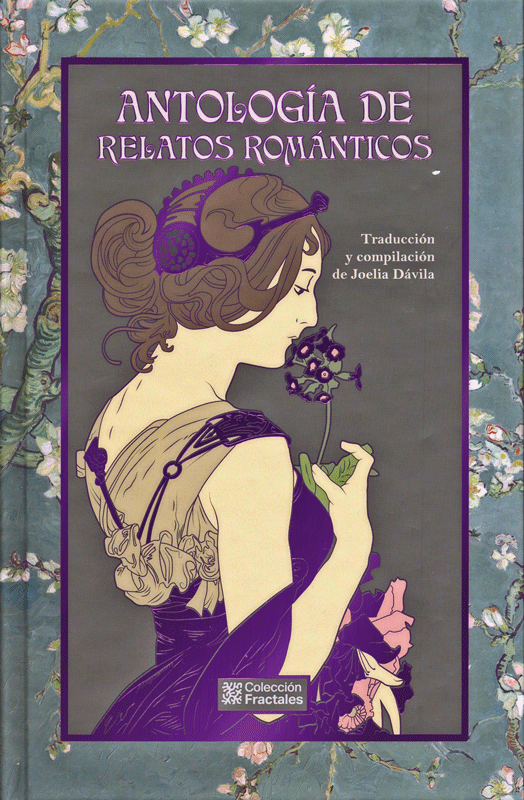
Antología de relatos románticos book cover
Antología de relatos románticos
2023
First Published
2.71
Average Rating
512
Number of Pages
La literatura romántica es un género rico y vigoroso que apela a lo más profundo del alma para construir una cartografía de los sentimientos humanos. En estas páginas concurren grandes autores de la literatura universal, desde Jane Austen hasta Horacio Quiroga, y nos regalan algunas de las historias de amor más extraordinarias en las que nuestras ilusiones y miedos más íntimos encuentran su reflejo en los amores secretos, celos incontrolables, pasiones desbordadas y ensoñaciones fantásticas que albergan los dieciséis relatos de esta recopilación.

Avg Rating
2.71
Number of Ratings
7
5 STARS
14%
4 STARS
14%
3 STARS
29%
2 STARS
14%
1 STARS
29%
goodreads

Authors

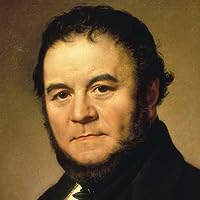
Stendhal
Stendhal
Author · 63 books

Henri-Marie Beyle, better known by his pen name Stendhal, was a 19th-century French writer. Known for his acute analysis of his characters' psychology, he is considered one of the earliest and foremost practitioners of realism in his two novels Le Rouge et le Noir (The Red and the Black, 1830) and La Chartreuse de Parme (The Charterhouse of Parma, 1839).

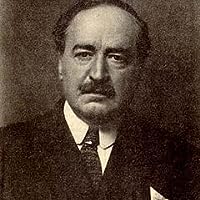
Vicente Blasco Ibanez
Author · 36 books

Vicente Blasco Ibáñez (January 29, 1867 – January 28, 1928) was a Spanish realist novelist writing in Spanish, a screenwriter and occasional film director. Born in Valencia, today he is best known in the English-speaking world for his World War I novel The Four Horsemen of the Apocalypse. He is also known for his political activities. He finished studying law, but hardly practised. He divided his time between politics, literature. He was a fan of Miguel de Cervantes Saavedra. His life, it can be said, tells a more interesting story than his novels. He was a militant Republican partisan in his youth and founded a newspaper, El Pueblo (translated as either The Town or The People) in his hometown. The newspaper aroused so much controversy that it was brought to court many times and censored. He made many enemies and was shot and almost killed in one dispute. The bullet was caught in the clasp of his belt. He had several stormy love affairs. He volunteered as the proofreader for the novel Noli Me Tangere, in which the Filipino patriot José Rizal expressed his contempt of the Spanish colonization of the Philippines. He traveled to Argentina in 1909 where two new cities, Nueva Valencia and Cervantes, were created. He gave conferences on historical events and Spanish literature. Tired and disgusted with government failures and inaction, Vicente Blasco Ibáñez moved to Paris, France at the beginning of World War I. He was a supporter of the Allies in World War I. He died in Menton, France at the age of 61.

Eugenio de Ochoa
Author · 1 book
Eugenio de Ochoa y Montel was a Spanish writer, critic, editor and translator.
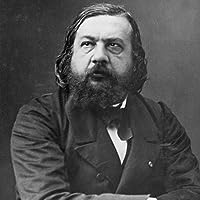
Theophile Gautier
Theophile Gautier
Author · 64 books
Pierre Jules Théophile Gautier was a French poet, dramatist, novelist, journalist, and literary critic. In the 1830 Revolution, he chose to stay with friends in the Doyenné district of Paris, living a rather pleasant bohemian life. He began writing poetry as early as 1826 but the majority of his life was spent as a contributor to various journals, mainly for La Presse, which also gave him the opportunity for foreign travel and meeting many influential contacts in high society and in the world of the arts, which inspired many of his writings including Voyage en Espagne (1843), Trésors d'Art de la Russie (1858), and Voyage en Russie (1867). He was a celebrated abandonnée of the Romantic Ballet, writing several scenarios, the most famous of which is Giselle. His prestige was confirmed by his role as director of Revue de Paris from 1851-1856. During this time, he became a journalist for Le Moniteur universel, then the editorship of influential review L'Artiste in 1856. His works include: Albertus (1830), La Comédie de la Mort (1838), Une Larme du Diable (1839), Constantinople (1853) and L'Art Moderne (1856)
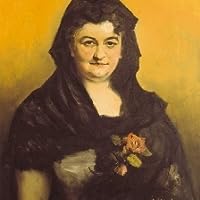
Emilia Pardo Bazán
Emilia Pardo Bazán
Author · 66 books

Emilia Pardo Bazán was a Galician author and scholar from Galicia. She is known for bringing naturalism to Spanish literature, for her detailed descriptions of reality, and for her role in feminist literature of her era. Her first novel, Pascual López (1879), is a simple exercise in fantasy of no remarkable promise, though it contains good descriptive passages of romance. It was followed by a more striking story, Un viaje de novios (1881), in which a discreet attempt was made to introduce into Spain the methods of French realism. The book caused a sensation among the literary cliques, and this sensation was increased by the appearance of another naturalistic tale, La tribuna (1885), wherein the influence of Émile Zola is unmistakable. Meanwhile, the writer's reply to her critics was issued under the title of La cuestion palpitante (1883), a clever piece of rhetoric, but of no special value as regards criticism or dialectics. The best of Emilia Pardo Bazán's work is embodied in Los pazos de Ulloa (1886), the painfully exact history of a decadent aristocratic family. A sequel, with the significant title of La madre naturaleza (1887), marks a further advance in the path of naturalism. She was also a journalist, essayist and critic. She died in Madrid.

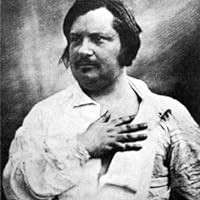
Honore de Balzac
Honore de Balzac
Author · 215 books

Honoré de Balzac was a nineteenth-century French novelist and playwright. His magnum opus was a sequence of almost 100 novels and plays collectively entitled La Comédie humaine, which presents a panorama of French life in the years after the fall of Napoléon Bonaparte in 1815. Due to his keen observation of fine detail and unfiltered representation of society, Balzac is regarded as one of the founders of realism in European literature. He is renowned for his multi-faceted characters; even his lesser characters are complex, morally ambiguous and fully human. Inanimate objects are imbued with character as well; the city of Paris, a backdrop for much of his writing, takes on many human qualities. His writing influenced many famous authors, including the novelists Marcel Proust, Émile Zola, Charles Dickens, Gustave Flaubert, Henry James and Jack Kerouac, as well as important philosophers such as Friedrich Engels. Many of Balzac's works have been made into films, and they continue to inspire other writers. An enthusiastic reader and independent thinker as a child, Balzac had trouble adapting himself to the teaching style of his grammar school. His willful nature caused trouble throughout his life, and frustrated his ambitions to succeed in the world of business. When he finished school, Balzac was apprenticed as a legal clerk, but he turned his back on law after wearying of its inhumanity and banal routine. Before and during his career as a writer, he attempted to be a publisher, printer, businessman, critic, and politician. He failed in all of these efforts. La Comédie Humaine reflects his real-life difficulties, and includes scenes from his own experience. Balzac suffered from health problems throughout his life, possibly due to his intense writing schedule. His relationship with his family was often strained by financial and personal drama, and he lost more than one friend over critical reviews. In 1850, he married Ewelina Hańska, his longtime paramour; he passed away five months later.

Friedrich de la Motte Fouqué
Author · 3 books

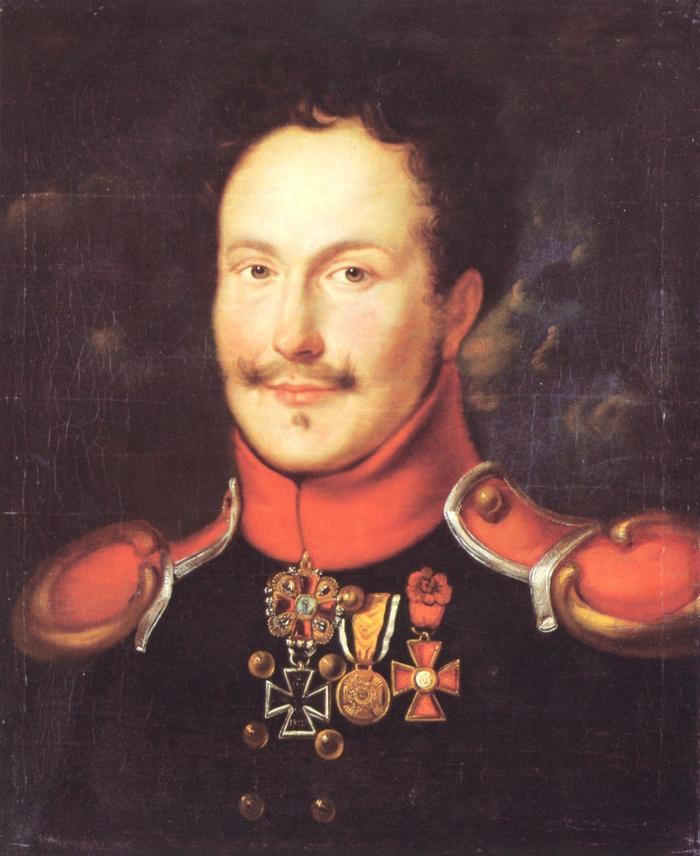
Friedrich Heinrich Karl de la Motte, Baron Fouqué was a German writer of the romantic style. He was born at Brandenburg an der Havel, of a family of French Huguenot origin, as evidenced in his family name. His grandfather, Heinrich August de la Motte Fouqué, had been one of Frederick the Great's generals and his father was a Prussian officer. Although not originally intended for a military career, Friedrich de la Motte Fouqué ultimately gave up his university studies at Halle to join the army, and he took part in the Rhine campaign of 1794. The rest of his life was devoted mainly to literary pursuits. He was introduced to August Wilhelm Schlegel, who deeply influenced him as a poet (mich gelehret Maß und Regel | Meister August Wilhelm Schlegel) and who published Fouqué's first book, Dramatische Spiele von Pellegrin, in 1804. Fouqué's first marriage was unhappy and soon ended in divorce. His second wife, Caroline Philippine von Briest (1773-1831), enjoyed some reputation as a novelist in her day. After her death Fouqué married a third time. Some consolation for the ebbing tide of popular favour was afforded him by the munificence of Frederick William IV of Prussia, who granted him a pension which allowed him to spend his later years in comfort. He died in Berlin in 1843.

Gustavo Adolfo Becquer
Author · 42 books

Gustavo Adolfo Domínguez Bastida, better known as Gustavo Adolfo Bécquer, was a Spanish post-romanticist writer of poetry, short stories, and nonfiction now considered one of the most important figures in Spanish literature. He adopted the alias of Bécquer as his brother Valeriano Bécquer, a painter, had done earlier. He was associated with the post-romanticism movement and wrote while realism was enjoying success in Spain. He was moderately well known during his life, but it was after his death that most of his works were published. He is best known for his intimate, lyrical poems and for his legends; more importantly, he is remembered for the verbal decor with which he impregnated everything he wrote. A Romantic poet above all else, Bécquer infused every single line he wrote with sensorial intensity, and his Legends still serve today as some of the most brilliant examples of prose poetry. Always including elements of the supernatural, Bécquer imbued his legends with a gothic sensibility, depicting gnomes, ghosts, enchanted fortresses and monasteries, and men and women who succumb to vanity or desire. Other lesser-known, but none less valuable, works include his "Cartas Desde mi Celda" ("Letters from my Cell") and "Cartas Literarias a una Mujer" ("Literary Epistles to a Woman") which adopt an intimate, contemplative style similar to Thoreau in "Walden." Here we find him ruminating at length on the subjects that characterize his poetic works: love, the purpose of art, folklore, the seductive pull of ancient ruins—and, of course, women. An essential figure in the canon of Hispanic letters, and an obligatory reading in any Spanish-language High School, he is today considered the founder of modern Spanish lyricism. Bécquer's influence on 20th century poets of the Spanish language is felt in the works of poets such as Octavio Paz, Giannina Braschi, Antonio Machado, Juan Ramón Jiménez, Pablo Neruda and many more.

548 Market St PMB 65688, San Francisco California 94104-5401 USA
© 2026 Paratext Inc. All rights reserved