Margins




548 Market St PMB 65688, San Francisco California 94104-5401 USA
© 2026 Paratext Inc. All rights reserved
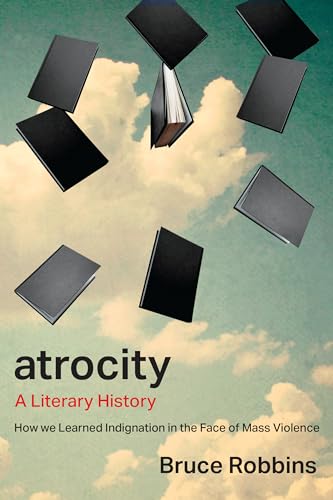
Exploring literary representations of mass violence, Robbins traces the emergence of a cosmopolitan recognition of atrocity. Mass violence did not always have a name. Like conquest, atrocity was not always seen as violating a moral norm or inviting indignation. Could the concept of atrocity even exist before people could accuse their own country of mass violence committed against the inhabitants of another country? Drawing on a vast archive, Bruce Robbins seeks to give atrocity a literary history. With penetrating insight, Robbins takes up such literary representations of atrocity as Bartolomé de las Casas' account of his fellow Spaniards' atrocities, Kurt Vonnegut's Slaughterhouse-Five, Grimmelshausen's 1668 novel Simplicissimus, David Mitchell's Cloud Atlas, Gabriel García Márquez's One Hundred Years of Solitude, Homero Aridjis' short novel Smyrna in Flames, and Tolstoy's Hadji Murat. What's achieved is a profound exploration of the longer trajectory of the emergence of abhorrence and indignation in the face of mass violence and a critical examination of the conditions for the emergence of cosmopolitanism―the ability to look at your own nation with the critical eyes of a stranger. In the presence of atrocity, what we want most is for someone to bear witness. What is it literature can do with atrocity that simple testimony cannot? Robbins answers by showing how literature goes beyond the legal paradigm of accusation. Meanwhile, venturing from the Bible to Zadie Smith, Robbins pursues the bold proposition that, in the midst of relentlessly repetitive slaughter and nameless, shapeless, irredeemable suffering, humanity's moral history might include a cosmopolitan arc.