Margins
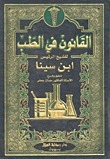
Avicenna's Medicine book cover
Avicenna's Medicine
A New Translation of the 11th-Century Canon with Practical Applications for Integrative Health Care
1025
First Published
4.31
Average Rating
643
Number of Pages
Ibn Sina's famous Canon of Medicine ( Qanun fi al-tibb ) comes to life in English with this translation. It is a clear and ordered Summa of all the medical knowledge of Ibn Sina's time augmented from his own observations. It is divided into five books. The first contains generalities concerning the human body, sickness, health and general treatment and therapeutics (the only volume translated here). The second contains the materia medica and the pharmacology of herbs. Three methods agreement, difference and concomitant variations are usually regarded as characteristic of modern science. The third book deals with special pathology, studied by organs, or rather by systems. The fourth book opens with the famous treatise on fevers; then follow the treatise on signs, symptoms, diagnostics and prognostics, minor surgery, tumors, wounds, fractures and bites and that on poisons. The fifth book contains the pharmacopoeia. Because the Canon constituted a monumental unity which maintained its authority until modern times it served as a basis for 700 years of medical teaching and practice and is a proven alternative medicine technique.

Avg Rating
4.31
Number of Ratings
268
5 STARS
58%
4 STARS
25%
3 STARS
10%
2 STARS
4%
1 STARS
3%
goodreads

Author

Avicenna
Avicenna
Author · 18 books

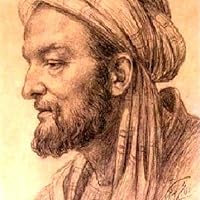
(Arabic: ابن سينا) Abū ‘Alī al-Ḥusayn ibn ‘Abd Allāh ibn Sīnā, known as Abū Alī Sīnā (Persian: ابوعلی سینا، پورسینا) or, more commonly, Ibn Sīnā or Pour Sina, but most commonly known in English by his Latinized name Avicenna (Greek: Aβιτζιανός, Avitzianós), (c. 980 - 1037) was a polymath of Persian origin and the foremost physician and philosopher of his time. He was also an astronomer, chemist, geologist, Hafiz,, logician, paleontologist, mathematician, Maktab teacher, physicist, poet, and scientist. Ibn Sīnā studied medicine under a physician named Koushyar. He wrote almost 450 treatises on a wide range of subjects, of which around 240 have survived. In particular, 150 of his surviving treatises concentrate on philosophy and 40 of them concentrate on medicine. His most famous works are The Book of Healing, a vast philosophical and scientific encyclopaedia, and The Canon of Medicine, which was a standard medical text at many medieval universities. The Canon of Medicine was used as a text-book in the universities of Montpellier and Louvain as late as 1650. Ibn Sīnā's Canon of Medicine provides a complete system of medicine according to the principles of Galen (and Hippocrates). ابن سينا هو أبو علي الحسين بن عبد الله بن الحسن بن علي بن سينا، عالم اشتهر بالطب والفلسفة واشتغل بهما. ولد في قرية (أفشنة) بالقرب من بخارى (في أوزبكستان حاليا) من أب من مدينة بلخ (في أفغانستان حاليا) و أم قروية سنة 370هـ (980م) وتوفي في مدينة همدان (في إيران حاليا) سنة 427هـ (1037م). عرف باسم الشيخ الرئيس وسماه الغربيون بأمير الأطباء و أبو الطب الحديث. وقد ألّف 200 كتاب في مواضيع مختلفة، العديد منها يركّز على الفلسفة والطب. إن ابن سينا هو من أول من كتب عن الطبّ في العالم ولقد اتبع نهج أو أسلوب أبقراط و جالينوس. وأشهر أعماله كتاب الشفاء وكتاب القانون في الطب.

548 Market St PMB 65688, San Francisco California 94104-5401 USA
© 2025 Paratext Inc. All rights reserved