


Margins
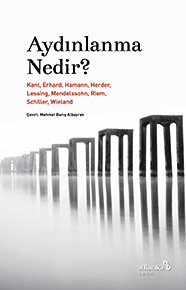
Aydınlanma Nedir? book cover
Aydınlanma Nedir?
2022
First Published
4.25
Average Rating
92
Number of Pages

Kant'ın en kısa ve öz metinlerinden olmakla birlikte, aynı zamanda Kant düşüncesinin yoğun, kritik ağırlıklı dokusundan kışkırtıcı retoriğiyle sıyrılan "Aydınlanma Nedir?"in, aydınlanma düşüncesinin büyüleyici ve zorlayıcı bir temel metni olduğu bugün hemen herkesçe kabul edilen bir gerçektir. Bu kitap, Kant'ın "Aydınlanma Nedir?" makalesi başta olmak üzere, bu soruya çeşitli şekillerde temas etmiş yahut cevap vermiş Erhard, Hamann, Herder, Lessing, Mendelssohn, Riem, Schiller, Wieland gibi önemli Alman düşünürlerin görüşlerinin bir derlemesini sunmaktadır. Kitap, Kant veya aydınlanma felsefesinin yanı sıra siyaset ve tarih gibi disiplinlerde araştırma yapan her okur için temel bir kaynaktır.
Avg Rating
4.25
Number of Ratings
12
5 STARS
50%
4 STARS
25%
3 STARS
25%
2 STARS
0%
1 STARS
0%
goodreads

Authors

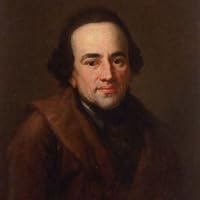
Moses Mendelssohn
Moses Mendelssohn
Author · 2 books

Moses Mendelssohn was a German Jewish philosopher to whose ideas the Haskalah (the 'Jewish enlightenment' of the eighteenth and nineteenth centuries) is indebted. Although himself a practicing orthodox Jew, he has been referred to as the father of Reform Judaism. Born to a poor Jewish family in Dessau and originally destined for a rabbinical career, Mendelssohn educated himself in German thought and literature and from his writings on philosophy and religion came to be regarded as a leading cultural figure of his time by both Germans and Jews. He also established himself as an important figure in the Berlin textile industry, which was the foundation of his family's wealth. Moses Mendelssohn's descendants include the composers Fanny and Felix Mendelssohn and the founders of the Mendelssohn & Co. banking house.

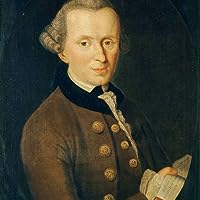
Immanuel Kant
Immanuel Kant
Author · 76 books

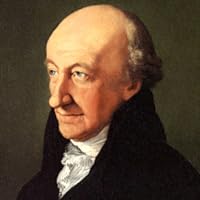
Immanuel Kant was an 18th-century philosopher from Königsberg, Prussia (now Kaliningrad, Russia). He's regarded as one of the most influential thinkers of modern Europe & of the late Enlightenment. His most important work is The Critique of Pure Reason, an investigation of reason itself. It encompasses an attack on traditional metaphysics & epistemology, & highlights his own contribution to these areas. Other main works of his maturity are The Critique of Practical Reason, which is about ethics, & The Critique of Judgment, about esthetics & teleology. Pursuing metaphysics involves asking questions about the ultimate nature of reality. Kant suggested that metaphysics can be reformed thru epistemology. He suggested that by understanding the sources & limits of human knowledge we can ask fruitful metaphysical questions. He asked if an object can be known to have certain properties prior to the experience of that object. He concluded that all objects that the mind can think about must conform to its manner of thought. Therefore if the mind can think only in terms of causality–which he concluded that it does–then we can know prior to experiencing them that all objects we experience must either be a cause or an effect. However, it follows from this that it's possible that there are objects of such a nature that the mind cannot think of them, & so the principle of causality, for instance, cannot be applied outside experience: hence we cannot know, for example, whether the world always existed or if it had a cause. So the grand questions of speculative metaphysics are off limits, but the sciences are firmly grounded in laws of the mind. Kant believed himself to be creating a compromise between the empiricists & the rationalists. The empiricists believed that knowledge is acquired thru experience alone, but the rationalists maintained that such knowledge is open to Cartesian doubt and that reason alone provides us with knowledge. Kant argues, however, that using reason without applying it to experience will only lead to illusions, while experience will be purely subjective without first being subsumed under pure reason. Kant’s thought was very influential in Germany during his lifetime, moving philosophy beyond the debate between the rationalists & empiricists. The philosophers Fichte, Schelling, Hegel and Schopenhauer saw themselves as correcting and expanding Kant's system, thus bringing about various forms of German Idealism. Kant continues to be a major influence on philosophy to this day, influencing both Analytic and Continental philosophy.

Gotthold Ephraim Lessing
Author · 22 books

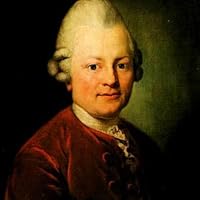
Gotthold Ephraim Lessing was a German writer, philosopher, dramatist, publicist, and art critic, and one of the most outstanding representatives of the Enlightenment era. His plays and theoretical writings substantially influenced the development of German literature. He is widely considered by theatre historians to be the first dramaturg. Lessing was born in Kamenz, a small town in Saxony. His father was a clergyman and the author of theological writings. After visiting Latin School in Kamenz (from 1737 onwards) and the Fürstenschule St. Afra in Meissen (from 1741 onwards) he studied theology and medicine in Leipzig (1746–1748). From 1748 to 1760 he lived in Leipzig and Berlin and worked as reviewer and editor for, amongst others, the Vossische Zeitung. In 1752 he took his Master's degree in Wittenberg. From 1760 to 1765 he worked in Breslau (now Wrocław) as secretary to General Tauentzien. In 1765 he returned to Berlin, only to leave again in 1767 to work for three years as a dramaturg and adviser at the German National Theatre in Hamburg. There he met Eva König, his future wife. In 1770 Lessing became a librarian at the Herzog-August-Bibliothek in Wolfenbüttel. His tenure there was interrupted by many travels. For example, in 1775 he journeyed to Italy accompanied by Prince Leopold. In 1771 Lessing was initiated into Freemasonry in the lodge "Zu den drei Rosen" in Hamburg. In 1776 he married Eva König, who was then a widow, in Jork (near Hamburg). She died in 1778 after giving birth to a short-lived son. On 15 February 1781, Lessing, aged 52, died during a visit to the wine dealer Angott in Brunswick. Lessing was also famous for his friendship with Jewish-German philosopher Moses Mendelssohn. In his celebrated biography of Mendelssohn's famous grandson, Felix, Larry Todd describes their friendship as one of the most "illuminating metaphors [for] the clarion call of the Enlightenment for religious tolerance". Lessing was a poet, philosopher and critic. His theoretical and critical writings are remarkable for their often witty and ironic style and their unerring polemics. Hereby the stylistic device of dialogue met with his intention of looking at a thought from different angles and searching for elements of truth even in the arguments made by his opponents. For him this truth was never solid or something which could be owned by someone but always a process of approaching. Early in his life, Lessing showed interest in the theatre. In his theoretical and critical writings on the subject—as in his own plays—he tried to contribute to the development of a new bourgeois theatre in Germany. With this he especially turned against the then predominant literary theory of Gottsched and his followers. He particularly criticized the simple imitation of the French example and pleaded for a recollection of the classic theorems of Aristotle and for a serious reception of Shakespeare's works. He worked with many theatre groups (e.g. the one of the Neuberin). In Hamburg he tried with others to set up the German National Theatre. Today his own works appear as prototypes of the later developed bourgeois German drama. Scholars generally see Miß Sara Sampson and Emilia Galotti as the first bourgeois tragedies, Minna von Barnhelm (Minna of Barnhelm) as the model for many classic German comedies, Nathan the Wise (Nathan der Weise) as the first German drama of ideas ("Ideendrama"). His theoretical writings Laocoon and Hamburg Dramaturgy (Hamburgische Dramaturgie) set the standards for the discussion of aesthetic and literary theoretical principles. Lessing advocated that dramaturgs should carry their work out working directly with theatre companies rather than in isolation. In his religious and philosophical writings he defended the faithful Christian's right for freedom of thought. He argued against the belief in revelation and the holding on to a literal

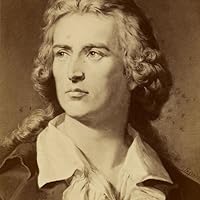
Friedrich Schiller
Friedrich Schiller
Author · 54 books

People best know long didactic poems and historical plays, such as Don Carlos (1787) and William Tell (1804), of leading romanticist German poet, dramatist, and historian Johann Christoph Friedrich von Schiller. This philosopher and dramatist struck up a productive if complicated friendship with already famous and influential Johann Wolfgang von Goethe during the last eighteen years of his life and encouraged Goethe to finish works that he left merely as sketches; they greatly discussed issues concerning aesthetics and thus gave way to a period, now referred to as classicism of Weimar. They also worked together on Die Xenien ( The Xenies ), a collection of short but harsh satires that verbally attacked perceived enemies of their aesthetic agenda. https://en.wikipedia.org/wiki/Friedri...

Johann Georg Hamann
Johann Georg Hamann
Author · 3 books

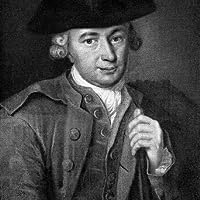
Johann Georg Hamann (August 27, 1730, Königsberg – June 21, 1788, Münster) was an important German philosopher, a main proponent of the Sturm und Drang movement, and associated by historian of ideas Isaiah Berlin with the Counter-Enlightenment. He was Pietist Lutheran, and a friend (while being an intellectual opponent) of the philosopher Immanuel Kant. He was also a lutenist, having studied this instrument with Timofey Belogradsky (a student of Sylvius Leopold Weiss), a Ukrainian virtuoso then living in Königsberg. He was known by the epithet Magus im Norden ("Magus of the North"). His distrust of reason and the Enlightenment ("I look upon logical proofs the way a well-bred girl looks upon a love letter" was one of his many witicisms) led him to conclude that faith in God was the only solution to the vexing problems of philosophy.

Christoph Martin Wieland
Author · 6 books
Christoph Martin Wieland (1733 – 1813) was a German poet and writer.
548 Market St PMB 65688, San Francisco California 94104-5401 USA
© 2026 Paratext Inc. All rights reserved