Margins
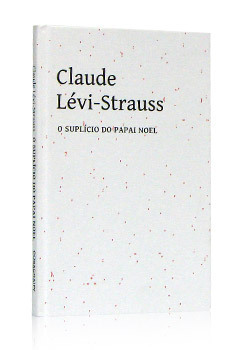
Babbo Natale giustiziato. Una riflessione sul personaggio Babbo Natale, scaturita da un fatto di cronaca book cover
Babbo Natale giustiziato. Una riflessione sul personaggio Babbo Natale, scaturita da un fatto di cronaca
1952
First Published
3.76
Average Rating
81
Number of Pages
«Il fatto di cronaca esaminato da Lévi-Strauss in Babbo Natale giustiziato - scrive l'antropologo Buttitta nello studio sul significato del ritorno dei morti che introduce il volume - non è meno significativo per intendere la complessità dei percorsi attraverso i quali certe strutture ideologiche persistono rifunzionalizzandosi. Lo studioso considerando la notizia che davanti alla cattedrale di Digione per iniziativa di solerti fedeli, era stato bruciato un simulacro di Babbo Natale per poi essere risuscitato in Municipio per iniziativa delle autorità comunali, capisce che non si tratta di un semplice fatto di cronaca. L'idea di una figura divina la cui morte è necessaria per rigenerare il tempo cioè la vita, è un complemento dello schema mitico nel quale il ruolo di mediazione risolutiva è assolto dai morti e dal loro inverso speculare costituito dai bambini».

Avg Rating
3.76
Number of Ratings
128
5 STARS
26%
4 STARS
33%
3 STARS
33%
2 STARS
9%
1 STARS
0%
goodreads

Author

Claude Levi-Strauss
Claude Levi-Strauss
Author · 27 books

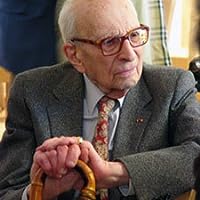
Claude Lévi-Strauss was a French anthropologist, well-known for his development of structural anthropology. He was born in Belgium to French parents who were living in Brussels at the time, but he grew up in Paris. His father was an artist, and a member of an intellectual French Jewish family. Lévi-Strauss studied at the University of Paris. From 1935-9 he was Professor at the University of Sao Paulo making several expeditions to central Brazil. Between 1942-1945 he was Professor at the New School for Social Research. In 1950 he became Director of Studies at the Ecole Practique des Hautes Etudes. In 1959 Lévi-Strauss assumed the Chair of Social Anthroplogy at the College de France. His books include The Raw and the Cooked, The Savage Mind, Structural Anthropology and Totemism (Encyclopedia of World Biography). Some of the reasons for his popularity are in his rejection of history and humanism, in his refusal to see Western civilization as privileged and unique, in his emphasis on form over content and in his insistence that the savage mind is equal to the civilized mind. Lévi-Strauss did many things in his life including studying Law and Philosophy. He also did considerable reading among literary masterpieces, and was deeply immersed in classical and contemporary music. Lévi-Strauss was awarded the Wenner-Gren Foundation's Viking Fund Medal for 1966 and the Erasmus Prize in 1975. He was also awarded four honorary degrees from Oxford, Yale, Havard and Columbia. Strauss held several memberships in institutions including the National Academy of Sciences, the American Academy and Institute of Arts and Letters, the American Academy of Arts and Sciences, and the American Philosophical Society (Encyclopedia of World Biography).

548 Market St PMB 65688, San Francisco California 94104-5401 USA
© 2026 Paratext Inc. All rights reserved