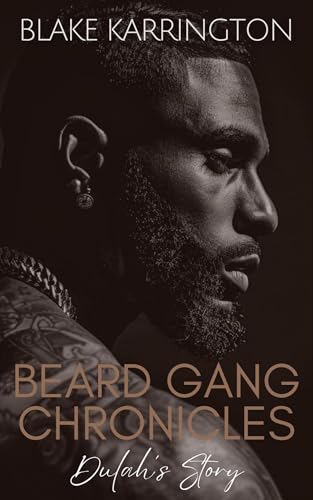
“Dulah’s & Mia’s Urban Love Story” Dulah came from the mud—no silver spoon, no handouts. Just hunger. And when that hunger pushed him to hit a lick that went sideways, he caught a murder and a twenty-five-year bid. Locked down but never laid down, Dulah linked with Vito, the prison’s silent kingpin. Who wasn’t just moving weight—he was moving power. Vito decides to recruit Dulah into the Beard a secret society of high-class hustlers who catered to the cravings of rich women. Behind bars, Dulah ran up racks without ever touching the streets. Blessed with an early release, he steps out with a new mindset and a new plug—Nic, the gatekeeper to the outside hustle. But the streets ain’t the same, and neither is Dulah. One job turns into a setup, and just like that, he’s knee-deep in a mess that smells like betrayal. That’s when Mia walks in—bad, bold, and everything he didn’t know he needed. But love in this game? That’s a gamble. Dulah slips, letting his heart lead instead of his hustle. And when emotions mix with street politics, the fallout could be deadly.

Author

Blake Karrington is more than an author. He’s a storyteller who places his readers in action-filled moments. It’s in these creative spaces that readers are allowed to get to know his complex characters as if they’re really alive. Most of Blake’s titles are in the South in urban settings that are often overlooked by the mainstream. But through Blake’s eyes, readers quickly learn that places like Charlotte, NC can be as gritty as they come. It’s in these streets of this oft overlooked world where Blake portrays murderers and thieves alike as believable characters. Without judgement, he weaves humanizing backstories that serve up compelling reasons for why a drug dealer might choose a life of crime. Readers of speak of the roller coaster ride of emotions that ensues from feeling anger at empathetic characters who always seem to do the wrong thing at the right to keep the story moving forward. In terms of setting,Blake’s stories introduce his readers to spaces they may or may not be used to - streetscapes with unkept, cracked sidewalks where poverty prevails, times are depressed and people are broke and desperate. In Blake storytelling space, morality is so curved that rooting for bad guys to get away with murder can sometimes seem like the right thing for the reader to do - even when it’s not. Readers who connect with Blake find him to be relatable. Likening him to a bad-boy gone good, they see a storyteller who writes as if he’s lived in world’s he generously shares, readily conveying his message that humanity is everywhere, especially in the unlikely, mean streets of cities like Charlotte.