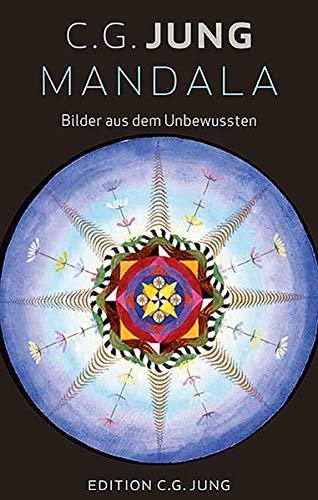



Das Rote Buch mit seinen spektakulären Bildern hat bei vielen Menschen ein grosses Interesse an C. G. Jung geweckt - nicht an Jung, dem grossen Arzt und Tiefenpsychologen, sondern an Jung, dem Schöpfer eindrucksvoller Bilder und Kalligraphien. Dieser neue, aufwändig gestaltete Bildband bietet einen weiteren umfassenden Eindruck von C. G. Jungs gestalterischer Tätigkeit. Jung selbst hatte sich immer wieder dagegen verwehrt, dass Bilder und Gestaltungen von ihm als »Kunst« bezeichnet werden. Die in diesem Band versammelten Bilder, Zeichnungen und Skulpturen zeugen jedoch von seiner grossen künstlerischen Schaffenskraft und seinem beeindruckenden Gespür für Form und Farbe. Fünf Textbeiträge bieten umfassende Erläuterungen u.a. zu Jungs Mandala-Zeichnungen, seiner Arbeitsweise im Roten Buch, seinen Farbkonzepten sowie seiner Bedeutung als Sammler. Ein Buch, das mit seinen ausdrucksstarken Bildern die Welt des Unbewussten nahebringt C. G. Jung, 1875–1961, war einer der Begründer der modernen Tiefenpsychologie und gehört zu den grössten Psychoanalytikern des 20. Jahrhunderts. Nach der Trennung von seinem Lehrer Sigmund Freud entwickelte er seine eigene »Analytische Psychologie«.
Author

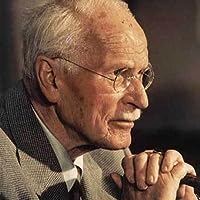
Carl Gustav Jung (/jʊŋ/; German: [ˈkarl ˈɡʊstaf jʊŋ]), often referred to as C. G. Jung, was a Swiss psychiatrist and psychotherapist who founded analytical psychology. Jung proposed and developed the concepts of extraversion and introversion; archetypes, and the collective unconscious. His work has been influential in psychiatry and in the study of religion, philosophy, archeology, anthropology, literature, and related fields. He was a prolific writer, many of whose works were not published until after his death. The central concept of analytical psychology is individuation—the psychological process of integrating the opposites, including the conscious with the unconscious, while still maintaining their relative autonomy. Jung considered individuation to be the central process of human development. Jung created some of the best known psychological concepts, including the archetype, the collective unconscious, the complex, and synchronicity. The Myers-Briggs Type Indicator (MBTI), a popular psychometric instrument, has been developed from Jung's theory of psychological types. Though he was a practising clinician and considered himself to be a scientist, much of his life's work was spent exploring tangential areas such as Eastern and Western philosophy, alchemy, astrology, and sociology, as well as literature and the arts. Jung's interest in philosophy and the occult led many to view him as a mystic, although his ambition was to be seen as a man of science. His influence on popular psychology, the "psychologization of religion", spirituality and the New Age movement has been immense.