Margins




548 Market St PMB 65688, San Francisco California 94104-5401 USA
© 2026 Paratext Inc. All rights reserved
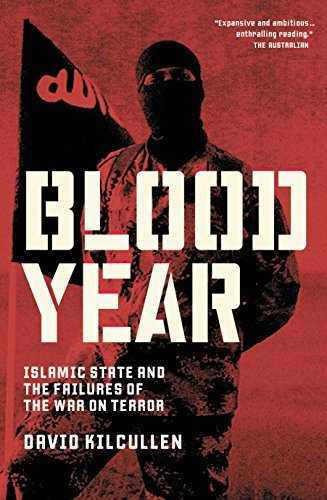
A key Australian participant in the battle against terrorism gives a riveting, up-to-date account of the rise of ISIS, and what it means. We have seen a 'blood year' in the Middle East – massacres and beheadings, fallen cities, collapsed and collapsing states, the unravelling of a decade of Western strategy. We saw the rise of ISIS, the splintering of government in Iraq, and a brutal Syrian civil war that grows ever worse. What went wrong? In this updated and vastly expanded version of his bestselling Quarterly Essay, David Kilcullen calls on twenty-five years' experience to answer that question. Kilcullen looks to strategy and history to make sense of the crisis. What are the roots and causes of the global jihad movement? What is ISIS? What threats does it pose to Australia? What does its rise say about the effectiveness of the War on Terror since 9/11, and what does a coherent strategy look like after a disastrous year? Blood Year is a vivid, urgent account of the War on Terror by a thinker who helped shape its strategy, and who witnessed its evolution on the ground. ‘We're now in the fifteenth year since 9/11 and, horrible as it is to contemplate, we may be nowhere close to the end of the War on Terror. For a while, it looked like things were improving: we were getting on top of the threat. But that was before ISIS began crucifying children, before the Taliban came back out of the mountains to seize the cities, before the bodies began washing up on the beaches, before the first Russian cluster bomb fell on a Syrian village.’—David Kilcullen, Blood Year