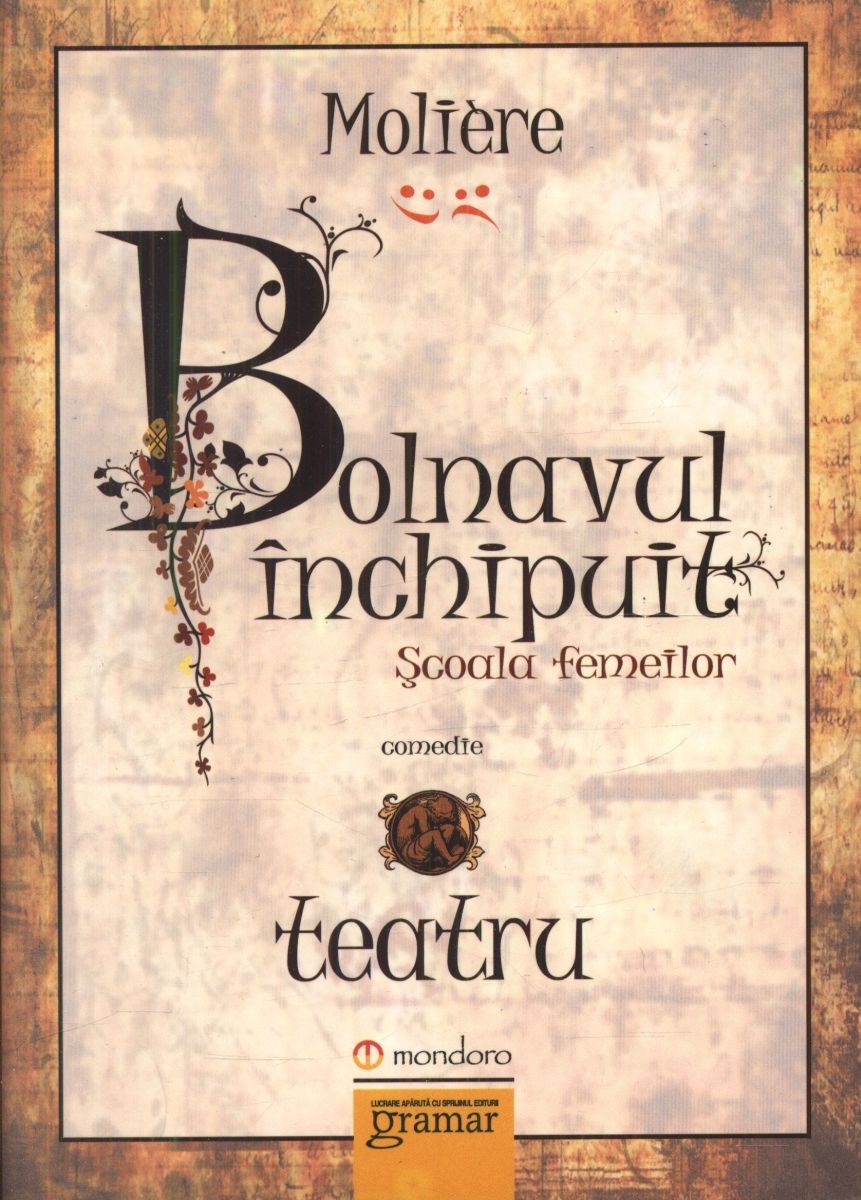
In ziua de 17 februarie 1673, mai bolnav ca niciodata, trebuia sa joace pentru a patra oara rolul lui ARGAN din "Bolnavul inchipuit". Cu toate staruintele prietenilor, el a continuat sa joace. La sfarsitul actului al treilea i-a venit rau, cazand in nesimtire. Dupa cateva ore, sufletul sau a intrat in nemurire. Bolnavul închipuit (în franceză Le Malade imaginaire) este o comedie-balet, ultima creație a lui Moliere, operă aflată la limita dintre comic și tragic. Nota de final este dată de dispariția autorului, care a murit la a patra reprezentație a ei. Bolnav, el s-a apărat prin râs de propriile slăbiciuni fizice dar și de teama de moarte. Solicitat în mod frecvent la curte, dar împins și de plăcerea sa de a crea spectacole pline de fast, pe gustul regelui, Moliere realiza și juca roluri de prim rang în propriile comedii-balet cu o vădită plăcere. Bolnavul închipuit este un tip ilustrativ de operă de acest gen, jucată în plin carnaval (10 februarie 1673) pe scena de la Palais Royal. Prologul însoțit de cuvenita reverență față de rege, scenele alegorice, versurile de tip pastoral, cântecele, totul arată că autorul a conceput un spectacol de mare amuzament. Datorită conflictelor cu Lully, muzica a fost compusă de Charpentier. Pentru Moliere spectacolul a fost un cântec de lebădă. Grav bolnav, el nu acceptă să nu joace. După cea de-a patra reprezentație, pe 17 februarie 1673, are un acces de hemoptizie și moare după spectacol.
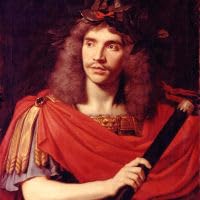
Author

Jean-Baptiste Poquelin, also known by his stage name, Molière, was a French playwright and actor who is considered one of the greatest masters of comedy in Western literature. Among Molière's best-known dramas are Le Misanthrope, (The Misanthrope), L'Ecole des femmes (The School for Wives), Tartuffe ou l'Imposteur, (Tartuffe or the Hypocrite), L'Avare ou l'École du mensonge (The Miser), Le Malade imaginaire (The Imaginary Invalid), and Le Bourgeois Gentilhomme (The Bourgeois Gentleman). From a prosperous family and having studied at the Jesuit Clermont College (now Lycée Louis-le-Grand), Molière was well suited to begin a life in the theatre. Thirteen years as an itinerant actor helped to polish his comic abilities while he also began writing, combining Commedia dell'Arte elements with the more refined French comedy. Through the patronage of a few aristocrats including the brother of Louis XIV, Molière procured a command performance before the King at the Louvre. Performing a classic play by Pierre Corneille and a farce of his own, Le Docteur amoureux (The Doctor in Love), Molière was granted the use of Salle du Petit-Bourbon at the Louvre, a spacious room appointed for theatrical performances. Later, Molière was granted the use of the Palais-Royal. In both locations he found success among the Parisians with plays such as Les Précieuses ridicules (The Affected Ladies), L'École des maris (The School for Husbands) and L'École des femmes (The School for Wives). This royal favour brought a royal pension to his troupe and the title "Troupe du Roi" (The King's Troupe). Molière continued as the official author of court entertainments. Though he received the adulation of the court and Parisians, Molière's satires attracted criticisms from moralists and the Church. Tartuffe ou l'Imposteur (Tartuffe or the Hypocrite) and its attack on religious hypocrisy roundly received condemnations from the Church while Don Juan was banned from performance. Molière's hard work in so many theatrical capacities began to take its toll on his health and, by 1667, he was forced to take a break from the stage. In 1673, during a production of his final play, Le Malade imaginaire (The Imaginary Invalid), Molière, who suffered from pulmonary tuberculosis, was seized by a coughing fit and a haemorrhage while playing the hypochondriac Argan. He finished the performance but collapsed again soon after, and died a few hours later. In his time in Paris, Molière had completely reformed French comedy.