Margins
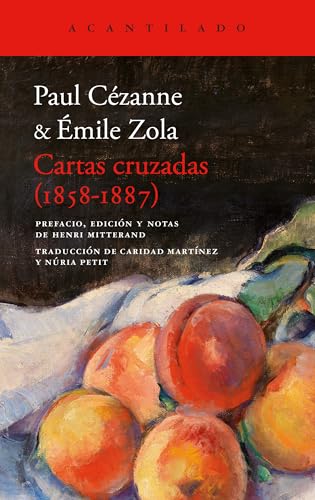
Cartas cruzadas (1858-1887) book cover
Cartas cruzadas (1858-1887)
2025
First Published
4.00
Average Rating
528
Number of Pages
Avg Rating
4.00
Number of Ratings
1
5 STARS
0%
4 STARS
100%
3 STARS
0%
2 STARS
0%
1 STARS
0%
goodreads

Authors

Emile Zola
Emile Zola
Author · 110 books

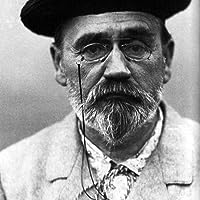
Émile François Zola was an influential French novelist, the most important example of the literary school of naturalism, and a major figure in the political liberalization of France. More than half of Zola's novels were part of a set of 20 books collectively known as Les Rougon-Macquart. Unlike Balzac who in the midst of his literary career resynthesized his work into La Comédie Humaine, Zola from the start at the age of 28 had thought of the complete layout of the series. Set in France's Second Empire, the series traces the "environmental" influences of violence, alcohol and prostitution which became more prevalent during the second wave of the Industrial Revolution. The series examines two branches of a family: the respectable (that is, legitimate) Rougons and the disreputable (illegitimate) Macquarts for five generations. As he described his plans for the series, "I want to portray, at the outset of a century of liberty and truth, a family that cannot restrain itself in its rush to possess all the good things that progress is making available and is derailed by its own momentum, the fatal convulsions that accompany the birth of a new world." Although Zola and Cézanne were friends from childhood, they broke in later life over Zola's fictionalized depiction of Cézanne and the Bohemian life of painters in his novel L'Œuvre (The Masterpiece, 1886). From 1877 with the publication of L'Assommoir, Émile Zola became wealthy, he was better paid than Victor Hugo, for example. He became a figurehead among the literary bourgeoisie and organized cultural dinners with Guy de Maupassant, Joris-Karl Huysmans and other writers at his luxurious villa in Medan near Paris after 1880. Germinal in 1885, then the three 'cities', Lourdes in 1894, Rome in 1896 and Paris in 1897, established Zola as a successful author. The self-proclaimed leader of French naturalism, Zola's works inspired operas such as those of Gustave Charpentier, notably Louise in the 1890s. His works, inspired by the concepts of heredity (Claude Bernard), social manichaeism and idealistic socialism, resonate with those of Nadar, Manet and subsequently Flaubert.

Paul Cezanne
Paul Cezanne
Author · 4 books

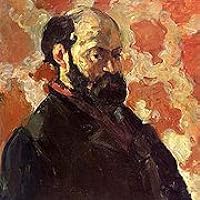
Paul Cézanne was a French artist and Post-Impressionist painter whose work laid the foundations of the transition from the 19th century conception of artistic endeavour to a new and radically different world of art in the 20th century. Cézanne can be said to form the bridge between late 19th century Impressionism and the early 20th century's new line of artistic enquiry, Cubism. The line attributed to both Matisse and Picasso that Cézanne "is the father of us all" cannot be easily dismissed. Cézanne's work demonstrates a mastery of design, colour, composition and draftsmanship. His often repetitive, sensitive and exploratory brushstrokes are highly characteristic and clearly recognizable. He used planes of colour and small brushstrokes that build up to form complex fields, at once both a direct expression of the sensations of the observing eye and an abstraction from observed nature. The paintings convey Cézanne's intense study of his subjects, a searching gaze and a dogged struggle to deal with the complexity of human visual perception.

548 Market St PMB 65688, San Francisco California 94104-5401 USA
© 2026 Paratext Inc. All rights reserved