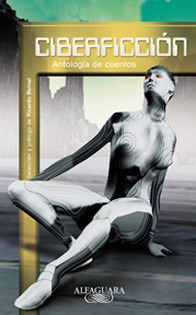



- La segunda variedad (Philip K. Dick, 1953) - La muchacha que estaba conectada (James Tiptree Jr., 1974) - Perdido en el banco de memoria (John Varley, 1980) - Regiones apartadas (William Gibson, 1981): - Quemando cromo (Wiliam Gibson, 1982)
Authors

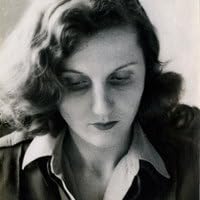
"James Tiptree Jr." was born Alice Bradley in Chicago in 1915. Her mother was the writer Mary Hastings Bradley; her father, Herbert, was a lawyer and explorer. Throughout her childhood she traveled with her parents, mostly to Africa, but also to India and Southeast Asia. Her early work was as an artist and art critic. During World War II she enlisted in the Army and became the first American female photointelligence officer. In Germany after the war, she met and married her commanding officer, Huntington D. Sheldon. In the early 1950s, both Sheldons joined the then-new CIA; he made it his career, but she resigned in 1955, went back to college, and earned a Ph.D. in experimental psychology. At about this same time, Alli Sheldon started writing science fiction. She wrote four stories and sent them off to four different science fiction magazines. She did not want to publish under her real name, because of her CIA and academic ties, and she intended to use a new pseudonym for each group of stories until some sold. They started selling immediately, and only the first pseudonym—"Tiptree" from a jar of jelly, "James" because she felt editors would be more receptive to a male writer, and "Jr." for fun—was needed. (A second pseudonym, "Raccoona Sheldon," came along later, so she could have a female persona.) Tiptree quickly became one of the most respected writers in the field, winning the Hugo Award for The Girl Who was Plugged In and Houston, Houston, Do You Read?, and the Nebula Award for "Love is the Plan, the Plan is Death" and Houston, Houston. Raccoona won the Nebula for "The Screwfly Solution," and Tiptree won the World Fantasy Award for the collection Tales from the Quintana Roo. The Tiptree fiction reflects Alli Sheldon's interests and concerns throughout her life: the alien among us (a role she portrayed in her childhood travels), the health of the planet, the quality of perception, the role of women, love, death, and humanity's place in a vast, cold universe. The Otherwise Award (formerly the Tiptree Award) has celebrated science fiction that "expands and explores gender roles" since 1991. Alice Sheldon died in 1987 by her own hand. Writing in her first book about the suicide of Hart Crane, she said succinctly: "Poets extrapolate." Julie Phillips wrote her biography, James Tiptree, Jr.: The Double Life of Alice B. Sheldon

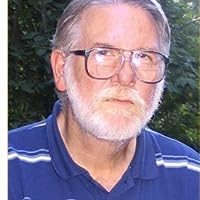
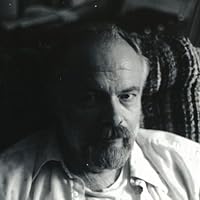
Full name: John Herbert Varley. John Varley was born in Austin, Texas. He grew up in Fort Worth, Texas, moved to Port Arthur in 1957, and graduated from Nederland High School. He went to Michigan State University. He has written several novels and numerous short stories.He has received both the Hugo and Nebula awards.

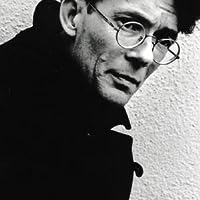
Librarian Note: There is more than one author in the Goodreads database with this name. See this thread for more information. William Ford Gibson is an American-Canadian writer who has been called the father of the cyberpunk subgenre of science fiction, having coined the term cyberspace in 1982 and popularized it in his first novel, Neuromancer (1984), which has sold more than 6.5 million copies worldwide. While his early writing took the form of short stories, Gibson has since written nine critically acclaimed novels (one in collaboration), contributed articles to several major publications, and has collaborated extensively with performance artists, filmmakers and musicians. His thought has been cited as an influence on science fiction authors, academia, cyberculture, and technology. ————————————————- William Gibson. (2007, October 17). In Wikipedia, The Free Encyclopedia. Retrieved 20:30, October 19, 2007, from http://en.wikipedia.org/w/index.php?t...

Philip K. Dick was born in Chicago in 1928 and lived most of his life in California. In 1952, he began writing professionally and proceeded to write numerous novels and short-story collections. He won the Hugo Award for the best novel in 1962 for The Man in the High Castle and the John W. Campbell Memorial Award for best novel of the year in 1974 for Flow My Tears, the Policeman Said. Philip K. Dick died on March 2, 1982, in Santa Ana, California, of heart failure following a stroke. In addition to 44 published novels, Dick wrote approximately 121 short stories, most of which appeared in science fiction magazines during his lifetime. Although Dick spent most of his career as a writer in near-poverty, ten of his stories have been adapted into popular films since his death, including Blade Runner, Total Recall, A Scanner Darkly, Minority Report, Paycheck, Next, Screamers, and The Adjustment Bureau. In 2005, Time magazine named Ubik one of the one hundred greatest English-language novels published since 1923. In 2007, Dick became the first science fiction writer to be included in The Library of America series.