
Antologi ini memuat 99 cerpen terjemahan karya 99 pengarang terkemuka dari pelbagai penjuru dunia dan zaman, dari sastrawan klasik semacam Leo Tolstoy hingga pengarang masa kini berusia awal 40-an serupa Liliana Blum. Lebih dari dua per tiganya, tepatnya 74 di antara 99 cerpen, pernah dipublikasikan sebelumnya di 20 media cetak nasional dan daerah. Dalam antologi ini, kita bisa membaca pula jejak pencapaian para pengarang terkemuka di berbagai belahan dunia dan zaman. Dari para empu Eropa seperti Anton Chekov, Fyodor Dostoyevsky, Emile Zola, James Joyce, dan Franz Kafka hingga para maestro Amerika Latin semacam Jorge Luis Borges, Jorge Cortazar, Carlos Fuentes, Isabel Allende, dan Roberto Bolano. Tak ketinggalan juga para kampiun Nobel Sastra serupa Gabriel Garcia Marquez, Octavio Paz, Nadine Gordimer, Gao Xingjian, dan Mo Yan. Suara-suara utama masa kini dalam pentas sastra dunia antara lain diwakili oleh Horacio Castellanos Moya (pengarang Honduras yang disebut-sebut World Literature Today layak meraih Nobel Sastra), Etgar Keret (penulis Israel yang menarik perhatian dunia), dan Haruki Murakami (novelis laris yang berkali-kali menjadi kandidat pemenang Nobel Sastra). Aku segera menyelesaikan dinding itu. Kurapatkan batu terakhir pada tempatnya. Lalu aku merekatkannya dengan semen. Terakhir, aku menumpuk belulang menutupi dinding baru itu. Hingga setengah abad tak seorang pun mengusik mereka. Beristirahat dengan damai! —Anggur Amontillado, Edgar Allan Poe
Authors

Nadine Gordimer was a South African writer, political activist, and recipient of the 1991 Nobel Prize in Literature. She was recognized as a woman "who through her magnificent epic writing has – in the words of Alfred Nobel – been of very great benefit to humanity". Gordimer's writing dealt with moral and racial issues, particularly apartheid in South Africa. Under that regime, works such as Burger's Daughter and July's People were banned. She was active in the anti-apartheid movement, joining the African National Congress during the days when the organization was banned. She was also active in HIV/AIDS causes.

Jorge Francisco Isidoro Luis Borges Acevedo, usually referred to as Jorge Luis Borges (Spanish pronunciation: [xoɾxe lwis boɾxes]), was an Argentine writer and poet born in Buenos Aires. In 1914, his family moved to Switzerland where he attended school and traveled to Spain. On his return to Argentina in 1921, Borges began publishing his poems and essays in Surrealist literary journals. He also worked as a librarian and public lecturer. Borges was fluent in several languages. He was a target of political persecution during the Peron regime, and supported the military juntas that overthrew it. Due to a hereditary condition, Borges became blind in his late fifties. In 1955, he was appointed director of the National Public Library (Biblioteca Nacional) and professor of Literature at the University of Buenos Aires. In 1961, he came to international attention when he received the first International Publishers' Prize Prix Formentor. His work was translated and published widely in the United States and in Europe. He died in Geneva, Switzerland, in 1986. J. M. Coetzee said of Borges: "He, more than anyone, renovated the language of fiction and thus opened the way to a remarkable generation of Spanish American novelists."

Murakami Haruki (Japanese: 村上 春樹) is a popular contemporary Japanese writer and translator. His work has been described as 'easily accessible, yet profoundly complex'. He can be located on Facebook at: https://www.facebook.com/harukimuraka... Since childhood, Murakami has been heavily influenced by Western culture, particularly Western music and literature. He grew up reading a range of works by American writers, such as Kurt Vonnegut and Richard Brautigan, and he is often distinguished from other Japanese writers by his Western influences. Murakami studied drama at Waseda University in Tokyo, where he met his wife, Yoko. His first job was at a record store, which is where one of his main characters, Toru Watanabe in Norwegian Wood, works. Shortly before finishing his studies, Murakami opened the coffeehouse 'Peter Cat' which was a jazz bar in the evening in Kokubunji, Tokyo with his wife. Many of his novels have themes and titles that invoke classical music, such as the three books making up The Wind-Up Bird Chronicle: The Thieving Magpie (after Rossini's opera), Bird as Prophet (after a piano piece by Robert Schumann usually known in English as The Prophet Bird), and The Bird-Catcher (a character in Mozart's opera The Magic Flute). Some of his novels take their titles from songs: Dance, Dance, Dance (after The Dells' song, although it is widely thought it was titled after the Beach Boys tune), Norwegian Wood (after The Beatles' song) and South of the Border, West of the Sun (the first part being the title of a song by Nat King Cole).


Prague-born writer Franz Kafka wrote in German, and his stories, such as " The Metamorphosis " (1916), and posthumously published novels, including The Trial (1925), concern troubled individuals in a nightmarishly impersonal world. Jewish middle-class family of this major fiction writer of the 20th century spoke German. People consider his unique body of much incomplete writing, mainly published posthumously, among the most influential in European literature. His stories include "The Metamorphosis" (1912) and " In the Penal Colony " (1914), whereas his posthumous novels include The Trial (1925), The Castle (1926) and Amerika (1927). Despite first language, Kafka also spoke fluent Czech. Later, Kafka acquired some knowledge of the French language and culture from Flaubert, one of his favorite authors. Kafka first studied chemistry at the Charles-Ferdinand University of Prague but after two weeks switched to law. This study offered a range of career possibilities, which pleased his father, and required a longer course of study that gave Kafka time to take classes in German studies and art history. At the university, he joined a student club, named Lese- und Redehalle der Deutschen Studenten, which organized literary events, readings, and other activities. In the end of his first year of studies, he met Max Brod, a close friend of his throughout his life, together with the journalist Felix Weltsch, who also studied law. Kafka obtained the degree of doctor of law on 18 June 1906 and performed an obligatory year of unpaid service as law clerk for the civil and criminal courts. Writing of Kafka attracted little attention before his death. During his lifetime, he published only a few short stories and never finished any of his novels except the very short "The Metamorphosis." Kafka wrote to Max Brod, his friend and literary executor: "Dearest Max, my last request: Everything I leave behind me ... in the way of diaries, manuscripts, letters (my own and others'), sketches, and so on, [is] to be burned unread." Brod told Kafka that he intended not to honor these wishes, but Kafka, so knowing, nevertheless consequently gave these directions specifically to Brod, who, so reasoning, overrode these wishes. Brod in fact oversaw the publication of most of work of Kafka in his possession; these works quickly began to attract attention and high critical regard. Max Brod encountered significant difficulty in compiling notebooks of Kafka into any chronological order as Kafka started writing in the middle of notebooks, from the last towards the first, et cetera. Kafka wrote all his published works in German except several letters in Czech to Milena Jesenská.

Etgar Keret is an Israeli writer known for his short stories, graphic novels, and scriptwriting for film and television. His books had been published in more than 45 languages. Keret has received the Prime Minister's award for literature, as well as the Ministry of Culture's Cinema Prize. The short film Malka Lev Adom (Skin Deep, 1996), which Keret wrote and directed with Ran Tal, won an Israel Film Academy award and first place in the Munich International Festival of Film Schools. The film Jellyfish, a joint venture for Keret and his wife received the Camera d'Or prize at the 2007 Cannes Film Festival. In 2010, Keret received the Chevalier (Knight) Medallion of France's Ordre des Arts et des Lettres.

Anton Pavlovich Chekhov (Russian: Антон Павлович Чехов ) was born in the small seaport of Taganrog, southern Russia, the son of a grocer. Chekhov's grandfather was a serf, who had bought his own freedom and that of his three sons in 1841. He also taught himself to read and write. Yevgenia Morozova, Chekhov's mother, was the daughter of a cloth merchant. "When I think back on my childhood," Chekhov recalled, "it all seems quite gloomy to me." His early years were shadowed by his father's tyranny, religious fanaticism, and long nights in the store, which was open from five in the morning till midnight. He attended a school for Greek boys in Taganrog (1867-68) and Taganrog grammar school (1868-79). The family was forced to move to Moscow following his father's bankruptcy. At the age of 16, Chekhov became independent and remained for some time alone in his native town, supporting himself through private tutoring. In 1879 Chekhov entered the Moscow University Medical School. While in the school, he began to publish hundreds of comic short stories to support himself and his mother, sisters and brothers. His publisher at this period was Nicholas Leikin, owner of the St. Petersburg journal Oskolki (splinters). His subjects were silly social situations, marital problems, farcical encounters between husbands, wives, mistresses, and lovers, whims of young women, of whom Chekhov had not much knowledge – the author was shy with women even after his marriage. His works appeared in St. Petersburg daily papers, Peterburskaia gazeta from 1885, and Novoe vremia from 1886. Chekhov's first novel, Nenunzhaya pobeda (1882), set in Hungary, parodied the novels of the popular Hungarian writer Mór Jókai. As a politician Jókai was also mocked for his ideological optimism. By 1886 Chekhov had gained a wide fame as a writer. His second full-length novel, The Shooting Party, was translated into English in 1926. Agatha Christie used its characters and atmosphere in her mystery novel The Murder of Roger Ackroyd (1926). Chekhov graduated in 1884, and practiced medicine until 1892. In 1886 Chekhov met H.S. Suvorin, who invited him to become a regular contributor for the St. Petersburg daily Novoe vremya. His friendship with Suvorin ended in 1898 because of his objections to the anti-Dreyfus campaign conducted by paper. But during these years Chechov developed his concept of the dispassionate, non-judgmental author. He outlined his program in a letter to his brother Aleksandr: "1. Absence of lengthy verbiage of political-social-economic nature; 2. total objectivity; 3. truthful descriptions of persons and objects; 4. extreme brevity; 5. audacity and originality; flee the stereotype; 6. compassion." Chekhov's first book of stories (1886) was a success, and gradually he became a full-time writer. The author's refusal to join the ranks of social critics arose the wrath of liberal and radical intelligentsia and he was criticized for dealing with serious social and moral questions, but avoiding giving answers. However, he was defended by such leading writers as Leo Tolstoy and Nikolai Leskov. "I'm not a liberal, or a conservative, or a gradualist, or a monk, or an indifferentist. I should like to be a free artist and that's all..." Chekhov said in 1888. The failure of his play The Wood Demon (1889) and problems with his novel made Chekhov to withdraw from literature for a period. In 1890 he travelled across Siberia to remote prison island, Sakhalin. There he conducted a detailed census of some 10,000 convicts and settlers condemned to live their lives on that harsh island. Chekhov hoped to use the results of his research for his doctoral dissertation. It is probable that hard conditions on the island also weakened his own physical condition. From this journey was born his famous travel book T

Gabriel José de la Concordia García Márquez was a Colombian novelist, short-story writer, screenwriter and journalist. García Márquez, familiarly known as "Gabo" in his native country, was considered one of the most significant authors of the 20th century. In 1982, he was awarded the Nobel Prize in Literature. He studied at the University of Bogotá and later worked as a reporter for the Colombian newspaper El Espectador and as a foreign correspondent in Rome, Paris, Barcelona, Caracas, and New York. He wrote many acclaimed non-fiction works and short stories, but is best-known for his novels, such as One Hundred Years of Solitude (1967) and Love in the Time of Cholera (1985). His works have achieved significant critical acclaim and widespread commercial success, most notably for popularizing a literary style labeled as magical realism, which uses magical elements and events in order to explain real experiences. Some of his works are set in a fictional village called Macondo, and most of them express the theme of solitude. Having previously written shorter fiction and screenplays, García Márquez sequestered himself away in his Mexico City home for an extended period of time to complete his novel Cien años de soledad, or One Hundred Years of Solitude, published in 1967. The author drew international acclaim for the work, which ultimately sold tens of millions of copies worldwide. García Márquez is credited with helping introduce an array of readers to magical realism, a genre that combines more conventional storytelling forms with vivid, layers of fantasy. Another one of his novels, El amor en los tiempos del cólera (1985), or Love in the Time of Cholera, drew a large global audience as well. The work was partially based on his parents' courtship and was adapted into a 2007 film starring Javier Bardem. García Márquez wrote seven novels during his life, with additional titles that include El general en su laberinto (1989), or The General in His Labyrinth, and Del amor y otros demonios (1994), or Of Love and Other Demons. (Arabic: جابرييل جارسيا ماركيز) (Hebrew: גבריאל גארסיה מרקס)

Modern Chinese author, in the western world most known for his novel Red Sorghum (which was turned into a movie by the same title). Often described as the Chinese Franz Kafka or Joseph Heller. Mo Yan (莫言) is a pen name and means don't speak. His real name is Guan Moye (simplified Chinese: 管谟业; traditional Chinese: 管謨業; pinyin: Guǎn Móyè). He has been awarded the Nobel Prize in Literature 2012 for his work which "with hallucinatory realism merges folk tales, history and the contemporary". Among the works highlighted by the Nobel judges were Red Sorghum (1987) and Big Breasts & Wide Hips (2004), as well as The Garlic Ballads. Chinese version: 莫言

Émile François Zola was an influential French novelist, the most important example of the literary school of naturalism, and a major figure in the political liberalization of France. More than half of Zola's novels were part of a set of 20 books collectively known as Les Rougon-Macquart. Unlike Balzac who in the midst of his literary career resynthesized his work into La Comédie Humaine, Zola from the start at the age of 28 had thought of the complete layout of the series. Set in France's Second Empire, the series traces the "environmental" influences of violence, alcohol and prostitution which became more prevalent during the second wave of the Industrial Revolution. The series examines two branches of a family: the respectable (that is, legitimate) Rougons and the disreputable (illegitimate) Macquarts for five generations. As he described his plans for the series, "I want to portray, at the outset of a century of liberty and truth, a family that cannot restrain itself in its rush to possess all the good things that progress is making available and is derailed by its own momentum, the fatal convulsions that accompany the birth of a new world." Although Zola and Cézanne were friends from childhood, they broke in later life over Zola's fictionalized depiction of Cézanne and the Bohemian life of painters in his novel L'Œuvre (The Masterpiece, 1886). From 1877 with the publication of L'Assommoir, Émile Zola became wealthy, he was better paid than Victor Hugo, for example. He became a figurehead among the literary bourgeoisie and organized cultural dinners with Guy de Maupassant, Joris-Karl Huysmans and other writers at his luxurious villa in Medan near Paris after 1880. Germinal in 1885, then the three 'cities', Lourdes in 1894, Rome in 1896 and Paris in 1897, established Zola as a successful author. The self-proclaimed leader of French naturalism, Zola's works inspired operas such as those of Gustave Charpentier, notably Louise in the 1890s. His works, inspired by the concepts of heredity (Claude Bernard), social manichaeism and idealistic socialism, resonate with those of Nadar, Manet and subsequently Flaubert.

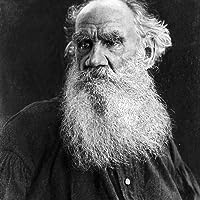
Lev Nikolayevich Tolstoy (Russian: Лев Николаевич Толстой; most appropriately used Liev Tolstoy; commonly Leo Tolstoy in Anglophone countries) was a Russian writer who primarily wrote novels and short stories. Later in life, he also wrote plays and essays. His two most famous works, the novels War and Peace and Anna Karenina, are acknowledged as two of the greatest novels of all time and a pinnacle of realist fiction. Many consider Tolstoy to have been one of the world's greatest novelists. Tolstoy is equally known for his complicated and paradoxical persona and for his extreme moralistic and ascetic views, which he adopted after a moral crisis and spiritual awakening in the 1870s, after which he also became noted as a moral thinker and social reformer. His literal interpretation of the ethical teachings of Jesus, centering on the Sermon on the Mount, caused him in later life to become a fervent Christian anarchist and anarcho-pacifist. His ideas on nonviolent resistance, expressed in such works as The Kingdom of God Is Within You, were to have a profound impact on such pivotal twentieth-century figures as Mohandas Gandhi and Martin Luther King, Jr.

Carlos Fuentes Macías was a Mexican writer and one of the best-known novelists and essayists of the 20th century in the Spanish-speaking world. Fuentes influenced contemporary Latin American literature, and his works have been widely translated into English and other languages. Fuentes was born in Panama City, Panama; his parents were Mexican. Due to his father being a diplomat, during his childhood he lived in Montevideo, Rio de Janeiro, Washington, Santiago, and Buenos Aires. In his adolescence, he returned to Mexico, where he lived until 1965. He was married to film star Rita Macedo from 1959 till 1973, although he was an habitual philanderer and allegedly, his affairs - which he claimed include film actresses such as Jeanne Moreau and Jean Seberg - brought her to despair. The couple ended their relationship amid scandal when Fuentes eloped with a very pregnant and then-unknown journalist named Silvia Lemus. They were eventually married. Following in the footsteps of his parents, he also became a diplomat in 1965 and served in London, Paris (as ambassador), and other capitals. In 1978 he resigned as ambassador to France in protest over the appointment of Gustavo Diaz Ordaz, former president of Mexico, as ambassador to Spain. He also taught courses at Brown, Princeton, Harvard, Penn, George Mason, Columbia and Cambridge. —- کارلوس فوئنتس در ۱۱ نوامبر ۱۹۲۸ در پاناماسیتی به دنیا آمد. مادرش برتا ماسیاس ریواس و پدرش رافائل فوئنتس بوئهتیگر است. پدر وی از دیپلماتهای مشهور مکزیک است. وی سفیر مکزیک در هلند، پاناما، پرتغال و ایتالیا بود. دوران کودکیاش در واشنتگتن دی.سی. و سانتیاگوی شیلی گذشت. فوئنتس در دانشگاه مکزیک و ژنو در رشتهٔ حقوق تحصیل کرد. او به زبانهای انگلیسی و فرانسه تسلط کامل دارد. آثار * مرگ آرتمیوکروز، ۱۹۶۲ * آئورا، ۱۹۶۲ * زمین ما، ۱۹۷۵ * گرینگوی پیر، ۱۹۸۵ * ملکهٔ عروسکها * آسوده خاصر، ترجمهٔ محمدامین لاهیجی. * مرگ آرتمیو کروز، ترجمهٔ مهدی سحابی. * آئورا، ترجمهٔ عبدالله کوثری. * سرهیدا. * خودم با دیگران (به تازگی با نام از چشم فوئنتس) ترجمهٔ عبدالله کوثری. —- Carlos Fuentes Macías fue un escritor mexicano y uno de los novelistas y ensayistas más conocidos en el mundo de habla española. Fuentes influyó en la literatura contemporánea de América Latina, y sus obras han sido ampliamente traducidas al inglés y otros idiomas. Fuentes nació en la ciudad de Panamá, Panamá, sus padres eran mexicanos. Debido a su padre era un diplomático, durante su infancia vivió en Montevideo, Río de Janeiro, Washington, Santiago y Buenos Aires. En su adolescencia regresó a México, donde vivió hasta 1965. Estuvo casado con la estrella de cine Rita Macedo de 1959 hasta 1973, aunque era un mujeriego habitual y, al parecer, sus asuntos - que se ha cobrado incluyen actrices como Jeanne Moreau y Jean Seberg, su llevados a la desesperación. La pareja terminó su relación en medio del escándalo, cuando Fuentes se fugó con un periodista muy embarazada y entonces desconocido de nombre Silvia Lemus. Se casaron finalmente. Siguiendo los pasos de sus padres, también se convirtió en un diplomático en 1965 y sirvió en Londres, París (como embajador), y otras capitales. En 1978 renunció al cargo de embajador en Francia en protesta por el nombramiento de Gustavo Díaz Ordaz, ex presidente de México, como embajador en España.

For most of his early adulthood, Bolaño was a vagabond, living at one time or another in Chile, Mexico, El Salvador, France and Spain. Bolaño moved to Europe in 1977, and finally made his way to Spain, where he married and settled on the Mediterranean coast near Barcelona, working as a dishwasher, a campground custodian, bellhop and garbage collector—working during the day and writing at night. He continued with his poetry, before shifting to fiction in his early forties. In an interview Bolaño stated that he made this decision because he felt responsible for the future financial well-being of his family, which he knew he could never secure from the earnings of a poet. This was confirmed by Jorge Herralde, who explained that Bolaño "abandoned his parsimonious beatnik existence" because the birth of his son in 1990 made him "decide that he was responsible for his family's future and that it would be easier to earn a living by writing fiction." However, he continued to think of himself primarily as a poet, and a collection of his verse, spanning 20 years, was published in 2000 under the title The Romantic Dogs. Regarding his native country Chile, which he visited just once after going into voluntary exile, Bolaño had conflicted feelings. He was notorious in Chile for his fierce attacks on Isabel Allende and other members of the literary establishment. In 2003, after a long period of declining health, Bolaño passed away. Bolaño was survived by his Spanish wife and their two children, whom he once called "my only motherland." Although deep down he always felt like a poet, his reputation ultimately rests on his novels, novellas and short story collections. Although Bolaño espoused the lifestyle of a bohemian poet and literary enfant terrible for all his adult life, he only began to produce substantial works of fiction in the 1990s. He almost immediately became a highly regarded figure in Spanish and Latin American letters. In rapid succession, he published a series of critically acclaimed works, the most important of which are the novel Los detectives salvajes (The Savage Detectives), the novella Nocturno de Chile (By Night In Chile), and, posthumously, the novel 2666. His two collections of short stories Llamadas telefónicas and Putas asesinas were awarded literary prizes. In 2009 a number of unpublished novels were discovered among the author's papers.


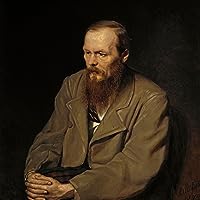
Fyodor Mikhailovich Dostoevsky was a Russian novelist, short story writer, essayist, and journalist. His literary works explore human psychology in the troubled political, social, and spiritual atmospheres of 19th-century Russia, and engage with a variety of philosophical and religious themes. His most acclaimed novels include Crime and Punishment (1866), The Idiot (1869), Demons (1872), and The Brothers Karamazov (1880). Many literary critics rate him as one of the greatest novelists in all of world literature, as multiple of his works are considered highly influential masterpieces. His 1864 novella Notes from Underground is considered to be one of the first works of existentialist literature. As such, he is also looked upon as a philosopher and theologian as well. (Russian: Фёдор Михайлович Достоевский) (see also Fiodor Dostoïevski)