Margins




548 Market St PMB 65688, San Francisco California 94104-5401 USA
© 2026 Paratext Inc. All rights reserved
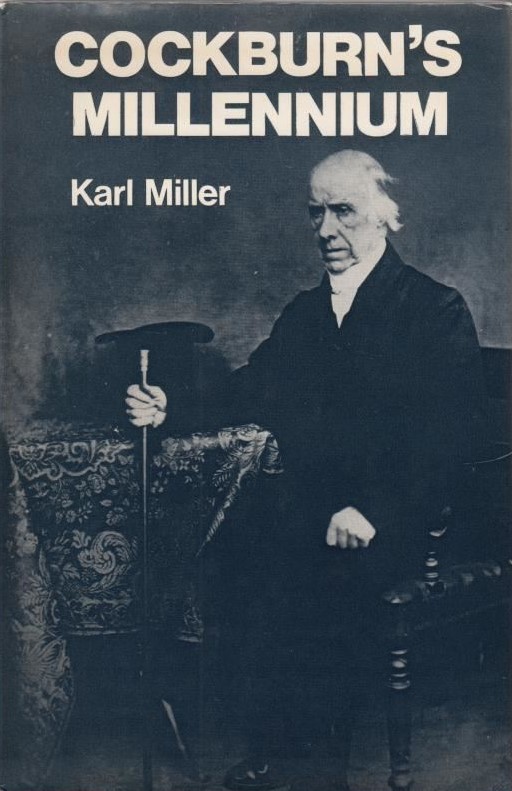
Henry Cockburn (1779 - 1854), a leading Scottish Whig of the nineteenth century, author of the classic Memorials of His Time, is perhaps the least-known of Scotland's famous men. 'Small, solid and genuine', in Carlyle's phrase, Cockburn gave himself to a variety of pursuits. As Advocate, Court of Session judge, orator, historian and poet, he fought for, and drafted, the Scottish Reform Bill of 1832 - with its momentous extension of the franchise - and he played a scarcely less significant part in the Victorian contest between Kirk and Judiciary. He broke with his father's principles, those of a sensible strong-minded lawyer and leading Scottish Tory, and became a 'man of sense' himself - an Edinburgh patriarch and sage, but of romantic sensibility, who would turn away from public commitments to take pleasure in the past and the pastoral seclusion of the neighbouring Pentland Hills. Karl Miller's sustained study of Cockburn, the first of its kind, was published in 1975. It makes use of manuscript materials to present a new picture of Cockburn's career and mental life, and presents him as one of a generation of thinkers and artists who succeeded to the Scottish Enlightenment. Cockburn's Millennium contains rich digressions on the outlook of the Scottish Whigs, on the world of the Edinburgh review, and on the Tory world-picture by which Cockburn and his friends were confronted and which included the genius of Sir Walter Scott and James Hogg. Cockburn is the protagonist of a work which ranges with penetration and wit over important issues of Scottish life and culture.