


Margins
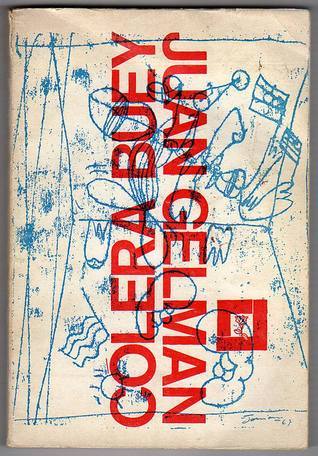
Colera Buey
1994
First Published
4.34
Average Rating
215
Number of Pages

Poetry. Latino/Latina Studies. Translated from the Spanish by Lisa Rose Bradford. Bilingual Edition. "why beneath the glory of this sun / do i sorrow like an ox?" A bull awakes one day to the realization that he's a castrated, browbeaten ox but is then briefly abstracted from this sorrow as the morning sun gently warms his hide and lifts heady aromas from the grass; while a man, graced with human cogitation, but burdened with the general suffering that surrounds him, delights in gorgeous women walking through flowery plats, who fleetingly offer this ambivalent oxen attitude pervades Juan Gelman's OXEN RAGE. Rife with speculation and uncertainty, this is a book of ruminations, written in language at times unorthodox and full of quirky coinages, often playful and paradoxical, always musical and richly imaginative. "OXEN RAGE is a 'midpoint 20th century' masterwork by a poet 'wretched and proud,' 'obscure in all his emberglow.' An exile, as Dante & so many 'word-concertistas' before him, Juan Gelman 'disorders the chaos / with demented exactitude.' To have this core book of his oeuvre become available now, accurately and beautifully englished, is a major event—and a superb & most useful guide through this, our own, demented century."—Pierre Joris "With her precise and imaginative translations, Lisa Rose Bradford makes it possible for the English-language reader to finally know one of the masterpieces of 20th-century Latin American poetry, Juan Gelman's OXEN RAGE. The work is a major crossroads in the leading thoroughfares traversed by this author, a model of rebellion and freedom, of devotion and rigor, in his exploration of reality through poetry. Each one of the 'the remains of nine books' that makes up OXEN RAGE has its own character and in their sequence achieves the total integration of the political and aesthetic avant-garde. Gelman takes on poetry as a widening of the understanding of the world, as the possibility of universal dialogue, as a radically transformative act."—Víctor Rodríguez Núñez "Juan Gelman's groundbreaking OXEN RAGE—one of the key works of Spanish-language poetry published in the second half of the twentieth century—engages the question of translation in unexpected and fascinating ways. Fortunately for English-speaking readers, Lisa Rose Bradford has produced an astonishing version in English of this masterpiece by the 2007 Cervantes Prize winner, published here in a wonderfully edited bilingual volume. Word by word, poem by poem, and book by book, Bradford carefully reproduces the playful logic of translation that pervades Gelman's original with exceptional ease and grace. If, as the Argentine poet suggests, the poems of Cólera buey constitute a 'herd of pieces that aspire to breathe,' Bradford manages to reproduce in OXEN RAGE that same vital aspiration by subtly recreating the many different dictions, tones, and voices that articulate Gelman's experimental conceptualization of poetic creation as a process of translation. As Bradford's version powerfully shows us, it is precisely here, in the crucial space where translation and creative writing ambiguously blur lines-an essential tradition of modern poetics gradually established by writers of the stature of Fernando Pessoa, Ezra Pound, Jorge Luis Borges, Jack Spicer, or Mary Jo Bang—where Gelman's OXEN RAGE undoubtedly deserves a distinguished place."—Ignacio Infante, Washington University in St. Louis "His writing is like a gust of wind, like a pounding wave where the sands delight in his verbal marvels, broken sentences, absence of punctuation, fractured rhythms that link, superimpose, interrupt and chop, leaving the poem in a question mark, which is a mark of life, the frozen sign of doubt. OXEN RAGE is a key book in twentieth- century Argentine literature, and with its publication, Gelman became an indispensable figure in the world of literature."—Marcelo Pichon Rivière, writer & filmmaker
Avg Rating
4.34
Number of Ratings
68
5 STARS
53%
4 STARS
28%
3 STARS
19%
2 STARS
0%
1 STARS
0%
goodreads

Author

Juan Gelman
Juan Gelman
Author · 18 books

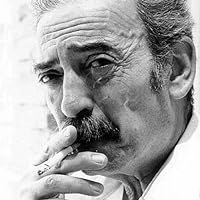
Juan Gelman is one of the most read and influential poets in the Spanish language. He has published more than twenty books of poetry since 1956 and has been translated into fourteen languages. A political activist and critical journalist since his youth, Gelman has not only been a literary paradigm but also a moral one, within and outside of Argentina. Among his most recent awards are the National Poetry Prize (Argentina, 1997), the Juan Rulfo Prize in Latin American and Caribbean Literature (Mexico, 2000), the Pablo Neruda Prize (Chile, 2005), the Queen Sofia Prize in Ibero-American Poetry (Spain, 2005), and the Cervantes Prize (the most important award given to a Hispanic writer, Spain, 2007). Long biographical note Juan Gelman is the most significant, contemporary Argentine intellectual figure and one of the most read and influential poets in the Spanish language. Son of a family of Jewish immigrants from the Ukraine, he grew up like any other porteño, among soccer and tango, in the populous neighborhood of Villa Crespo. At 11, he published his first poem in the magazine Rojo y negro, and in the 1950s formed part of the group of rebel writers, El Pan Duro. He was discovered by Raúl González Túñón, among the most relevant voices of the southern country’s poetic avant-garde, who saw in the young man’s verses “a rich and vivacious lyricism and a principally social content […] that does not elude the richness of fantasy.” Gelman has published, from his initial Violín y otras cuestiones (1956) to his most recent Mundar (2008), more than twenty books of poetry. These works, as Mario Benedetti asserted early on, constitute “the most coherent, and also the most daring, participatory repertoire (in spite of its inevitable wells of solitude), and ultimately the one most suited to its environment, that Argentine poetry has today”, and Hispanic poetry in general, as the profusion of re-editions of his books and numerous anthologies proves. Gelman’s poetry has achieved international recognition, with translations into fourteen languages, including English. Among his awards are the National Poetry Prize (Argentina, 1997), the Juan Rulfo Prize in Latin American and Caribbean Literature (Mexico, 2000), the Pablo Neruda Prize (Chile, 2005), the Queen Sofia Prize in Ibero-American Poetry (Spain, 2005), and the Cervantes Prize (Spain, 2007), the most important award in Hispanic Letters. No one should be surprised to see him the winner of the Nobel Prize in Literature one day. It would be relevant to note that Juan Gelman has not only been a literary paradigm but also a moral one, within and outside of Argentina. A political activist and critical journalist since his youth, he was forced into an exile of thirteen years because of the military dictatorship that ravaged his country from 1976 to 1983, and the weak governments that followed. In 1976 the ultra-right kidnapped his children, Nora Eva, 19, and Marcelo Ariel, 20, along with his son’s wife, María Claudia Iruretagoyena, 19, who was 7 months pregnant. Nora Eva would later return, unlike his son and daughter-in-law, who were killed; their child born in a concentration camp. The vehement search for the truth about the fate of these family members, which culminated in finding his granddaughter in Uruguay in 2000, has made the poet a symbol of the struggle for respect for human rights. Like other poets from his time and space, Juan Gelman creates his work starting from a critique of the so-called post-avante-garde poetry, which surges in the Hispanic world in the 1940s and breaks with the powerful avante-garde. He is a poet who denies the labors of the Mexican Octavio Paz, the Cuban José Lezama Lima, the Argentine Alberto Girri, among others, to reaffirm it in his own way. It is a poetry that goes against the current, transgresses the established social and cultural order, challenges the individualism intrinsic to modernity and the neo-colonial condition. A poetry that renounc

548 Market St PMB 65688, San Francisco California 94104-5401 USA
© 2026 Paratext Inc. All rights reserved