Margins
Columbia Themes in Philosophy, Social Criticism, and the Arts book cover 1
Columbia Themes in Philosophy, Social Criticism, and the Arts book cover 2
Columbia Themes in Philosophy, Social Criticism, and the Arts book cover 3
Columbia Themes in Philosophy, Social Criticism, and the Arts
Series · 26
books · 1997-2022

Books in series

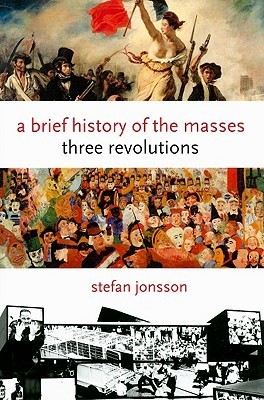
A Brief History of the Masses book cover
#3

A Brief History of the Masses

Three Revolutions

2008

Stefan Jonsson uses three monumental works of art to build a provocative history of popular revolt: Jacques-Louis David's "The Tennis Court Oath" (1791), James Ensor's "Christ's Entry into Brussels in 1889" (1888), and Alfredo Jaar's "They Loved It So Much, the Revolution" (1989). Addressing, respectively, the French Revolution of 1789, Belgium's proletarian messianism in the 1880s, and the worldwide rebellions and revolutions of 1968, these canonical images not only depict an alternative view of history but offer a new understanding of the relationship between art and politics and the revolutionary nature of true democracy. Drawing on examples from literature, politics, philosophy, and other works of art, Jonsson carefully constructs his portrait, revealing surprising parallels between the political representation of "the people" in government and their aesthetic representation in painting. Both essentially "frame" the people, Jonsson argues, defining them as elites or masses, responsible citizens or angry mobs. Yet in the aesthetic fantasies of David, Ensor, and Jaar, Jonsson finds a different understanding of democracy-one in which human collectives break the frame and enter the picture. Connecting the achievements and failures of past revolutions to current political issues, Jonsson then situates our present moment in a long historical drama of popular unrest, making his book both a cultural history and a contemporary discussion about the fate of democracy in our globalized world.
Literature, Life, and Modernity book cover
#4

Literature, Life, and Modernity

2008

Richard Eldridge explores the ability of dense and formally interesting literature to respond to the complexities of modern life. Beyond simple entertainment, difficult modern works cultivate reflective depth and help their readers order and interpret their lives as subjects in relation to complex economies and technological systems. By imagining themselves in the role of the protagonist or the authorial persona, readers become immersed in structures of sustained attention, under which concrete possibilities of meaningful life, along with difficulties that block their realization, are tracked and clarified. Literary form, Eldridge argues, generates structures of care, reflection, and investment within readers, shaping—if not stabilizing—their interactions with everyday objects and events. Through the experience of literary forms of attention, readers may come to think and live more actively, more fully engaging with modern life, rather than passively suffering it. Eldridge considers the thought of Descartes, Kant, Adorno, Benjamin, Stanley Cavell, and Charles Taylor in his discussion of Goethe, Wordsworth, Rilke, Stoppard, and Sebald, advancing a philosophy of literature that addresses our desire to read and the meaning and satisfaction that literary attention brings to our fragmented modern lives.
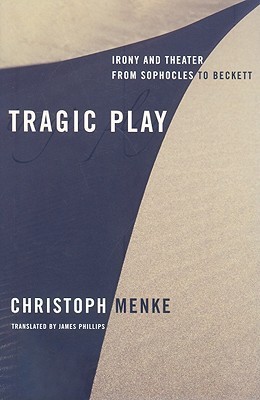
Tragic Play book cover
#5

Tragic Play

Irony and Theater from Sophocles to Beckett

2005

Tragic Play explores the deep philosophical significance of classic and modern tragedies in order to cast light on the tragic dimensions of contemporary experience. Romanticism, it has often been claimed, brought tragedy to an end, making modernity the age after tragedy. Christoph Menke opposes this modernist prejudice by arguing that tragedy remains alive in the present in the distinctively new form of the playful, ironic, and self-consciously performative. Through close readings of plays by William Shakespeare, Samuel Beckett, Heiner Müller, and Botho Strauss, Menke shows how tragedy re-emerges in modernity as "tragedy of play." In Hamlet, Endgame, Philoktet, and Ithaka, Menke integrates philosophical theory with critical readings to investigate shifting terms of judgment, curse, reversal, misfortune, and violence.
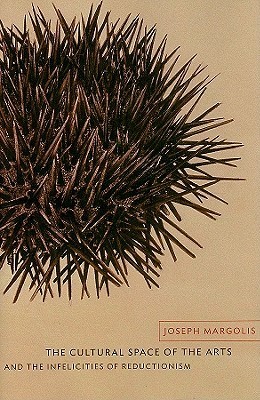
The Cultural Space of the Arts and the Infelicities of Reductionism book cover
#8

The Cultural Space of the Arts and the Infelicities of Reductionism

2010

Joseph Margolis, known for his considerable contributions to the philosophy of art and aesthetics, pragmatism, and American philosophy, has focused primarily on the troublesome concepts of culture, history, language, agency, art, interpretation, and the human person or self. For Margolis, the signal problem has always been the how can we distinguish between physical nature and human culture? How do these realms relate? The Cultural Space of the Arts and the Infelicities of Reductionism identifies a conceptual tendency that can be drawn from the work of the twentieth century's best-known analytic philosophers of Arthur Danto, Richard Wollheim, Kendall Walton, Nelson Goodman, Monroe Beardsley, Noël Carroll, and Jerrold Levinson, among others. This trend threatens to impoverish our grasp and appreciation of the arts by failing to do justice to the culturally informed nature of the arts themselves. Through his analysis, Margolis sets out to retrieve an adequate picture of the essential differences between physical nature and human culture—particularly through language, history, meaning, significance, the emergence of the human self or person, and the essential features of human life—all to explain how such difference bears on our perception of paintings and literature. Clearly argued and provocatively engaging, Margolis' work reestablishes what is essential to a productive encounter with art.
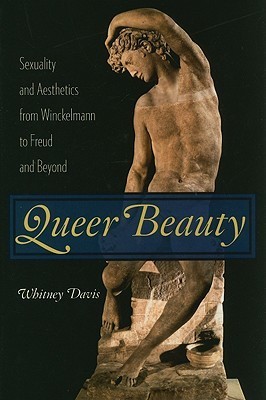
Queer Beauty book cover
#10

Queer Beauty

Sexuality and Aesthetics from Winckelmann to Freud and Beyond

2010

The pioneering work of Johann Winckelmann (1717-1768) identified a homoerotic appreciation of male beauty in classical Greek sculpture, a fascination that had endured in Western art since the Greeks. Yet after Winckelmann, the value (even the possibility) of art's queer beauty was often denied. Several theorists, notably the philosopher Immanuel Kant, broke sexual attraction and aesthetic appreciation into separate or dueling domains. In turn, sexual desire and aesthetic pleasure had to be profoundly rethought by later writers. Whitney Davis follows how such innovative thinkers as John Addington Symonds, Michel Foucault, and Richard Wollheim rejoined these two domains, reclaiming earlier insights about the mutual implication of sexuality and aesthetics. Addressing texts by Arthur Schopenhauer, Charles Darwin, Oscar Wilde, Vernon Lee, and Sigmund Freud, among many others, Davis criticizes modern approaches, such as Kantian idealism, Darwinism, psychoanalysis, and analytic aesthetics, for either reducing aesthetics to a question of sexuality or for removing sexuality from the aesthetic field altogether. Despite these schematic reductions, sexuality always returns to aesthetics, and aesthetic considerations always recur in sexuality. Davis particularly emphasizes the way in which philosophies of art since the late eighteenth century have responded to nonstandard sexuality, especially homoeroticism, and how theories of nonstandard sexuality have drawn on aesthetics in significant ways. Many imaginative and penetrating critics have wrestled productively, though often inconclusively and "against themselves," with the aesthetic making of sexual life and new forms of art made from reconstituted sexualities. Through a critique that confronts history, philosophy, science, psychology, and dominant theories of art and sexuality, Davis challenges privileged types of sexual and aesthetic creation imagined in modern culture-and assumed today.

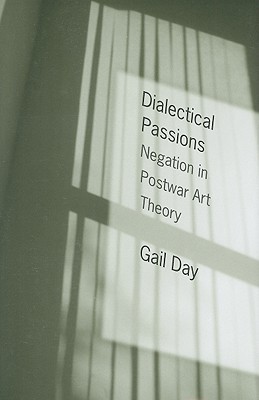
Dialectical Passions book cover
#11

Dialectical Passions

Negation in Postwar Art Theory

2010

Representing a new generation of theorists reaffirming the radical dimensions of art, Gail Day launches a bold critique of late twentieth-century art theory and its often reductive analysis of cultural objects. Exploring core debates in discourses on art, from the New Left to theories of "critical postmodernism" and beyond, Day counters the belief that recent tendencies in art fail to be adequately critical. She also challenges the political inertia that results from these conclusions. Day organizes her defense around critics who have engaged substantively with emancipatory thought and social process: T. J. Clark, Manfredo Tafuri, Fredric Jameson, Benjamin H. D. Buchloh, and Hal Foster, among others. She maps the tension between radical dialectics and left nihilism and assesses the interpretation and internalization of negation in art theory. Chapters confront the claim that exchange and equivalence have subsumed the use value of cultural objects—and with it critical distance—and interrogate the proposition of completed nihilism and the metropolis put forward in the politics of Italian operaismo. Day covers the debates on symbol and allegory waged within the context of 1980s art and their relation to the writings of Walter Benjamin and Paul de Man. She also examines common conceptions of mediation, totality, negation, and the politics of anticipation. A necessary unsettling of received wisdoms, "Dialectical Passions" recasts emancipatory reflection in aesthetics, art, and architecture.
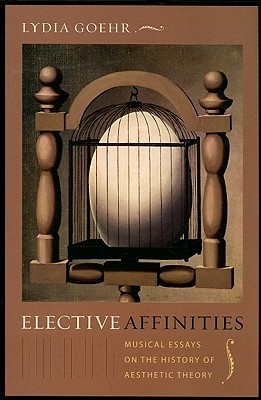
Elective Affinities book cover
#12

Elective Affinities

Musical Essays on the History of Aesthetic Theory

2008

As illustrated in Goethe's famous novel of the same name, elective affinities are powerful relationships that crystallize under changing conditions. In this new book, Lydia Goehr focuses on the history of elective affinities between philosophy and music from German classicism, romanticism, and idealism to the modernist aesthetic theory of Theodor W. Adorno and Arthur C. Danto. Aesthetic theory, she argues, depends on a dynamic philosophy of history centered on tendencies, yearnings, needs, and potentialities. With this in mind, she recasts the theses of Adorno and Danto regarding the death or end of philosophy, art, music, and human experience as arguments for continuation and survival. Elective Affinities tracks the migration of aesthetic and critical theory from Germany to the United States following the catastrophic period of the twentieth century marked by the Second World War.
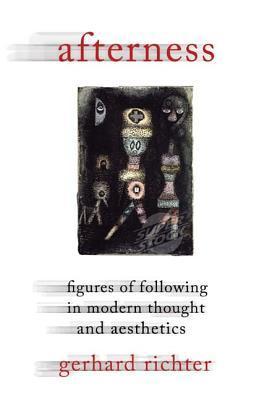
Afterness book cover
#13

Afterness

Figures of Following in Modern Thought and Aesthetics

2011

Gerhard Richter's groundbreaking study argues that the concept of "afterness" is a key figure in the thought and aesthetics of modernity. It pursues questions such as: What does it mean for something to "follow" something else? Does that which follows mark a clear break with what came before it, or does it in fact tacitly perpetuate its predecessor as a consequence of its inevitable indebtedness to the terms and conditions of that from which it claims to have departed? Indeed, is not the very act of breaking with, and then following upon, a way of retroactively constructing and fortifying that from which the break that set the movement of following into motion had occurred? The book explores the concept and movement of afterness as a privileged yet uncanny category through close readings of writers such as Kant, Kafka, Heidegger, Bloch, Benjamin, Brecht, Adorno, Arendt, Lyotard, and Derrida. It shows how the vexed concepts of afterness, following, and coming after shed new light on a constellation of modern preoccupations, including personal and cultural memory, translation, photography, hope, and the historical and conceptual specificity of what has been termed "after Auschwitz." The study's various analyses—across a heterogeneous collection of modern writers and thinkers, diverse historical moments of articulation, and a range of media—conspire to illuminate Lyotard's apodictic statement that "after philosophy comes philosophy. But it has been altered by the 'after.'" As Richter's intricate study demonstrates, much hinges on our interpretation of the "after." After all, our most fundamental assumptions concerning modern aesthetic representation, conceptual discourse, community, subjectivity, and politics are at stake.
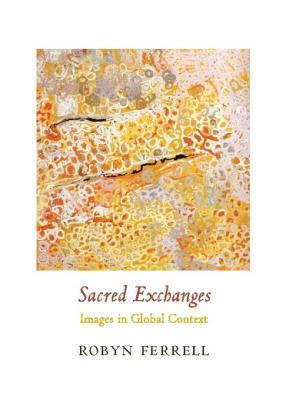
Sacred Exchanges book cover
#14

Sacred Exchanges

Images in Global Context

2012

As the international art market globalizes the indigenous image, it changes its identity, status, value, and purpose in local and larger contexts. Focusing on a school of Australian Aboriginal painting that has become popular in the contemporary art world, Robyn Ferrell traces the influence of cultural exchanges on art, the self, and attitudes toward the other. Aboriginal acrylic painting, produced by indigenous women artists of the Australian Desert, bears a superficial resemblance to abstract expressionism and is often read as such by viewers. Yet to see this art only through a Western lens is to miss its unique ontology, logics of sensation, and rich politics and religion. Ferrell explores the culture that produces these paintings and connects its aesthetic to the brutal environmental and economic realities of its people. From here, she travels to urban locales, observing museums and department stores as they traffic interchangeably in art and commodities. Ferrell ties the history of these desert works to global acts of genocide and dispossession. Rethinking the value of the artistic image in the global market and different interpretations of the sacred, she considers photojournalism, ecotourism, and other sacred sites of the western subject, investigating the intersection of modern art and postmodern culture. She ultimately challenges the primacy of the European gaze and its fascination with sacred cultures, constructing a more balanced intercultural dialogue that deemphasizes the aesthetic of the real championed by western philosophy.
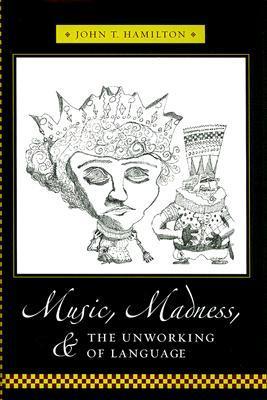
Music, Madness, and the Unworking of Language book cover
#17

Music, Madness, and the Unworking of Language

2008

In the romantic tradition, music is consistently associated with madness, either as cause or cure. Writers as diverse as Kleist, Hoffmann, and Nietzsche articulated this theme, which in fact reaches back to classical antiquity and continues to resonate in the modern imagination. What John Hamilton investigates in this study is the way literary, philosophical, and psychological treatments of music and madness challenge the limits of representation and thereby create a crisis of language. Special focus is given to the decidedly autobiographical impulse of the late eighteenth and early nineteenth centuries, where musical experience and mental disturbance disrupt the expression of referential thought, illuminating the irreducible aspects of the self before language can work them back into a discursive system. The study begins in the 1750s with Diderot's "Neveu de Rameau," and situates that text in relation to Rousseau's reflections on the voice and the burgeoning discipline of musical aesthetics. Upon tracing the linkage of music and madness that courses through the work of Herder, Hegel, Wackenroder, and Kleist, Hamilton turns his attention to E. T. A. Hoffmann, whose writings of the first decades of the nineteenth century accumulate and qualify the preceding tradition. Throughout, Hamilton considers the particular representations that link music and madness, investigating the underlying motives, preconceptions, and ideological premises that facilitate the association of these two experiences. The gap between sensation and its verbal representation proved especially problematic for romantic writers concerned with the ineffability of selfhood. The author who chose to represent himself necessarily faced problems of language, which invariably compromised the uniqueness that the author wished to express. Music and madness, therefore, unworked the generalizing functions of language and marked a critical limit to linguistic capabilities. While the various conflicts among music, madness, and language questioned the viability of signification, they also raised the possibility of producing meaning beyond significance.
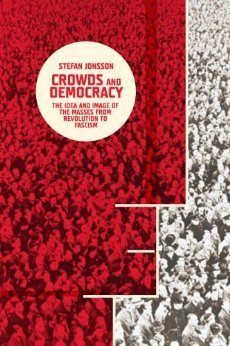
Crowds and Democracy book cover
#18

Crowds and Democracy

The Idea and Image of the Masses from Revolution to Fascism

2013

Between 1918 and 1933, the masses became a decisive preoccupation of European culture, fueling modernist movements in art, literature, architecture, theater, and cinema, as well as the rise of communism and fascism and experiments in radical democracy. Spanning aesthetics, cultural studies, intellectual history, and political theory, this volume unpacks the significance of the shadow agent known as "the mass" during a critical period in European history. It follows its evolution into the preferred conceptual tool for social scientists, the ideal slogan for politicians, and the chosen image for artists and writers trying to capture a society in flux and a people in upheaval. This volume is the second installment in Stefan Jonsson's epic study of the crowd and the mass in modern Europe, building on his work in A Brief History of the Masses, which focused on monumental artworks produced in 1789, 1889, and 1989.
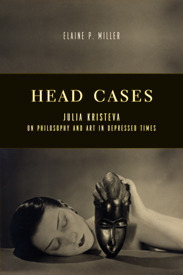
Head Cases book cover
#19

Head Cases

Julia Kristeva on Philosophy and Art in Depressed Times

2014

While philosophy and psychoanalysis privilege language and conceptual distinctions and mistrust the image, the philosopher and psychoanalyst Julia Kristeva recognizes the power of art and the imagination to unblock important sources of meaning. She also appreciates the process through which creative acts counteract and transform feelings of violence and depression. Reviewing Kristeva's corpus, Elaine P. Miller considers the intellectual's "aesthetic idea" and "thought specular" in their capacity to reshape depressive thought on both the individual and cultural level. She revisits Kristeva's reading of Walter Benjamin with reference to melancholic art and the imagination's allegorical structure; her analysis of Byzantine iconoclasm in relation to Freud's psychoanalytic theory of negation and Hegel's dialectical negativity; her understanding of Proust as an exemplary practitioner of sublimation; her rereading of Kant and Arendt in terms of art as an intentional lingering with foreignness; and her argument that forgiveness is both a philosophical and psychoanalytic method of transcending a "stuck" existence. Focusing on specific artworks that illustrate Kristeva's ideas, from ancient Greek tragedy to early photography, contemporary installation art, and film, Miller positions creative acts as a form of "spiritual inoculation" against the violence of our society and its discouragement of thought and reflection.
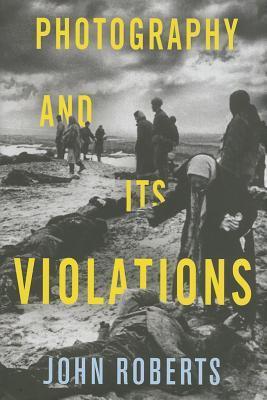
Photography and Its Violations book cover
#21

Photography and Its Violations

2014

Theorists critique photography for "objectifying" its subjects and manipulating appearances for the sake of art. In this bold counterargument, John Roberts recasts photography's violating powers of disclosure and aesthetic technique as part of a complex "social ontology" that exposes the hierarchies, divisions, and exclusions behind appearances. The photographer must "arrive unannounced" and "get in the way of the world," Roberts argues, committing photography to the truth-claims of the spectator over the self-interests and sensitivities of the subject. Yet even though the violating capacity of the photograph results from external power relations, the photographer is still faced with an ethical whether to advance photography's truth-claims on the basis of these powers or to diminish or veil these powers to protect the integrity of the subject. Photography's acts of intrusion and destabilization, then, constantly test the photographer at the point of production, in the darkroom, and at the computer, especially in our 24-hour digital image culture. In this game-changing work, Roberts refunctions photography's place in the world, politically and theoretically restoring its reputation as a truth-producing medium.
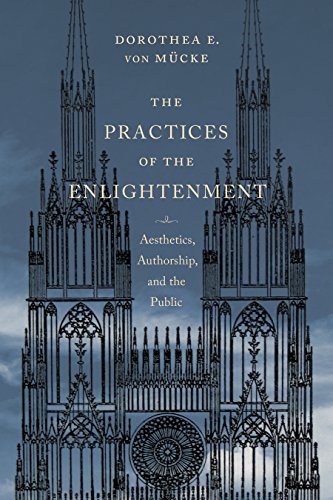
The Practices of the Enlightenment book cover
#22

The Practices of the Enlightenment

Aesthetics, Authorship, and the Public

2015

Rethinking the relationship between eighteenth-century pietistic traditions and Enlightenment thought and practice, The Practices of Enlightenment unravels the complex and often neglected religious origins of modern secular discourse. Mapping surprising routes of exchange between the religious and aesthetic writings of the period and recentering concerns of authorship and audience, this book revitalizes scholarship on the Enlightenment. The study engages with three critical categories: aesthetics, authorship, and the public sphere, tracing the relationship between religious and aesthetic modes of reflective contemplation, autobiography and the hermeneutics of the self, and the discursive creation of the public sphere. Focusing largely on German intellectual life, this critical engagement also extends to France through Rousseau and to England through Shaftesbury. Rereading canonical works and lesser-known texts by Goethe, Lessing, and Herder, the book challenges common narratives recounting the rise of empiricist philosophy, the idea of the "sensible" individual, and the notion of the modern author as celebrity, bringing new perspective to the Enlightenment concepts of instinct, drive, genius, and the public sphere.
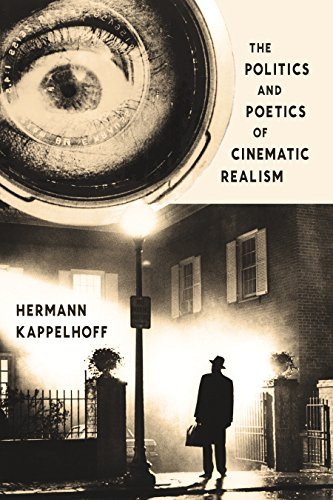
The Politics and Poetics of Cinematic Realism book cover
#23

The Politics and Poetics of Cinematic Realism

2015

Hermann Kappelhoff casts the evolution of cinema as an ongoing struggle to relate audiences to their historical moment. Appreciating cinema's unique ability to bind concrete living conditions to individual experience (which existing political institutions cannot), he reads films by Sergei Eisenstein and Pedro Almodóvar, by the New Objectivity and the New Hollywood, to demonstrate how cinema situates spectators within society. Kappelhoff applies the Deleuzean practice of "thinking in images" to his analysis of films and incorporates the approaches of Jacques Rancière and Richard Rorty, who see politics in the permanent reconfiguration of poetic forms. This enables him to conceptualize film as a medium that continually renews the audiovisual spaces and temporalities through which audiences confront reality. Revitalizing the reading of films by Visconti, Fassbinder, Kubrick, Friedkin, and others, Kappelhoff affirms cinema's historical significance while discovering its engagement with politics as a realm of experience.
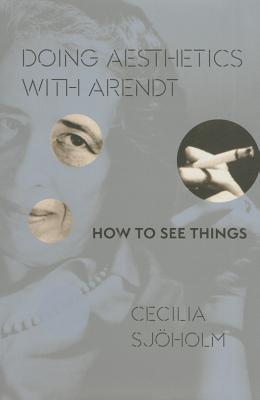
Doing Aesthetics with Arendt book cover
#24

Doing Aesthetics with Arendt

How to See Things

2015

Cecilia Sjöholm reads Hannah Arendt as a philosopher of the senses, grappling with questions of vision, hearing, and touch even in her political work. Constructing an Arendtian theory of aesthetics from the philosopher's fragmentary writings on art and perception, Sjöholm begins a vibrant new chapter in Arendt scholarship that expands her relevance for contemporary philosophers. Arendt wrote thoughtfully about the role of sensibility and aesthetic judgment in political life and on the power of art to enrich human experience. Sjöholm draws a clear line from Arendt's consideration of these subjects to her reflections on aesthetic encounters and works of art mentioned in her published writings and stored among her memorabilia. This delicate effort allows Sjöholm to revisit Arendt's political concepts of freedom, plurality, and judgment from an aesthetic point of view and incorporate Arendt's insight into current discussions of literature, music, theater, and visual art. Though Arendt did not explicitly outline an aesthetics, Sj?holm's work substantively incorporates her perspective into contemporary reckonings with radical politics and their relationship to art.
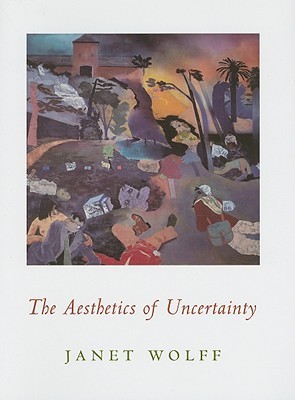
The Aesthetics of Uncertainty book cover
#25

The Aesthetics of Uncertainty

2008

Feminism, poststructuralism, postcolonialism, and Marxism, among other critical approaches, have undermined traditional notions of aesthetics in recent decades. But questions of aesthetic judgment and pleasure persist, and many critics now seek a "return to aesthetics" or a "return to beauty." Janet Wolff advances a "postcritical" aesthetics grounded in shared values that are negotiated in the context of community. She relates this approach to contemporary debates about a committed politics similarly founded on the abandonment of certainty. Neither universalist nor relativist, the "aesthetics of uncertainty" provides a discourse on beauty that contemporary critics can engage with and offers a basis for judgment that is committed to assigning value to works of art. Wolff explores her position through a range of topics: the question of beauty in relation to feminist critique; the problematic status of twentieth-century English art, visual representations of the Holocaust, Jewish identity as portrayed by the artist R. B. Kitaj, refugee artists and modernism in 1940s Britain, and the nature and appeal of imagistic thinking in sociology. She addresses the desire for certainty and the timeliness of doubt and concludes with a meditation on the intersection of aesthetics and ethics, arguing that ethical issues are very much implicated in aesthetic discourse.
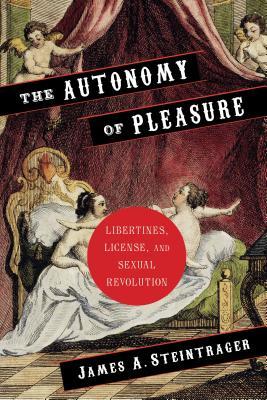
The Autonomy of Pleasure book cover
#26

The Autonomy of Pleasure

Libertines, License, and Sexual Revolution

2016

What would happen if pleasure were made the organizing principle for social relations and sexual pleasure ruled over all? Radical French libertines experimented clandestinely with this idea during the Enlightenment. In explicit novels, dialogues, poems, and engravings, they wrenched pleasure free from religion and morality, from politics, aesthetics, anatomy, and finally reason itself, and imagined how such a world would be desirable, legitimate, rapturous―and potentially horrific. Laying out the logic and willful illogic of radical libertinage, this book ties the Enlightenment engagement with sexual license to the expansion of print, empiricism, the revival of skepticism, the fashionable arts and lifestyles of the Ancien Régime, and the rise and decline of absolutism. It examines the consequences of imagining sexual pleasure as sovereign power and a law unto itself across a range of topics, including sodomy, the science of sexual difference, political philosophy, aesthetics, and race. It also analyzes the roots of radical claims for pleasure in earlier licentious satire and their echoes in appeals for sexual liberation in the 1960s and beyond.
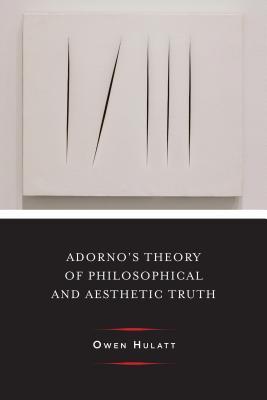
Adorno's Theory of Philosophical and Aesthetic Truth book cover
#27

Adorno's Theory of Philosophical and Aesthetic Truth

2016

In Adorno's Theory of Philosophical and Aesthetic Truth, Owen Hulatt undertakes an original reading of Theodor W. Adorno's epistemology and its material underpinnings, deepening our understanding of his theories of truth, art, and the nonidentical. Hulatt's novel interpretation casts Adorno's theory of philosophical and aesthetic truth as substantially unified, supporting the thinker's claim that both philosophy and art are capable of being true. For Adorno, truth is produced when rhetorical "texture" combines with cognitive "performance," leading to the breakdown of concepts that mediate the experience of the consciousness. Both philosophy and art manifest these features, although philosophy enacts these conceptual issues directly, while art does so obliquely. Hulatt builds a robust argument for Adorno's claim that concepts ineluctably misconstrue their objects. He also puts the still influential thinker into conversation with Hegel, Husserl, Frazer, Sohn-Rethel, Benjamin, Strawson, Dahlhaus, Habermas, and Caillois, among many others.
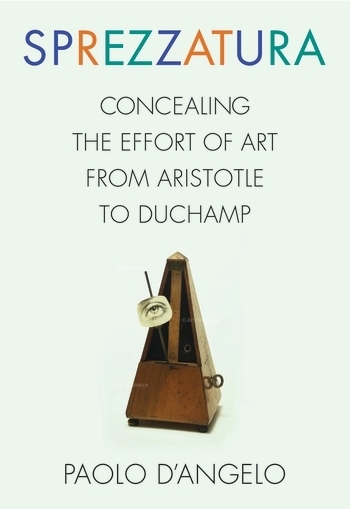
Sprezzatura book cover
#30

Sprezzatura

Concealing the Effort of Art from Aristotle to Duchamp

2018

The essence of art is to conceal art. A dancer or musician does not only need to perform with ability. There should also be a lack of visible effort that gives an impression of naturalness. To disguise technique and feign ease is to heighten beauty. To express this notion, Italian has a word with no exact equivalent in other languages, a kind of unaffectedness or nonchalance.In this book, the first to consider sprezzatura in its own right, philosopher of art Paolo D’Angelo reconstructs the history of concealing art, from ancient rhetoric to our own times. The word sprezzatura was coined in 1528 by Baldassarre Castiglione in The Book of the Courtier to mean a kind of grace with a special the ability to conceal art. But the idea reaches back to Aristotle and Cicero and forward to avant-garde works such as Duchamp’s ready-mades, all of which share the suspicion of the overt display of skill. The precept that art must be hidden turns up in a number of fields, from cosmetics to interior design, politics to poetry, the English garden to shabby chic. Through exploring different articulations of this idea, D’Angelo shows the paradox of art hides that it is art, but in doing so it reveals itself to be art and becomes an assertion about art. When art is concealed, it appears as spontaneous as nature—yet, paradoxically, also reveals its indebtedness to technique. An erudite and surprising tour through aesthetics, philosophy, and art history, Sprezzatura presents a strikingly original argument with deceptive ease.
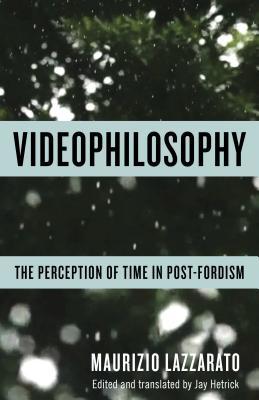
Videophilosophy book cover
#31

Videophilosophy

The Perception of Time in Post-Fordism

1997

The Italian philosopher Maurizio Lazzarato has earned international acclaim for his analysis of contemporary capitalism, in particular his influential concept of immaterial labor and his perceptive writings on debt. In Videophilosophy, he reveals the underpinnings of contemporary subjectivity in the aesthetics and politics of mass media. First written in French and published in Italian and later revised but never published in full, this book discloses the conceptual groundwork of Lazzarato's thought as a whole for a time when his writings have become increasingly influential. Drawing on Bergson, Nietzsche, Benjamin, Deleuze and Guattari, and the film theory and practice of Dziga Vertov, Lazzarato constructs a new philosophy of media that ties political economy to the politics of aesthetics. Through his concept of "machines that crystallize time," he argues that the proliferation of digital technologies over the past half-century marks the transition to a new mode of capitalist production characterized by unprecedented forms of subjection. This new era of the commodification of the self, Lazzarato declares, demands novel types of political action that challenge the commercialization and exploitation of time. This crucial text by an essential contemporary thinker offers vital new perspectives on aesthetics, politics, and media and critical theory.
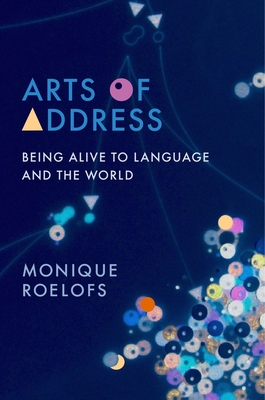
Arts of Address book cover
#32

Arts of Address

Being Alive to Language and the World

2020

Modes of address are forms of signification that we direct at living beings, things, and places, and they at us and at each other. Seeing is a form of address. So are speaking, singing, and painting. Initiating or responding to such calls, we participate in encounters with the world. Widely used yet less often examined in its own right, the notion of address cries out for analysis. Monique Roelofs offers a pathbreaking systematic model of the field of address and puts it to work in the arts, critical theory, and social life. She shows how address props up finely hewn modalities of relationality, agency, and normativity. Address exceeds a one-on-one pairing of cultural productions with their audiences. As ardently energizing tiny slippages and snippets as fueling larger impulses in the society, it activates and reaestheticizes registers of race, gender, class, coloniality, and cosmopolitanism. In readings of writers and artists ranging from Julio Cortázar to Jamaica Kincaid and from Martha Rosler to Pope.L, Roelofs demonstrates the centrality of address to freedom and a critical political aesthetics. Under the banner of a unified concept of address, Hume, Kant, and Foucault strike up conversations with Benjamin, Barthes, Althusser, Fanon, Anzaldúa, and Butler. Drawing on a wide array of artistic and theoretical sources and challenging disciplinary boundaries, the book illuminates address’s significance to cultural existence and to our reflexive aesthetic engagement in it. Keeping the reader on the lookout for flash fiction that pops up out of nowhere and for insurgent whisperings that take to the air, Arts of Address explores the aliveness of being alive.
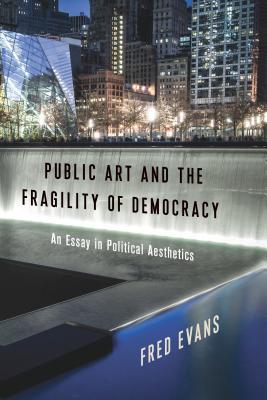
Public Art and the Fragility of Democracy book cover
#34

Public Art and the Fragility of Democracy

An Essay in Political Aesthetics

2018

Public space is political space. When a work of public art is put up or taken down, it is an inherently political statement, and the work’s aesthetics are inextricably entwined with its political valences. Democracy’s openness allows public art to explore its values critically and to suggest new ones. However, it also facilitates artworks that can surreptitiously or fortuitously undermine democratic values. Today, as bigotry and authoritarianism are on the rise and democratic movements seek to combat them, as Confederate monuments fall and sculptures celebrating diversity rise, the struggle over the values enshrined in the public arena has taken on a new urgency. In this book, Fred Evans develops philosophical and political criteria for assessing how public art can respond to the fragility of democracy. He calls for considering such artworks as acts of citizenship, pointing to their capacity to resist autocratic tendencies and reveal new dimensions of democratic society. Through close considerations of Chicago’s Millennium Park and New York’s National September 11 Memorial, Evans shows how a wide range of artworks participate in democratic dialogues. A nuanced consideration of contemporary art, aesthetics, and political theory, this book is a timely and rigorous elucidation of how thoughtful public art can contribute to the flourishing of a democratic way of life.
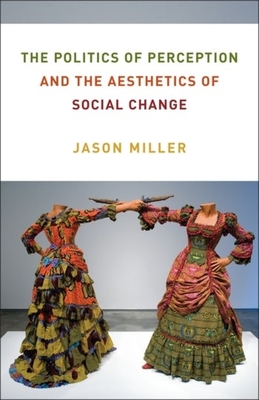
The Politics of Perception and the Aesthetics of Social Change book cover
#35

The Politics of Perception and the Aesthetics of Social Change

2021

In both politics and art in recent decades, there has been a dramatic shift in emphasis on representation of identity. Liberal ideals of universality and individuality have given way to a concern with the visibility and recognition of underrepresented groups. Modernist and postmodernist celebrations of disruption and subversion have been challenged by the view that representation is integral to social change. Despite this convergence, neither political nor aesthetic theory has given much attention to the increasingly central role of art in debates and struggles over cultural identity in the public sphere. Connecting Hegelian aesthetics with contemporary cultural politics, Jason Miller argues that both the aesthetic and political value of art are found in the reflexive self-awareness that artistic representation enables. The significance of art in modern life is that it shows us both the particular element in humanity as well as the human element in particularity. Just as Hegel asks us to acknowledge how different historical and cultural contexts produce radically different experiences of art, identity-based art calls on its audiences to situate themselves in relation to perspectives and experiences potentially quite remote―or even inaccessible―from their own. Miller offers a timely response to questions such as: How does contemporary art’s politics of perception contest liberal notions of deliberative politics? How does the cultural identity of the artist relate to the representations of cultural identity in their work? How do we understand and evaluate identity-based art aesthetically? Discussing a wide range of works of art and popular culture―from Antigone to Do the Right Thing and The Wire ―this book develops a new conceptual framework for understanding the representation of cultural identity that affirms art’s capacity to effect social change.
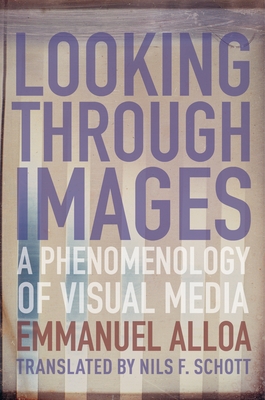
Looking Through Images book cover
#36

Looking Through Images

A Phenomenology of Visual Media

2018

Images have always stirred ambivalent reactions. Yet whether eliciting fascinated gazes or iconoclastic repulsion from their beholders, they have hardly ever been seen as true sources of knowledge. They were long viewed as mere appearances, placeholders for the things themselves or deceptive illusions. Today, the traditional critique of the spectacle has given way to an unconditional embrace of the visual. However, we still lack a persuasive theoretical account of how images work.Emmanuel Alloa retraces the history of Western attitudes toward the visual to propose a major rethinking of images as irreplaceable agents of our everyday engagement with the world. He examines how ideas of images and their powers have been constructed in Western humanities, art theory, and philosophy, developing a novel genealogy of both visual studies and the concept of the medium. Alloa reconstructs the earliest Western media theory—Aristotle’s concept of the diaphanous milieu of vision—and the significance of its subsequent erasure in the history of science. Ultimately, he argues for a historically informed phenomenology of images and visual media that explains why images are not simply referential depictions, windows onto the world. Instead, images constantly reactivate the power of appearing. As media of visualization, they allow things to appear that could not be visible except in and through these very material devices.
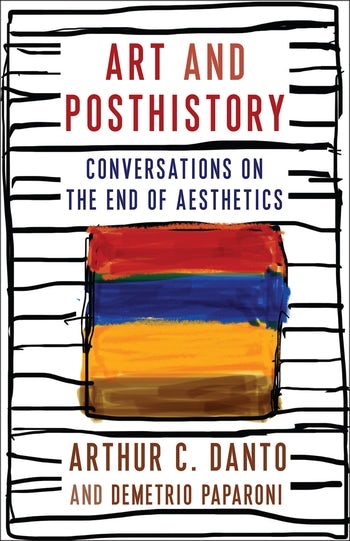
Art and Posthistory book cover
#37

Art and Posthistory

Conversations on the End of Aesthetics

2022

From the 1990s until just before his death, the legendary art critic and philosopher Arthur C. Danto carried out extended conversations about contemporary art with the prominent Italian critic Demetrio Paparoni. Their discussions ranged widely over a vast range of topics, from American pop art and minimalism to abstraction and appropriationism. Yet they continually returned to the concepts at the core of Danto's thinking—posthistory and the end of aesthetics—provocative notions that to this day shape questions about the meaning and future of contemporary art. Art and Posthistory presents these rich dialogues and correspondence, testifying to the ongoing importance of Danto's ideas. It offers readers the opportunity to experience the intellectual excitement of Danto in person, speculating in a freewheeling yet erudite style. Danto and Paparoni discuss figures such as Andy Warhol, Marcel Duchamp, Franz Kline, Sean Scully, Clement Greenberg, Cindy Sherman, and Wang Guangyi, offering both insightful comments on individual works and sweeping observations about wider issues. On occasion, the artist Mimmo Paladino and the philosopher Mario Perniola join the conversation, enlivening the discussion and adding their own perspectives. The book also features an introductory essay by Paparoni that provides lucid analysis of Danto's thinking, emphasizing where the two disagree as well as what they learned from each other.

Authors

Arthur C. Danto
Arthur C. Danto
Author · 28 books
Arthur C. Danto was Johnsonian Professor Emeritus of Philosophy at Columbia University and art critic for The Nation. He was the author of numerous books, including Unnatural Wonders: Essays from the Gap Between Art and Life, After the End of Art, and Beyond the Brillo Box: The Visual Arts in Post-Historical Perspective.
John Roberts
Author · 1 book
John Roberts is a former Senior Research Fellow in Fine Art and now Professor of Art & Aethetics at the University of Wolverhampton. He is the author of The Art of Interruption: Realism, Photography and the Everyday (Manchester University Press, 1997) and The Philistine Controversy (Verso, with Dave Beech, 2002), plus other books and numerous articles, in Radical Philosophy and elsewhere.
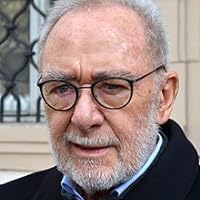
Gerhard Richter
Gerhard Richter
Author · 11 books
German visual artist. Richter has produced abstract as well as photorealistic paintings, and also photographs and glass pieces. He is widely regarded as one of the most important contemporary German artists and several of his works have set record prices at auction.
Jason Miller
Author · 23 books
There is more than one author in the Goodreads database with this name. See all those with similar names here.
Maurizio Lazzarato
Maurizio Lazzarato
Author · 8 books
Maurizio Lazzarato is a sociologist and philosopher in Paris. He is the author of Governing by Debt and Signs and Machines: Capitalism and the Production of Subjectivity, both published by Semiotext(e).
548 Market St PMB 65688, San Francisco California 94104-5401 USA
© 2025 Paratext Inc. All rights reserved
Columbia Themes in Philosophy, Social Criticism, and the Arts