Margins
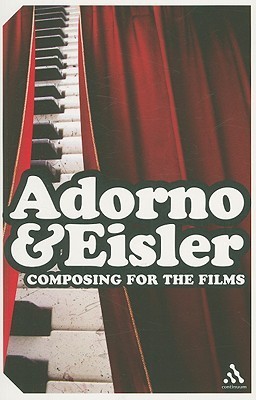
Composing for the Films book cover
Composing for the Films
1947
First Published
3.79
Average Rating
195
Number of Pages
This classic account of the nature of film music aesthetics was first published in 1947. Its value comes from a unique combination of talents and experience enjoyed by the book's authors. Eisler's time at Hollywood gave him a particular insight on the technical questions which arise for composers when music is used in the production of films; while Adorno was able to contribute on wide aesthetic and sociological matters as well as specifically musical questions. Above all, the authors envisaged the book as a contribution to the study of modern, industrialised culture; and, in this respect, it has a particular importance to the whole area of cultural studies.

Avg Rating
3.79
Number of Ratings
63
5 STARS
25%
4 STARS
46%
3 STARS
13%
2 STARS
14%
1 STARS
2%
goodreads

Author

Theodor W. Adorno
Theodor W. Adorno
Author · 51 books

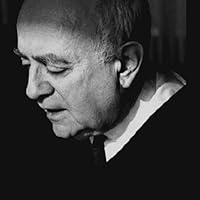
Theodor Wiesengrund Adorno was one of the most important philosophers and social critics in Germany after World War II. Although less well known among anglophone philosophers than his contemporary Hans-Georg Gadamer, Adorno had even greater influence on scholars and intellectuals in postwar Germany. In the 1960s he was the most prominent challenger to both Sir Karl Popper's philosophy of science and Martin Heidegger's philosophy of existence. Jürgen Habermas, Germany's foremost social philosopher after 1970, was Adorno's student and assistant. The scope of Adorno's influence stems from the interdisciplinary character of his research and of the Frankfurt School to which he belonged. It also stems from the thoroughness with which he examined Western philosophical traditions, especially from Kant onward, and the radicalness to his critique of contemporary Western society. He was a seminal social philosopher and a leading member of the first generation of Critical Theory. Unreliable translations hampered the initial reception of Adorno's published work in English speaking countries. Since the 1990s, however, better translations have appeared, along with newly translated lectures and other posthumous works that are still being published. These materials not only facilitate an emerging assessment of his work in epistemology and ethics but also strengthen an already advanced reception of his work in aesthetics and cultural theory.

548 Market St PMB 65688, San Francisco California 94104-5401 USA
© 2026 Paratext Inc. All rights reserved