Margins
Coniston
1906
First Published
3.48
Average Rating
556
Number of Pages
First I am to write a love-story of long ago, of a time some little while after General Jackson had got into the White House and had shown the world what a real democracy was. The Era of the first six Presidents had closed, and a new Era had begun. I am speaking of political Eras. Certain gentlemen, with a pious belief in democracy, but with a firmer determination to get on top, arose, -and got in top. So many of these gentlemen arose in the different states, and they were so clever, and they found so many chinks in the Constitution to crawl through and steal the people's chestnuts, that the Era may be called the Boss-Era. After the Boss came along certain Things without souls, but of many minds, and found more chinks in the Constitution: bigger chinks, for the Things were bigger, and they stole more chestnuts. But I am getting far ahead of my love-story-and of my book. The reader is warned that this first love-story will, in a few chapters, come to an end: and not to a happy end-otherwise there would be no book. Lest he should throw the book away when he arrives at this page, it is only fair to tell him that there is another and a much longer love story later on, if he will only continue to read, in which, it is hoped, he may not be disappointed. The hills seem to leap up against the sky as I describe that region where Cynthia Ware was born, and the very old country names help to summon up the picture. Coniston Mountain, called by some the Blue Mountain, clad in Hercynian forests, ten good miles in length, north and south, with its notch road that winds over the saddle behind the withers of it. Coniston Water, that oozes out from under the loam in a hundred places, on the eastern slope, gathers into a rushing stream to cleave the very granite, flows southward around the south end of Coniston Mountain, and having turned the mills at Brampton, idles through meadows westward in its own green valley until it comes to Harwich, where it works again and tumbles into a river. Brampton and Harwich are rivals, but Coniston Water gives of its power impartially to each. From the little farm clearings on the western slope of Coniston Mountain you can sweep the broad valley of a certain broad river where grew (and grow still) the giant pines that gave many a mast to King George's navy as tribute for the land. And beyond that river rises beautiful Farewell Mountain of many colors, now sapphire, now amethyst, its crest rimmed about at evening with saffron flame; and, beyond Farewell, the emerald billows of the western peaks catching the level light. A dozen little brooks are born high among the western spruces on Coniston to score deep, cool valleys in their way through Clovelly township to the broad music of the water and fresh river-valleys full of the music of the water and fresh with the odor of the ferns.

Avg Rating
3.48
Number of Ratings
25
5 STARS
20%
4 STARS
24%
3 STARS
44%
2 STARS
8%
1 STARS
4%
goodreads

Author

Winston Churchill
Winston Churchill
Author · 13 books

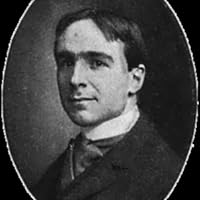
This is not the British Prime Minister, Sir Winston Spencer Churchill. This is the American novelist, Winston Churchill. Churchill was born in St. Louis, Missouri, the son of Edward Spalding and Emma Bell (Blaine) Churchill. He attended Smith Academy in Missouri and the United States Naval Academy, where he graduated in 1894 and became an editor of the Army and Navy Journal. He resigned from the navy to pursue a writing career. While he would be most successful as a novelist, he was also a published poet and essayist. His first novel was The Celebrity (1898). (Mr. Keegan's Elopement was published in 1896 within a magazine. In 1903 it was republished as an illustrated hardback book.) Churchill's next novel—Richard Carvel (1899)—was a phenomenon, selling as many as two million copies in a nation of only 76 million, and made Churchill rich. His next two novels, The Crisis (1901) and The Crossing (1904), were also very successful. Churchill's early novels were historical but his later works were set in contemporary America. He often sought to include his political ideas into his novels. Churchill wrote in the naturalist style of literature, and some have called him the most influential of the American naturalists. In 1899, Churchill moved to Cornish, New Hampshire. He became involved in politics and was elected to the state legislature in 1903 and 1905. He unsuccessfully sought the Republican nomination for governor in 1906. In 1912, he was nominated as the Progressive candidate for governor but did not win the election. He did not again seek office. In 1917, he toured the battlefields of World War I and wrote about what he saw, his first non-fiction work. Sometime after this move, he took up watercolors, and also became known for his landscapes. Some of his works are in the collections of Cornish Colony Museum in Windsor, Vermont, Hood Museum of Art (part of Hopkins Center for the Arts Dartmouth College) in Hanover, New Hampshire, and Saint-Gaudens National Historic Site in Cornish, New Hampshire. In 1919, Churchill decided to stop writing and withdrew from public life. As a result of this he was gradually forgotten by the public. In 1940, The Uncharted Way, his first book in 20 years, was published. The book examined Churchill's thoughts on religion. He did not seek to publicize the book and it received little attention. Shortly before his death he said, "It is very difficult now for me to think of myself as a writer of novels, as all that seems to belong to another life." Churchill died in Winter Park, Florida in 1947. He is the great-grandfather of Albany, New York, journalist Chris Churchill. [https://en.wikipedia.org/wiki/Winston...]

548 Market St PMB 65688, San Francisco California 94104-5401 USA
© 2026 Paratext Inc. All rights reserved