Authors
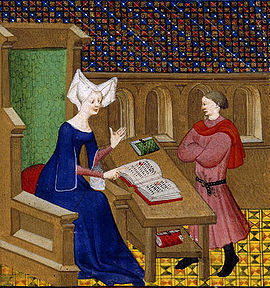
Christine de Pizan (also seen as de Pisan) (1363–c.1434) was a writer and analyst of the medieval era who strongly challenged misogyny and stereotypes that were prevalent in the male-dominated realm of the arts. De Pizan completed forty-one pieces during her thirty-year career (1399–1429). She earned her accolade as Europe’s first professional woman writer (Redfern 74). Her success stems from a wide range of innovative writing and rhetorical techniques that critically challenged renowned male writers such as Jean de Meun who, to Pizan’s dismay, incorporated misogynist beliefs within their literary works. In recent decades, de Pizan's work has been returned to prominence by the efforts of scholars such as Charity Cannon Willard and Earl Jeffrey Richards. Certain scholars have argued that she should be seen as an early feminist who efficiently used language to convey that women could play an important role within society, although this characterisation has been challenged by other critics who claim either that it is an anachronistic use of the word, or that her beliefs were not progressive enough to merit such a designation
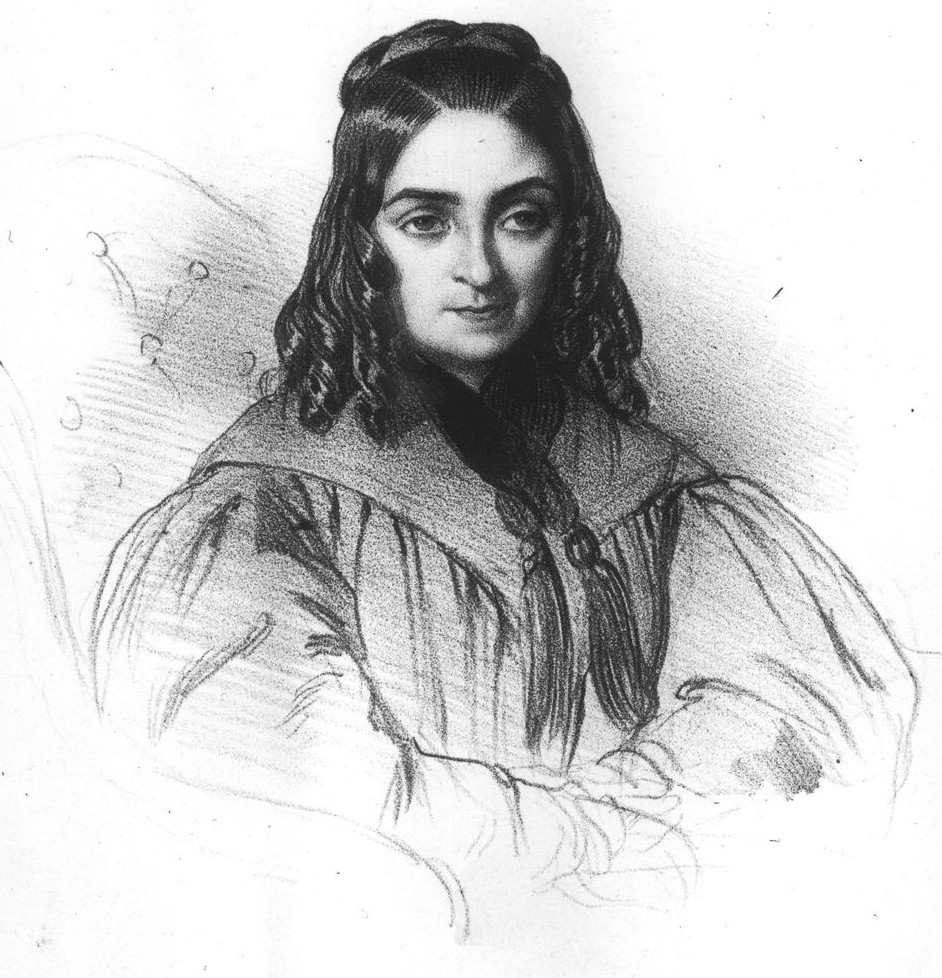
Flore Celestine Thérèse Henriette Tristán y Moscoso better known as Flora Tristan was a French-Peruvian socialist writer and activist. She made important contributions to early feminist theory, and argued that the progress of women's rights was directly related with the progress of the working class. Her theories had a trong influence on Karl Marx, Friedrich Engels and Charles Fourier. She wrote several works, the best known of which are Peregrinations of a Pariah (1838), Promenades in London (1840), and The Workers' Union (1843). Tristan was also the grandmother of the painter Paul Gauguin.
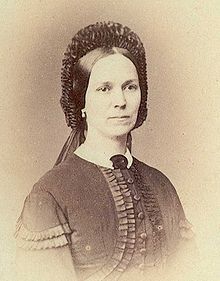
Victoire Léodile Béra, wrote under the pen name André Léo, her two twin sons' names. She was a French novelist, journalist and feminist. She was born in Lusignan, Vienne, at Town Hall square, in 1824. She stayed there until 1830, when her father moved to Champagné Saint Hilaire, where he was a judge. She left the region in 1851, to Lausanne in Switzerland, where she married Gregoire Champseix. He was there since the Spring 1849 after fleeing the repression due to his contribution to the 1848 revolution and later, the Napoleon III police. In 1866 a feminist group called the Société pour la Revendication du Droit des Femmes began to meet at the house of André Léo in Paris. Members included Paule Minck, Louise Michel, Eliska Vincent, Élie Reclus and his wife Néomie, Mme Jules Simon and Caroline de Barrau. Maria Deraismes also participated. Because of the broad range of opinions, the group decided to focus on the subject of improving girls' education.[1] André Léo fought with the French Republicans, later during the Commune de Paris she did not support it but condemned it and it ideals and ideas going way to far., and in the International Workers Association. Travelling in Europe, she studied and worked at improving the feminine condition of her times. She died in Paris in 1900, after achieving much work: numerous novels, tales and essays, articles and political texts. Her writings, especially on social and educational issues, express ideas which still remain highly topical.

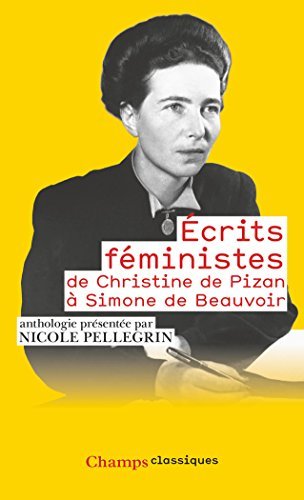
Simone de Beauvoir was a French author and philosopher. She wrote novels, monographs on philosophy, political and social issues, essays, biographies, and an autobiography. She is now best known for her metaphysical novels, including "She Came to Stay" and "The Mandarins", and for her 1949 treatise "The Second Sex", a detailed analysis of women's oppression and a foundational tract of contemporary feminism. —— Simone de Beauvoir est née à Paris le 9 janvier 1908. Elle fit ses études jusqu'au baccalauréat dans le très catholique cours Désir. Agrégée de philosophie en 1929, elle enseigna à Marseille, à Rouen et à Paris jusqu'en 1943. C'est L'Invitée (1943) qu'on doit considérer comme son véritable début littéraire. Viennent ensuite Le sang des autres (1945), Tous les hommes sont mortels (1946), Les Mandarins (prix Goncourt 1954), Les Belles Images (1966) et La Femme rompue (1968). Simone de Beauvoir a écrit des mémoires où elle nous donne elle-même à connaître sa vie, son œuvre. L'ampleur de l'entreprise autobiographique trouve sa justification, son sens, dans une contradiction essentielle à l'écrivain : choisir lui fut toujours impossible entre le bonheur de vivre et la nécessité d'écrire ; d'une part la splendeur contingente, de l'autre la rigueur salvatrice. Faire de sa propre existence l'objet de son écriture, c'était en partie sortir de ce dilemme. Outre le célèbre Deuxième sexe (1949) devenu l'ouvrage de référence du mouvement féministe mondial, l'œuvre théorique de Simone de Beauvoir comprend de nombreux essais philosophiques ou polémiques. Après la mort de Jean-Paul Sartre, Simone de Beauvoir a publié La Cérémonie des adieux (1981) et les Lettres au Castor (1983) qui rassemblent une partie de l'abondante correspondance qu'elle reçut de lui. Jusqu'au jour de sa mort, le 14 avril 1986, elle a collaboré activement à la revue fondée par Sartre et elle-même, Les Temps Modernes, et manifesté sous des formes diverses et innombrables sa solidarité avec le féminisme.