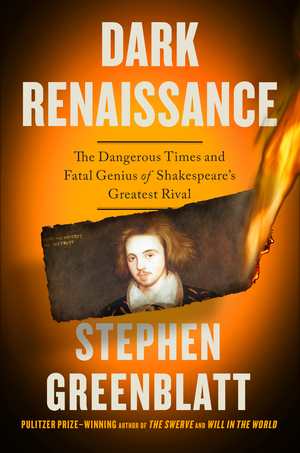



The Pulitzer Prize–winning author of Will in the World reveals the daring and subversive life of Christopher Marlowe—Shakespeare’s contemporary, inspiration, and rival. In brutally repressive sixteenth-century England, artists had been frightened into dull conventionality; foreigners were suspect; popular entertainment largely consisted of coarse spectacles, animal fights, and hangings. Into this crude world came an ambitious cobbler’s son with an uncanny ear for Latin poetry—a torment for most schoolboys, yet for a few, a secret portal to beauty, visionary imagination, transgressive desire, and dangerous skepticism. What Christopher Marlowe found on the other side of that door, and what he did with it, brought about a spectacular explosion of English literature, language, and culture, enabling the success of his collaborator and rival, William Shakespeare. With propulsive narrative flair and brilliant literary criticism, Stephen Greenblatt reconstructs the youthful involvement with the queen’s spy service that shaped Marlowe’s brief, troubling life and gave us his Tamburlaine and Faustus—dramatic masterpieces on power and its costs. And with detailed historical insight, Greenblatt explores how the people Marlowe knew, and the transformations they wrought, birthed the economic, scientific, and cultural power of the modern world—involving Faustian bargains with which we reckon still.

Author

Stephen Greenblatt (Ph.D. Yale) is Cogan University Professor of English and American Literature and Language at Harvard University. Also General Editor of The Norton Anthology of English Literature, Eighth Edition, he is the author of nine books, including Will in the World: How Shakespeare Became Shakespeare; Hamlet in Purgatory; Practicing New Historicism; Marvelous Possessions: The Wonder of the New World; Learning to Curse: Essays in Early Modern Culture; and The Swerve: How the World Became Modern. He has edited six collections of criticism, is the co-author (with Charles Mee) of a play, Cardenio, and is a founding coeditor of the journal Representations. He honors include the MLA's James Russell Lowell Prize, for Shakespearean Negotiations: The Circulation of Social Energy in Renaissance England, the Distinguished Humanist Award from the Mellon Foundation, the Distinguished Teaching Award from the University of California, Berkeley. He is a fellow of the American Academy of Arts and Sciences and the American Philosophical Society. He lives in Cambridge, Massachusetts, and in Vermont. Stephen Jay Greenblatt is a Pulitzer Prize winning American literary critic, theorist and scholar. Greenblatt is regarded by many as one of the founders of New Historicism, a set of critical practices that he often refers to as "cultural poetics"; his works have been influential since the early 1980s when he introduced the term. Greenblatt has written and edited numerous books and articles relevant to new historicism, the study of culture, Renaissance studies and Shakespeare studies and is considered to be an expert in these fields. He is also co-founder of the literary-cultural journal Representations, which often publishes articles by new historicists. His most popular work is Will in the World, a biography of Shakespeare that was on the New York Times Best Seller List for nine weeks.