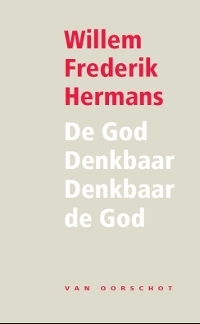



De god Denkbaar Denkbaar de god
1956
First Published
3.41
Average Rating
148
Number of Pages
Zelf vergeleek Hermans dit boek met een tekenfilm. De God Denkbaar drijft op stijl, op 'de betovering van het zinsritme', zoals Hermans het in een interview formuleerde. Hij noemde het een poëtisch boek, misschien ook een godsdienstig 'Het gaat over een God Denkbaar. Een god kan Denkbaar zijn... maar denkbaar, wat is niet allemaal denkbaar? Alles is denkbaar.'
Avg Rating
3.41
Number of Ratings
199
5 STARS
16%
4 STARS
33%
3 STARS
34%
2 STARS
12%
1 STARS
6%
goodreads
Author

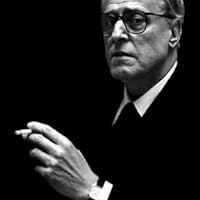
Willem Frederik Hermans
Author · 26 books
Willem Frederik Hermans is one of the greatest post-war Dutch authors. Before devoting his entire life to writing, Hermans had been teaching Physical Geography at the University of Groningen for many years. He had already started writing and publishing in magazines at a young age. His polemic and provocative style led to a court case as early as 1952. His caustic pieces were compiled in Mandarijnen op zwavelzuur (Mandarines in Sulphuric Acid, 1963), which was reprinted with additions a number of times. It is Hermans’s belief that in order to survive people have to create their own reality. It is inevitable that all these experiences of reality will collide. Language is essential to create order out of chaos and plays an important role in this process. In his essays on Wittgenstein, Hermans studied this problem in depth. In his novels and stories Hermans places his characters in a world of certainty for themselves but equivocal for the reader. It is in this field of tension that the intrigue in De tranen der acacia’s (Acacia’s Tears, 1949) and in De donkere kamer van Damocles (The Darkroom of Damocles, 1958) develops. Although stories such as Moedwil en misverstand (Malice and Misunderstanding) and Paranoia have a surrealistic tendency, Hermans’ novels The Darkroom Of Damocles, Nooit meer slapen (Beyond Sleep), Uit talloos veel miljoenen (From Countless Millions) are more realistic or satirical and everything in his rich oeuvre is subordinate to the author’s pessimistic philosophy.