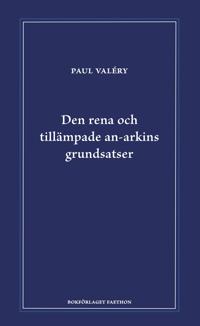



Paul Valéry (1871–1945) var en av förra seklets viktigaste franska författare. Som ung ingick han i kretsen kring Stéphane Mallarmé och blev 1925 invald i Franska akademien. Hans författarskap omfattar många genrer (poesi, dramatik, berättelser, filosofiska dialoger, essäer) och från tjugotalets mitt var han en intellektuell institution inte bara i Frankrike utan i hela Europa. Den rena och tillämpade an-arkins grund satser är en samling anteckningar som Valéry gjorde under 1930-talets slut. De berör inte bara politik i allmänhet, dess specifika väsen och problem, utan också dess verkan på den enskilda människan. Texten bär Valérys signum, den är förtätad och lapidarisk, utmanande och provocerande. Författaren Horace Engdahl har översatt och försett boken med ett förord.
Author

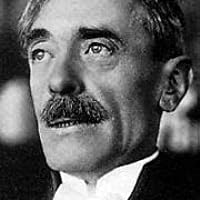
Ambroise-Paul-Toussaint-Jules Valéry was a French poet, essayist, and philosopher. His interests were sufficiently broad that he can be classified as a polymath. In addition to his fiction (poetry, drama and dialogues), he also wrote many essays and aphorisms on art, history, letters, music, and current events. Valéry is best known as a poet, and is sometimes considered to be the last of the French Symbolists. But he published fewer than a hundred poems, and none that drew much attention. On the night of 4 October 1892, during a heavy storm, Paul Valéry entered an existential crisis, which made a big impact on his writing career. Around 1898, his writing activity even came to a near-standstill, due partly to the death of his mentor Stéphane Mallarmé and for nearly twenty years from that time on, Valery did not publish a single word until 1917, when he finally broke this 'Great Silence' with the publication of La Jeune Parque at forty-six years of age. This obscure but superbly musical masterpiece, of 512 alexandrine lines in rhyming pairs, had taken him four years to complete, and immediately secured his fame. It is esteemed by many in France as the greatest French poem of the 20th century.