


Margins
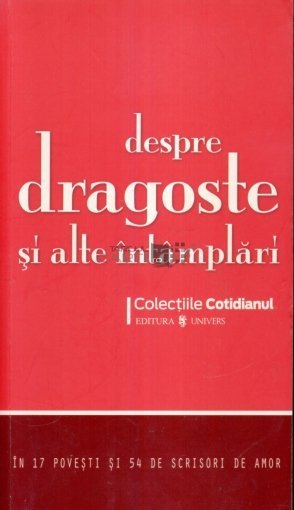
Despre dragoste şi alte întâmplări book cover
Despre dragoste şi alte întâmplări
2008
First Published
3.67
Average Rating
500
Number of Pages

-în 17 povești și alte 54 de scrisori de amor- Mari povești de dragoste a lumii într-o singură carte. Vei descoperi scrisori celebre de amor și povestiri ale iubirii din toate timpurile,vei regăsi poate în paginile acestei antologii extazul și suferințele propriei tale povești de amor,aceea la care te întorci cu gândul sau pe care tocmai o trăiești. Metamorfozele dragostei,în care fericirea devine peste o clipă disperare,iar încrederea totală se distilează misterios în gelozie,apoi,la fel de misterios,redevine încredere eternă,te vor face să visezi la iubiri ce-ar fi putut să fie și,cine știe, să întâlnești în tine insuți personajul îndrăgostit pe care îl ignorai.

Avg Rating
3.67
Number of Ratings
21
5 STARS
24%
4 STARS
29%
3 STARS
43%
2 STARS
0%
1 STARS
5%
goodreads

Authors

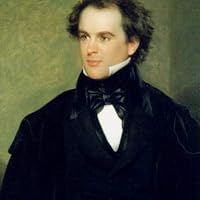
Nathaniel Hawthorne
Nathaniel Hawthorne
Author · 199 books

Nathaniel Hawthorne was a 19th century American novelist and short story writer. He is seen as a key figure in the development of American literature for his tales of the nation's colonial history. Shortly after graduating from Bowdoin College, Hathorne changed his name to Hawthorne. Hawthorne anonymously published his first work, a novel titled Fanshawe, in 1828. In 1837, he published Twice-Told Tales and became engaged to painter and illustrator Sophia Peabody the next year. He worked at a Custom House and joined a Transcendentalist Utopian community, before marrying Peabody in 1842. The couple moved to The Old Manse in Concord, Massachusetts, later moving to Salem, the Berkshires, then to The Wayside in Concord. The Scarlet Letter was published in 1850, followed by a succession of other novels. A political appointment took Hawthorne and family to Europe before returning to The Wayside in 1860. Hawthorne died on May 19, 1864, leaving behind his wife and their three children. Much of Hawthorne's writing centers around New England and many feature moral allegories with a Puritan inspiration. His work is considered part of the Romantic movement and includes novels, short stories, and a biography of his friend, the United States President Franklin Pierce.

Henry James
Henry James
Author · 244 books

Henry James, OM (1843-1916), son of theologian Henry James Sr., brother of the philosopher and psychologist William James and diarist Alice James, was an American-born author, one of the founders and leaders of a school of realism in fiction. He spent much of his life in England and became a British subject shortly before his death. He is primarily known for a series of major novels in which he portrayed the encounter of America with Europe. His plots centered on personal relationships, the proper exercise of power in such relationships, and other moral questions. His method of writing from the point of view of a character within a tale allowed him to explore the phenomena of consciousness and perception, and his style in later works has been compared to impressionist painting. James insisted that writers in Great Britain and America should be allowed the greatest freedom possible in presenting their view of the world, as French authors were. His imaginative use of point of view, interior monologue and unreliable narrators in his own novels and tales brought a new depth and interest to realistic fiction, and foreshadowed the modernist work of the twentieth century. An extraordinarily productive writer, in addition to his voluminous works of fiction he published articles and books of travel writing, biography, autobiography, and criticism,and wrote plays, some of which were performed during his lifetime with moderate success. His theatrical work is thought to have profoundly influenced his later novels and tales.

Hugo von Hofmannsthal
Author · 20 books

Austrian writer Hugo von Hofmannsthal established his reputation with lyric poems and a number of plays, including Yesterday (1891) and Death and the Fool (1893). This Austrian novelist, librettist, poet, dramatist, narrator, and essayist flourished. https://en.wikipedia.org/wiki/Hugo\_vo...

Edith Wharton
Edith Wharton
Author · 168 books

Edith Newbold Jones was born into such wealth and privilege that her family inspired the phrase "keeping up with the Joneses." The youngest of three children, Edith spent her early years touring Europe with her parents and, upon the family's return to the United States, enjoyed a privileged childhood in New York and Newport, Rhode Island. Edith's creativity and talent soon became obvious: By the age of eighteen she had written a novella, (as well as witty reviews of it) and published poetry in the Atlantic Monthly. After a failed engagement, Edith married a wealthy sportsman, Edward Wharton. Despite similar backgrounds and a shared taste for travel, the marriage was not a success. Many of Wharton's novels chronicle unhappy marriages, in which the demands of love and vocation often conflict with the expectations of society. Wharton's first major novel, The House of Mirth, published in 1905, enjoyed considerable literary success. Ethan Frome appeared six years later, solidifying Wharton's reputation as an important novelist. Often in the company of her close friend, Henry James, Wharton mingled with some of the most famous writers and artists of the day, including F. Scott Fitzgerald, André Gide, Sinclair Lewis, Jean Cocteau, and Jack London. In 1913 Edith divorced Edward. She lived mostly in France for the remainder of her life. When World War I broke out, she organized hostels for refugees, worked as a fund-raiser, and wrote for American publications from battlefield frontlines. She was awarded the French Legion of Honor for her courage and distinguished work. The Age of Innocence, a novel about New York in the 1870s, earned Wharton the Pulitzer Prize for fiction in 1921 — the first time the award had been bestowed upon a woman. Wharton traveled throughout Europe to encourage young authors. She also continued to write, lying in her bed every morning, as she had always done, dropping each newly penned page on the floor to be collected and arranged when she was finished. Wharton suffered a stroke and died on August 11, 1937. She is buried in the American Cemetery in Versailles, France.

  • Barnesandnoble.com
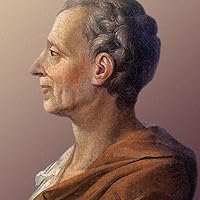
Montesquieu
Montesquieu
Author · 13 books
Charles-Louis de Secondat, baron de La Brède et de Montesquieu, generally referred to as simply Montesquieu, was a French social commentator and political thinker who lived during the Enlightenment. He is famous for his articulation of the theory of separation of powers, which is taken for granted in modern discussions of government and implemented in many constitutions throughout the world. He was largely responsible for the popularization of the terms "feudalism" and "Byzantine Empire."
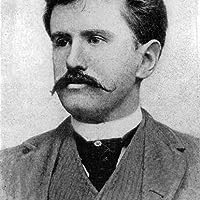
O. Henry
O. Henry
Author · 180 books

Such volumes as Cabbages and Kings (1904) and The Four Million (1906) collect short stories, noted for their often surprising endings, of American writer William Sydney Porter, who used the pen name O. Henry. His biography shows where he found inspiration for his characters. His era produced their voices and his language. Mother of three-year-old Porter died from tuberculosis. He left school at fifteen years of age and worked for five years in drugstore of his uncle and then for two years at a Texas sheep ranch. In 1884, he went to Austin, where he worked in a real estate office and a church choir and spent four years as a draftsman in the general land office. His wife and firstborn died, but daughter Margaret survived him. He failed to establish a small humorous weekly and afterward worked in poorly-run bank. When its accounts balanced not, people blamed and fired him. In Houston, he worked for a few years until, ordered to stand trial for embezzlement, he fled to New Orleans and thence Honduras. Two years later, he returned on account of illness of his wife. Apprehended, Porter served a few months more than three years in a penitentiary in Columbus, Ohio. During his incarceration, he composed ten short stories, including A Blackjack Bargainer , The Enchanted Kiss , and The Duplicity of Hargraves . In 1899, McClure's published Whistling Dick's Christmas Story and Georgia's Ruling . In Pittsburgh, Pennsylvania, he sent manuscripts to New York editors. In the spring of 1902, Ainslee's Magazine offered him a regular income if he moved to New York. In less than eight years, he became a bestselling author of collections of short stories. Cabbages and Kings came first in 1904 The Four Million, and The Trimmed Lamp and Heart of the West followed in 1907, and The Voice of the City in 1908, Roads of Destiny and Options in 1909, Strictly Business and Whirligigs in 1910 followed. Posthumously published collections include The Gentle Grafter about the swindler, Jeff Peters; Rolling Stones , Waifs and Strays , and in 1936, unsigned stories, followed. People rewarded other persons financially more. A Retrieved Reformation about the safe-cracker Jimmy Valentine got $250; six years later, $500 for dramatic rights, which gave over $100,000 royalties for playwright Paul Armstrong. Many stories have been made into films.

Ion Luca Caragiale
Ion Luca Caragiale
Author · 25 books

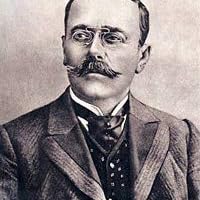
Ion Luca Caragiale was a Wallachian-born Romanian playwright, short story writer, poet, theater manager, political commentator and journalist. Leaving behind an important cultural legacy, he is considered one of the greatest playwrights in Romanian language and literature, as well as one of its most important writers and a leading representative of local humor. Alongside Mihai Eminescu, Ioan Slavici and Ion Creangă, he is seen as one of the main representatives of Junimea, an influential literary society with which he nonetheless parted during the second half of his life. His work, spanning four decades, covers the ground between Neoclassicism, Realism, and Naturalism, building on an original synthesis of foreign and local influences. Although few in number, Caragiale's plays constitute the most accomplished expression of Romanian theater, as well as being important venues for criticism of late 19th century Romanian society. They include the comedies A Stormy Night, Conu Leonida faţă cu reacţiunea, O Scrisoare Pierduta Comedie in patru acte, and the tragedy Năpasta. In addition to these, Caragiale authored the melodrama O soacră, a large number of essays, articles, short stories, novellas and sketch stories, as well as occasional works of poetry and autobiographical texts such as Din carnetul unui vechi sufleur. In many cases, his creations were first published in one of several magazines he edited—Claponul, Moftul Român, Vatra and Epoca. Most of his prose works have been published under the title Momente, schite, povestiri: they include Căldură mare, Cănuţă om sucit, Două loturi, Grand Hotel "Victoria română", as well as several pieces referring to stock characters such as Lache and Mache, Marius Chicoş Rostogan and Mitică. In some of his later fiction writings, including La hanul lui Mânjoală, Kir Ianulea, Abu-Hasan, Pastramă trufanda and Calul dracului, Caragiale adopted the fantasy genre or turned to historical fiction. Ion Luca Caragiale was interested in the politics of the Romanian Kingdom, and oscillated between the liberal current and conservatism. Most of his satirical works target the liberal republicans and the National Liberals, evidencing both his respect for their rivals at Junimea and his connections with the literary critic Titu Maiorescu. He came to clash with National Liberal leaders such as Dimitrie Sturdza and Bogdan Petriceicu Hasdeu, and was a lifelong adversary of the Symbolist poet Alexandru Macedonski. As a result of these conflicts, the most prominent of Caragiale's critics barred his access to the cultural establishment for several decades. During the 1890s, Caragiale rallied with the radical movement of George Panu, before associating with the Conservative Party. After having decided to settle in Berlin, he came to voice strong criticism for Romanian politicians of all colors in the wake of the 1907 Romanian Peasants' Revolt, and ultimately joined the Conservative-Democratic Party. Ion Luca was the nephew of Costache and Iorgu Caragiale, who were major figures of mid-19th-century Romanian theater. His sons Mateiu I. Caragiale and Luca I. Caragiale were both modernist writers.

Jules Barbey d'Aurevilly
Author · 7 books

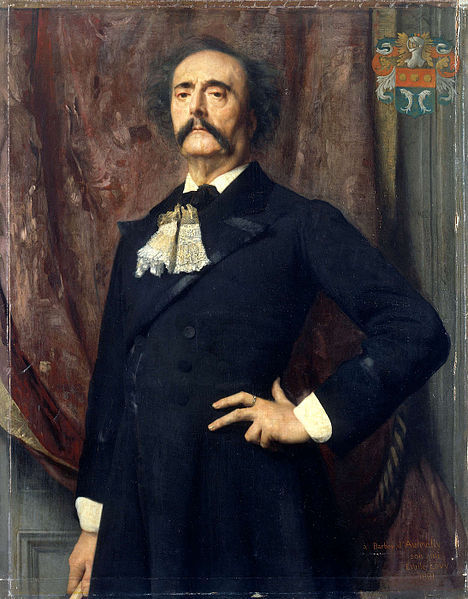
Jules-Amédée Barbey d'Aurevilly was a novelist and literary critic at the Bonapartist paper Le Pays who was influential among fin-de-siècle decadents. He specialised in mystery tales that explored hidden motivation and hinted at evil without being explicitly concerned with anything supernatural. He had a decisive influence on writers such as Auguste Villiers de l'Isle-Adam, Henry James and Marcel Proust.

Ion Creangă
Ion Creangă
Author · 18 books

Ion Creangă was a Moldavian-born Romanian writer, raconteur and schoolteacher. A main figure in 19th century Romanian literature, he is best known for his Childhood Memories volume, his novellas and short stories, and his many anecdotes. Creangă's main contribution to fantasy and children's literature includes narratives structured around eponymous protagonists (Povestea lui Harap Alb, Ivan Turbincă, Dănilă Prepeleac), as well as fairy tales indebted to conventional forms (Povestea porcului, Capra cu trei iezi, Soacra cu trei nurori). Like Swift or Mark Twain, Creangă is more than a story-teller for children or simply a humorist. His work is a human and social document of the ways of thinking and the life of a Romanian village in the nineteenth century. It may seem of restricted interest, owing to the local peasant setting, as well as to the language in which it was written; it carries nevertheless all the joy and pathos of a book of universal significance. Creangă's Memories symbolically picture the destiny of every child walking the path toward maturity and experience. The work inaugurates an original formula in the art of memoir writing, and represents a monument of high spirits and verbal abundance. A jovial verbal torrent, a kind of lexical spree, generously flushes this rhapsody of perennial childhood.

Franz Kafka
Franz Kafka
Author · 347 books

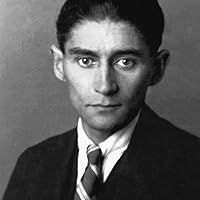
Prague-born writer Franz Kafka wrote in German, and his stories, such as " The Metamorphosis " (1916), and posthumously published novels, including The Trial (1925), concern troubled individuals in a nightmarishly impersonal world. Jewish middle-class family of this major fiction writer of the 20th century spoke German. People consider his unique body of much incomplete writing, mainly published posthumously, among the most influential in European literature. His stories include "The Metamorphosis" (1912) and " In the Penal Colony " (1914), whereas his posthumous novels include The Trial (1925), The Castle (1926) and Amerika (1927). Despite first language, Kafka also spoke fluent Czech. Later, Kafka acquired some knowledge of the French language and culture from Flaubert, one of his favorite authors. Kafka first studied chemistry at the Charles-Ferdinand University of Prague but after two weeks switched to law. This study offered a range of career possibilities, which pleased his father, and required a longer course of study that gave Kafka time to take classes in German studies and art history. At the university, he joined a student club, named Lese- und Redehalle der Deutschen Studenten, which organized literary events, readings, and other activities. In the end of his first year of studies, he met Max Brod, a close friend of his throughout his life, together with the journalist Felix Weltsch, who also studied law. Kafka obtained the degree of doctor of law on 18 June 1906 and performed an obligatory year of unpaid service as law clerk for the civil and criminal courts. Writing of Kafka attracted little attention before his death. During his lifetime, he published only a few short stories and never finished any of his novels except the very short "The Metamorphosis." Kafka wrote to Max Brod, his friend and literary executor: "Dearest Max, my last request: Everything I leave behind me ... in the way of diaries, manuscripts, letters (my own and others'), sketches, and so on, [is] to be burned unread." Brod told Kafka that he intended not to honor these wishes, but Kafka, so knowing, nevertheless consequently gave these directions specifically to Brod, who, so reasoning, overrode these wishes. Brod in fact oversaw the publication of most of work of Kafka in his possession; these works quickly began to attract attention and high critical regard. Max Brod encountered significant difficulty in compiling notebooks of Kafka into any chronological order as Kafka started writing in the middle of notebooks, from the last towards the first, et cetera. Kafka wrote all his published works in German except several letters in Czech to Milena Jesenská.

Mariana Alcoforado
Mariana Alcoforado
Author · 2 books

Mariana Vaz Alcoforado (Santa Maria da Feira, Beja, 22 April 1640 - Beja, 28 July 1723), was a Portuguese nun, living in the convent of the Poor Ladies (Convento de Nossa Senhora da Conceição) in Beja, Portugal. Debate continues as to whether Mariana was the real Portuguese author of the Letters of a Portuguese Nun (comprising five letters). Her purported love affair with the French officer Noël Bouton, Marquis de Chamilly and later Marshall of France, has made Beja famous in (mainly Portuguese and French) literary circles. Some literary scholars consider the letters a fictional work and their authorship is ascribed to Gabriel-Joseph de La Vergne, comte de Guilleragues (1628–1685), although a real nun named Mariana Alcoforado did exist. In her recent book Letters of a Portuguese Nun: Uncovering the Mystery Behind a Seventeenth-Century Forbidden Love (2006), the author Myriam Cyr has attempted to reassert the attribution of the letters to the real Mariana Alcoforado.

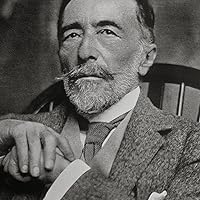
Joseph Conrad
Joseph Conrad
Author · 131 books

Joseph Conrad (born Józef Teodor Konrad Korzeniowski ) was a Polish-born English novelist who today is most famous for Heart of Darkness, his fictionalized account of Colonial Africa. Conrad left his native Poland in his middle teens to avoid conscription into the Russian Army. He joined the French Merchant Marine and briefly employed himself as a wartime gunrunner. He then began to work aboard British ships, learning English from his shipmates. He was made a Master Mariner, and served more than sixteen years before an event inspired him to try his hand at writing. He was hired to take a steamship into Africa, and according to Conrad, the experience of seeing firsthand the horrors of colonial rule left him a changed man. Joseph Conrad settled in England in 1894, the year before he published his first novel. He was deeply interested in a small number of writers both in French and English whose work he studied carefully. This was useful when, because a need to come to terms with his experience, lead him to write Heart of Darkness, in 1899, which was followed by other fictionalized explorations of his life. He has been lauded as one of the most powerful, insightful, and disturbing novelists in the English canon despite coming to English later in life, which allowed him to combine it with the sensibilities of French, Russian, and Polish literature.

Stendhal
Stendhal
Author · 60 books

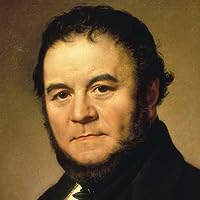
Henri-Marie Beyle, better known by his pen name Stendhal, was a 19th-century French writer. Known for his acute analysis of his characters' psychology, he is considered one of the earliest and foremost practitioners of realism in his two novels Le Rouge et le Noir (The Red and the Black, 1830) and La Chartreuse de Parme (The Charterhouse of Parma, 1839).

Anton Chekhov
Anton Chekhov
Author · 608 books

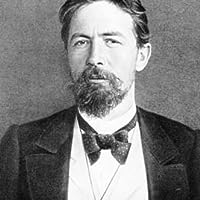
Anton Pavlovich Chekhov (Russian: Антон Павлович Чехов ) was born in the small seaport of Taganrog, southern Russia, the son of a grocer. Chekhov's grandfather was a serf, who had bought his own freedom and that of his three sons in 1841. He also taught himself to read and write. Yevgenia Morozova, Chekhov's mother, was the daughter of a cloth merchant. "When I think back on my childhood," Chekhov recalled, "it all seems quite gloomy to me." His early years were shadowed by his father's tyranny, religious fanaticism, and long nights in the store, which was open from five in the morning till midnight. He attended a school for Greek boys in Taganrog (1867-68) and Taganrog grammar school (1868-79). The family was forced to move to Moscow following his father's bankruptcy. At the age of 16, Chekhov became independent and remained for some time alone in his native town, supporting himself through private tutoring. In 1879 Chekhov entered the Moscow University Medical School. While in the school, he began to publish hundreds of comic short stories to support himself and his mother, sisters and brothers. His publisher at this period was Nicholas Leikin, owner of the St. Petersburg journal Oskolki (splinters). His subjects were silly social situations, marital problems, farcical encounters between husbands, wives, mistresses, and lovers, whims of young women, of whom Chekhov had not much knowledge – the author was shy with women even after his marriage. His works appeared in St. Petersburg daily papers, Peterburskaia gazeta from 1885, and Novoe vremia from 1886. Chekhov's first novel, Nenunzhaya pobeda (1882), set in Hungary, parodied the novels of the popular Hungarian writer Mór Jókai. As a politician Jókai was also mocked for his ideological optimism. By 1886 Chekhov had gained a wide fame as a writer. His second full-length novel, The Shooting Party, was translated into English in 1926. Agatha Christie used its characters and atmosphere in her mystery novel The Murder of Roger Ackroyd (1926). Chekhov graduated in 1884, and practiced medicine until 1892. In 1886 Chekhov met H.S. Suvorin, who invited him to become a regular contributor for the St. Petersburg daily Novoe vremya. His friendship with Suvorin ended in 1898 because of his objections to the anti-Dreyfus campaign conducted by paper. But during these years Chechov developed his concept of the dispassionate, non-judgmental author. He outlined his program in a letter to his brother Aleksandr: "1. Absence of lengthy verbiage of political-social-economic nature; 2. total objectivity; 3. truthful descriptions of persons and objects; 4. extreme brevity; 5. audacity and originality; flee the stereotype; 6. compassion." Chekhov's first book of stories (1886) was a success, and gradually he became a full-time writer. The author's refusal to join the ranks of social critics arose the wrath of liberal and radical intelligentsia and he was criticized for dealing with serious social and moral questions, but avoiding giving answers. However, he was defended by such leading writers as Leo Tolstoy and Nikolai Leskov. "I'm not a liberal, or a conservative, or a gradualist, or a monk, or an indifferentist. I should like to be a free artist and that's all..." Chekhov said in 1888. The failure of his play The Wood Demon (1889) and problems with his novel made Chekhov to withdraw from literature for a period. In 1890 he travelled across Siberia to remote prison island, Sakhalin. There he conducted a detailed census of some 10,000 convicts and settlers condemned to live their lives on that harsh island. Chekhov hoped to use the results of his research for his doctoral dissertation. It is probable that hard conditions on the island also weakened his own physical condition. From this journey was born his famous travel book T

Ioan T. Morar
Ioan T. Morar
Author · 5 books

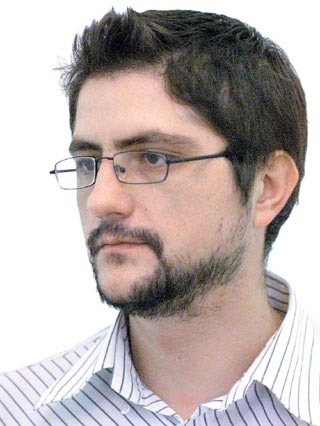
Ioan T. Morar este un scriitor, jurnalist, diplomat și activist civic din România. În 1981 a absolvit ca șef de promoție facultatea de Filologie a Universității Timișoara, secția română-franceză. În perioada 1981-1986 a fost profesor de limba română la Liceul Industrial „Textila” din Lugoj. Din 1987 a devenit redactor al revistelor Viața studențească și Amfiteatru. După 1989 a lucrat la Cuvântul și Alianța Civică. Între 1990 și 1991 a fost redactor șef la Varietăți, TVR, de unde a demisionat. Este membru fondator al Academiei Cațavencu unde lucrează și în prezent. Din toamna anului 2004 este și senior editor la Cotidianul. A realizat mai multe emisiuni de televiziune, pînă în 1996 activînd în grupul Divertis. Este realizator și prezentator al emisiunii „Lumea citește!” pe TVR 1. Este membru al Uniunii Scriitorilor din România. În 2010 a fost numit în postul de consul general român la Marseilles, Franța.

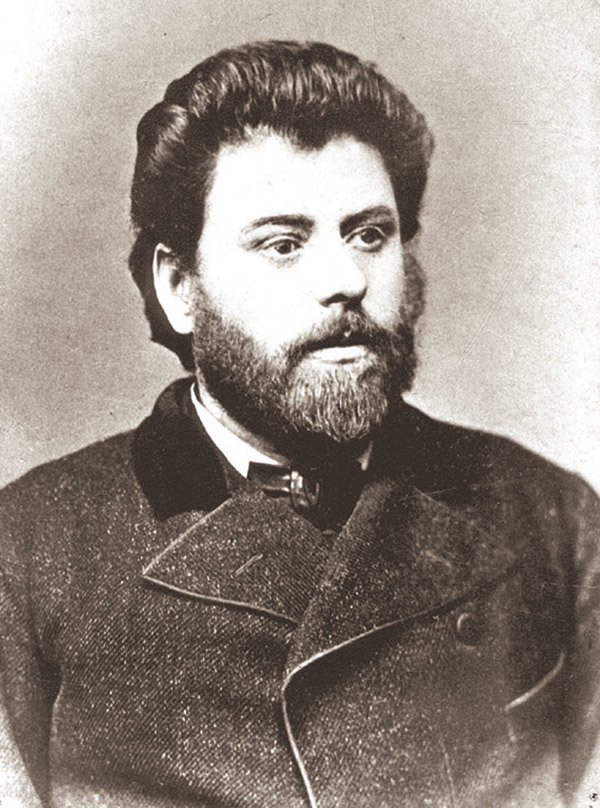
Mihai Eminescu
Mihai Eminescu
Author · 23 books

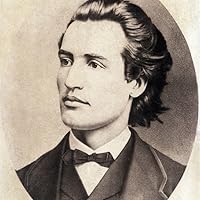
Mihai Eminescu (Romanian pronunciation: [miˈhaj emiˈnesku]; born Mihail Eminovici) was a Romantic poet, novelist and journalist, often regarded as the most famous and influential Romanian poet. Eminescu was an active member of the Junimea literary society and he worked as an editor for the newspaper Timpul ("The Time"), the official newspaper of the Conservative Party (1880–1918). His first poems volume was published when he was 16 and he went to Vienna to study when he was 19. The poet's manuscripts, containing 46 volumes and approximately 14,000 pages, were offered by Titu Maiorescu as a gift to the Romanian Academy during the meeting that was held on January 25, 1902. Notable works include Luceafărul (Evening Star), Odă în metru antic (Ode in Ancient Meter), and the five Letters (Epistles/Satires). In his poems he frequently used metaphysical, mythological and historical subjects. In general his work was influenced by the German philosopher Arthur Schopenhauer.

Giovanni Boccaccio
Giovanni Boccaccio
Author · 27 books
Giovanni Boccaccio (1313 – 21 December 1375) was an Italian author and poet, a friend and correspondent of Petrarch, and an important Renaissance humanist in his own right and author of a number of notable works including the Decameron, On Famous Women, and his poetry in the Italian vernacular. Boccaccio is particularly notable for his dialogue, of which it has been said that it surpasses in verisimilitude that of just about all of his contemporaries, since they were medieval writers and often followed formulaic models for character and plot.
548 Market St PMB 65688, San Francisco California 94104-5401 USA
© 2026 Paratext Inc. All rights reserved