


Part of Series
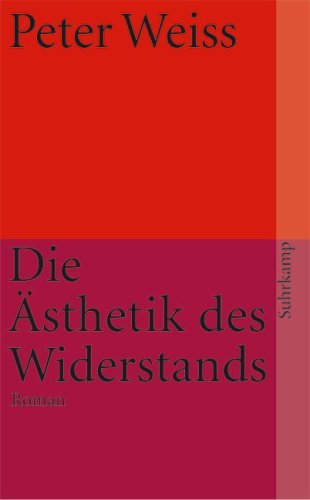
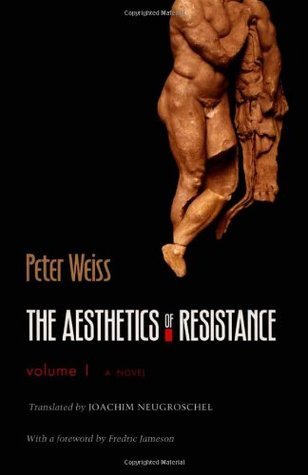
Zwischen 1975 und 1981 erschien sein »literarisches Hauptwerk«, so bezeichnete Peter Weiss Die Ästhetik des Widerstands. Der Roman war und ist ein Kultbuch. Wer kennt nicht die Eingangsszene, die Analyse des Pergamonaltars im Berlin des Jahres 1937 durch Mitglieder des Untergrunds, und die letzten, von Melancholie getränkten Reflexionen über die mögliche Erfolglosigkeit des Widerstands gegen den Faschismus? An Versuchen, die Singularität der Ästhetik des Widerstands anzudeuten, hat es nicht gefehlt: die einen verglichen das Werk mit Marcel Prousts Auf der Suche nach der verlorenen Zeit, andre fühlten sich an James Joyce' Ulysses erinnert, wieder andere an Walter Benjamins Passagen-Werk. Die beiden Ausgaben, in der Bundesrepublik die des Suhrkamp Verlags, Frankfurt am Main, in der DDR ab 1983 die des Henschel Verlags, Ost-Berlin, weichen im Textbestand vor allem im dritten Teil beträchtlich voneinander ab. Nun hat der ausgewiesene Philologe und Weiss-Kenner Jürgen Schutte die definitive Fassung erstellt: Sie präsentiert den Text nach den Vorgaben von Peter Weiss.
Author

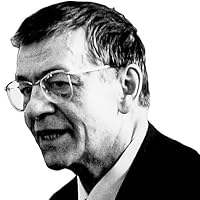
Peter Ulrich Weiss was a German writer, painter, and artist of adopted Swedish nationality. He is particularly known for his play Marat/Sade and his novel The Aesthetics of Resistance. Weiss' first art exhibition took place in 1936. His first produced play was Der Turm in 1950. In 1952 he joined the Swedish Experimental Film Studio, where he made films for several years. During this period, he also taught painting at Stockholm's People's University, and illustrated a Swedish edition of The Book of One Thousand and One Nights. Until the early 1960s, Weiss also wrote prose. His work consists of short and intense novels with Kafkaesque details and feelings, often with autobiographical background. One of the most known films made by Peter Weiss is an experimental one, The Mirage (1959) and the second one - it is very seldom mentioned - is a film Weiss directed in Paris 1960 together with Barbro Boman, titled Play Girls or The Flamboyant Sex (Schwedische Mädchen in Paris or Verlockung in German). Among the short films by Weiss, The Studio of Doctor Faust (1956) shows the extremely strong link of Weiss to a German cultural background. Weiss' best-known work is the play Marat/Sade (1963), first performed in West Berlin in 1964, which brought him widespread international attention. The following year, legendary director Peter Brook staged a famous production in New York City. It studies the power in society through two extreme and extremely different historical persons, Jean-Paul Marat, a brutal hero of the French Revolution, and the Marquis de Sade, for whom sadism was named. In Marat/Sade, Weiss uses a technique which, to quote from the play itself, speaks of the play within a play within itself: "Our play's chief aim has been to take to bits great propositions and their opposites, see how they work, and let them fight it out." The play is considered a classic, and is still performed, although less regularly. Weiss was honored with the Charles Veillon Award, 1963; the Lessing Prize, 1965; the Heinrich Mann Prize, 1966; the Carl Albert Anderson Prize, 1967; the Thomas Dehler Prize, 1978; the Cologne Literature Prize, 1981; the Bremen Literature Prize, 1982; the De Nios Prize, 1982; the Swedish Theatre Critics Prize, 1982; and the Georg Büchner Prize, 1982. A translation of Weiss' L'instruction (Die Ermittlung) was performed at London's Young Vic theater by a Rwandan company in November 2007. The production presented a dramatic contrast between the play's view on the Holocaust and the Rwandan actors' own experience with their nation's genocide. http://literaturkritik.de/public/reze... http://literaturkritik.de/public/reze...