Margins
Sign in
Margins
548 Market St PMB 65688, San Francisco California 94104-5401 USA
hello@margins.app
·
+1 (650) 223-5283
Privacy Policy
·
Terms of Use
© 2026 Paratext Inc. All rights reserved
The Aesthetics of Resistance
The Aesthetics of Resistance
Series · 4 books · 1975-1983
By
Peter Weiss
Books in series
#1
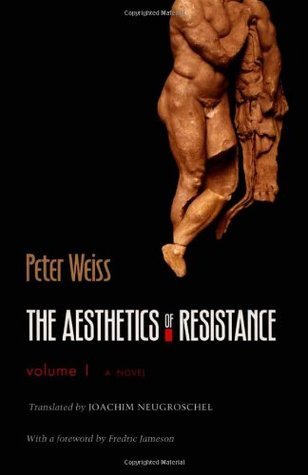
The Aesthetics of Resistance, Vol. 1
1975
A major literary event, the publication of this masterly translation makes one of the towering works of twentieth-century German literature available to English-speaking readers for the first time. The three-volume novel The Aesthetics of Resistance is the crowning achievement of Peter Weiss, the internationally renowned dramatist best known for his play Marat/Sade . The first volume, presented here, was initially published in Germany in 1975; the third and final volume appeared in 1981, just six months before Weiss’s death. Spanning the period from the late 1930s to World War II, this historical novel dramatizes antifascist resistance and the rise and fall of proletarian political parties in Europe. Living in Berlin in 1937, the unnamed narrator and his peers—sixteen- and seventeen-year-old working-class students—seek ways to express their hatred for the Nazi regime. They meet in museums and galleries, and in their discussions they explore the affinity between political resistance and art, the connection at the heart of Weiss’s novel. Weiss suggests that meaning lies in embracing resistance, no matter how intense the oppression, and that we must look to art for new models of political action and social understanding. The novel includes extended meditations on paintings, sculpture, and literature. Moving from the Berlin underground to the front lines of the Spanish Civil War and on to other parts of Europe, the story teems with characters, almost all of whom are based on historical figures. The Aesthetics of Resistance is one of the truly great works of postwar German literature and an essential resource for understanding twentieth-century German history.
#2
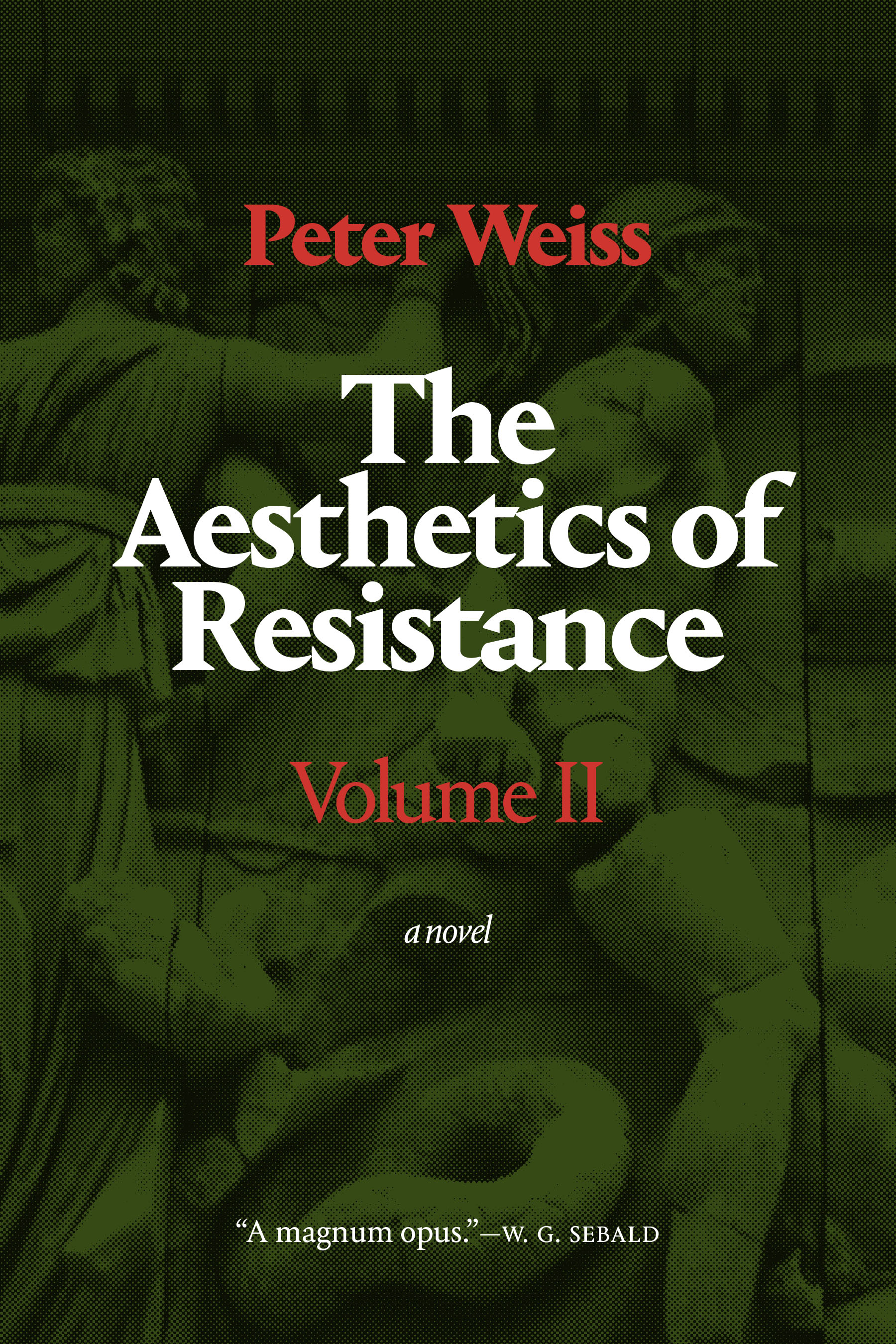
The Aesthetics of Resistance, Volume II
1978
A major literary event, the publication of the second volume of Peter Weiss' three-volume novel The Aesthetics of Resistance makes one of the towering works of twentieth-century German literature available to English-speaking readers for the first time. The crowning achievement of Peter Weiss—the internationally renowned writer best known for his play Marat/Sade—The Aesthetics of Resistance spans the period from the late 1930s to World War II, dramatizing antifascist resistance and the rise and fall of proletarian political parties in Europe. Volume two, initially published in 1978, opens as the unnamed narrator finds himself in Paris after having retreated from the front lines of the Spanish Civil War. From there, he moves on to Stockholm, where he works in a factory, becomes involved with the Communist Party, and meets Bertolt Brecht. Featuring the narrator's extended meditations on paintings, sculpture, and literature, the novel teems with characters, almost all of whom are based on historical figures. Throughout, the narrator explores the affinity between political resistance and art—the connection at the heart of Weiss' novel. Weiss suggests that meaning lies in embracing resistance, no matter how intense the oppression, and that we must look to art for new models of political action and social understanding. The Aesthetics of Resistance is one of the truly great works of postwar German literature and an essential resource for understanding twentieth-century history.
#3
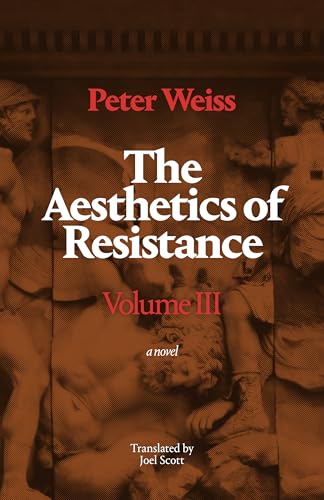
The Aesthetics of Resistance, Volume III
1981
Ce troisieme volume est moins la chronique que la synthese politique et historique d'evenements de ce siecle. Au premier plan cette fois, le destin de chaque individu vu jusqu'alors dans un errance des parents du narrateur chasses par les persecutions nazies de camp en camp ou ils sont temoins des horreurs perpetrees; suicide de l'ecrivain Karin Boye que l'enormite de ces horreurs reduit au silence; inconcevables difficultes des refugies politiques en Suede; combats des antifascistes dans la clandestinite en Allemagne nazie et aneantissement des membres berlinois de ce qui fut l'"orchestre rouge". Et parallelement toujours une reflexion sur le sens de l'art et sa force dans l'expression de la realite politique. Et l'espoir, l'endurance de ceux qui, ainsi que l'exprime Heilmann dans la lettre-testament redigee la nuit precedant son "Ce que nous avons voulu saisir n'a jamais pu etre prouve. Notre message resta plutot modeste. Il y avait parmi nous des scientifiques, des artistes. Meme leur esprit n'a pas suffit pour gagner le monde a notre dessein. Il y avait aussi un sculpteur, son oeuvre etait mince, et un ecrivain, ses poemes et ses romans n'entreront pas dans l'histoire de la litterature. Ils travaillaient pourtant avec autant de passion que ceux qui seront peut-etre epargnes et vous laisseront quelque chose qui vous enrichira. Ce que je veux dire, c'est que leurs realisations ne peuvent etre mesurees aux criteres evidents pour tous, qu'il faudra un jour inventer une nouvelle balance qui rendra justice au poids de leur vie. Il y a quelques mois encore, je deplorais de ne pouvoir connaitre ce qui commencera, a present il me suffit de n'avoir jamais fait autre chose que ce que j'ai tenu pour juste, meme si ce qui est juste tend de nouveau a s'estomper."
#1-3
Die Ästhetik des Widerstands
1983
Zwischen 1975 und 1981 erschien sein »literarisches Hauptwerk«, so bezeichnete Peter Weiss Die Ästhetik des Widerstands. Der Roman war und ist ein Kultbuch. Wer kennt nicht die Eingangsszene, die Analyse des Pergamonaltars im Berlin des Jahres 1937 durch Mitglieder des Untergrunds, und die letzten, von Melancholie getränkten Reflexionen über die mögliche Erfolglosigkeit des Widerstands gegen den Faschismus? An Versuchen, die Singularität der Ästhetik des Widerstands anzudeuten, hat es nicht gefehlt: die einen verglichen das Werk mit Marcel Prousts Auf der Suche nach der verlorenen Zeit, andre fühlten sich an James Joyce' Ulysses erinnert, wieder andere an Walter Benjamins Passagen-Werk. Die beiden Ausgaben, in der Bundesrepublik die des Suhrkamp Verlags, Frankfurt am Main, in der DDR ab 1983 die des Henschel Verlags, Ost-Berlin, weichen im Textbestand vor allem im dritten Teil beträchtlich voneinander ab. Nun hat der ausgewiesene Philologe und Weiss-Kenner Jürgen Schutte die definitive Fassung erstellt: Sie präsentiert den Text nach den Vorgaben von Peter Weiss.
Author
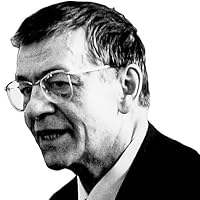
Peter Weiss
Author · 15 books