Margins
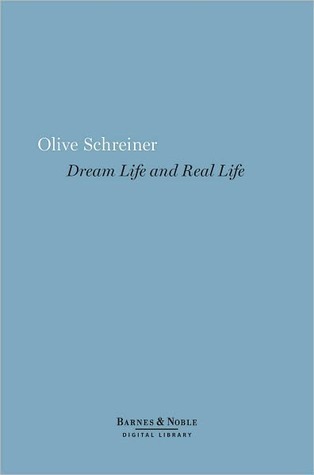
Dream Life and Real Life book cover
Dream Life and Real Life
A Little African Story
1893
First Published
3.45
Average Rating
47
Number of Pages
pubOne.info present you this new edition. Little Jannita sat alone beside a milk-bush. Before her and behind her stretched the plain, covered with red sand and thorny karoo bushes; and here and there a milk-bush, looking like a bundle of pale green rods tied together. Not a tree was to be seen anywhere, except on the banks of the river, and that was far away, and the sun beat on her head. Round her fed the Angora goats she was herding; pretty things, especially the little ones, with white silky curls that t

Avg Rating
3.45
Number of Ratings
40
5 STARS
25%
4 STARS
23%
3 STARS
33%
2 STARS
13%
1 STARS
8%
goodreads

Author

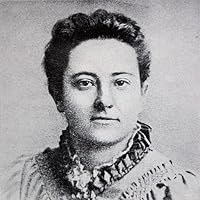
Olive Schreiner
Olive Schreiner
Author · 9 books

Olive Schreiner (24 March 1855 - December 11, 1920), was a South African author, pacifist and political activist. She is best known for her novel The Story of an African Farm, which has been acclaimed for the manner it tackled the issues of its day, ranging from agnosticism to the treatment of women. From Wikipedia: Olive Emilie Albertina Schreiner (1855-1920) was named after her three older brothers, Oliver (1848-1854), Albert (1843-1843) and Emile (1852-1852), who died before she was born. She was the ninth of twelve children born to a missionary couple, Gottlob Schreiner and Rebecca Lyndall at the Wesleyan Missionary Society station at Wittebergen in the Eastern Cape, near Herschel in South Africa. Her childhood was a harsh one: her father was loving and gentle, though unpractical; but her mother Rebecca was intent on teaching her children the same restraint and self-discipline that had been a part of her upbringing. Olive received virtually all her initial education from her mother who was well-read and gifted.[clarification needed] Her eldest brother Fred (1840-1901) was educated in England and became headmaster of a school in Eastbourne. When Olive was six, Gottlob transferred to Healdtown in the Eastern Cape to run the Wesleyan training institute there. As with so many of his other projects, he simply was not up to the task and was expelled in disgrace for trading against missionary regulations. He was forced to make his own living for the first time in his life, and tried a business venture. Again, he failed and was insolvent within a year. The family lived in abject poverty as a result. However, Olive was not to remain with her parents for long. When her older brother Theophilus (1844-1920) was appointed headmaster in Cradock in 1867, she went to live with him along with two of her siblings. She also attended his school and received a formal education for the first time. Despite that, she was no happier in Cradock than she had been in Wittebergen or Healdtown. Her siblings were very religious, but Olive had already rejected the Christianity of her parents as baseless and it was the cause of many arguments with her family. Therefore, when Theo and her brother left Cradock for the diamond fields of Griqualand West, Olive chose to become a governess . On the way to her first post at Barkly East, she met Willie Bertram, who shared her views of religion and who lent her a copy of Herbert Spencer’s First Principles. This text was to have a profound impact on her. While rejecting religious creeds and doctrine, Spencer also argued for a belief in an Absolute that lay beyond the scope of human knowledge and conception. This belief was founded in the unity of nature and a teleological universe, both of which Olive was to appropriate for herself in her attempts to create a morality free of organized religion. After this meeting, Olive travelled from place to place, accepting posts as a governess with various families and leaving them because of the sexual predation of her male employers in many cases. During this time she met Julius Gau, to whom she became engaged under doubtful circumstances. For whatever reason, their engagement did not last long and she returned to live with her parents and then with her brothers. She read widely and began writing seriously. She started Undine at this time. However, her brothers’ financial situation soon deteriorated, as diamonds became increasingly difficult to find. Olive had no choice but to resume her transient lifestyle, moving between various households and towns, until she returned briefly to her parents in 1874. It was there that she had the first of the asthma attacks that would plague her for the rest of her life. Since her parents were no more financially secure than before and because of her ill-health, Olive was forced to resume working in order to support them.

548 Market St PMB 65688, San Francisco California 94104-5401 USA
© 2026 Paratext Inc. All rights reserved