Margins
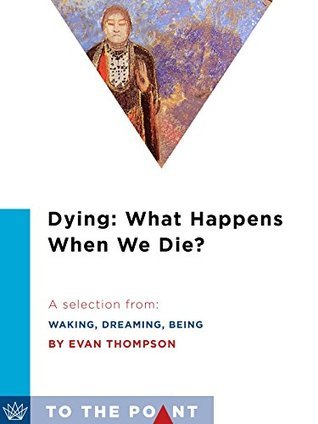
Dying book cover
Dying
What Happens When We Die?: A Selection from Waking, Dreaming, Being: Self and Consciousness in Neuroscience, Meditation, and Philosophy
2014
First Published
3.85
Average Rating
60
Number of Pages
In the ancient Indian epic, Mahabharata, the Lord of Death asks, "What is the most wondrous thing in the world?", and his son answers, "It is that all around us people can be dying and we don't believe it can happen to us." This refusal to face the inevitability of death is especially prevalent in modern Western societies. We look to science to tell us how things are but biomedicine and neuroscience divest death of any personal significance by presenting it as just the breakdown of the body and the cessation of consciousness. The Tibetan Buddhist perspective stands in sharp contrast to this modern scientific notion of death. This tradition conceives dying not as the mere termination of living processes within the body, but as a rite of passage and transformation of consciousness. Physical death, in this tradition, initiates a transition from one of the six bardos ("in-between states") of consciousness to an opportunity for total enlightenment. In What Happens When We Die?, Evan Thompson establishes a middle ground between the depersonalized, scientific account of death and the highly ritualized notion of death found in Tibetan Buddhism. Thompson's depiction of death and dying offers an insightful neurobiological analysis while also delving into the phenomenology of death, examining the psychological and spiritual effects of dying on human consciousness. In a trenchant critique of the near-death experience literature, he shows that these experiences do not provide evidence for the continuation of consciousness after death, but also that they must be understood phenomenologically and not in purely neuroscience terms. We must learn to tolerate the "ultimate ungraspability of death" by bearing witness to dying and death instead of turning away from them. We can learn to face the experience of dying through meditative practice, and to view the final moments of life not as a frightening inevitability to be shunned or ignored, but as a deeply personal experience to be accepted and even embraced.

Avg Rating
3.85
Number of Ratings
27
5 STARS
30%
4 STARS
41%
3 STARS
15%
2 STARS
15%
1 STARS
0%
goodreads

Author

Evan Thompson
Evan Thompson
Author · 7 books

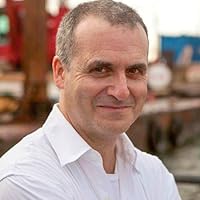
Evan Thompson is a writer and professor of philosophy at the University of British Columbia in Vancouver. He works on the nature of the mind, the self, and human experience. His work combines cognitive science, philosophy of mind, phenomenology, and cross-cultural philosophy, especially Asian philosophical traditions. He is the author of Waking, Dreaming, Being: Self and Consciousness in Neuroscience, Meditation, and Philosophy (Columbia University Press, 2015); Mind in Life: Biology, Phenomenology, and the Sciences of Mind (Harvard University Press, 2007); and Colour Vision: A Study in Cognitive Science and the Philosophy of Perception (Routledge Press, 1995). He is the co-author, with Francisco J. Varela and Eleanor Rosch, of The Embodied Mind: Cognitive Science and Human Experience (MIT Press, 1991, revised edition 2016). Evan is an Elected Fellow of the Royal Society of Canada. Evan received his A.B. from Amherst College in 1983 in Asian Studies and his Ph.D. in Philosophy from the University of Toronto in 1990. He was Professor of Philosophy at the University of Toronto from 2005 to 2013, and held a Canada Research Chair in Cognitive Science and the Embodied Mind at York University from 2002 to 2005. In 2014, he was the Numata Invited Visiting Professor at the Center for Buddhist Studies at the University of California, Berkeley. He has also held invited visiting appointments at the Faculty of Philosophy, Friedrich-Schiller-Universität Jena, the Ecole Polytechnique (Paris), the Center for Subjectivity Research at the University of Copenhagen, and the Department of Philosophy at the University of Colorado, Boulder. In 2012 he co-directed, with Christian Coseru and Jay Garfield, the National Endowment for the Humanities Summer Institute on Investigating Consciousness: Buddhist and Contemporary Philosophical Perspectives, and he will again be co-director, with Coseru and Garfield, of the 2018 NEH Summer Institute on Self-Knowledge in Eastern and Western Philosophies. Evan is currently serving as the Co-Chair of the Steering Council of the Mind and Life Institute and is a member of the Dialogue and Education Working Circle of the Kalein Centre in Nelson, British Columbia.

548 Market St PMB 65688, San Francisco California 94104-5401 USA
© 2026 Paratext Inc. All rights reserved