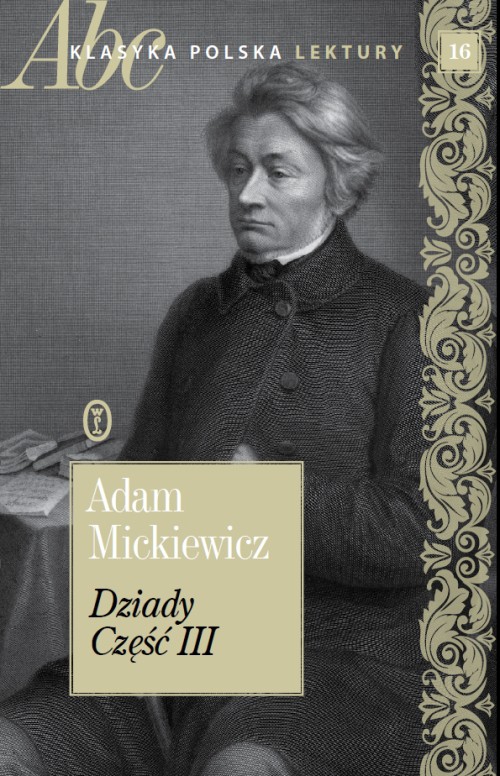
Adam Mickiewicz's Forefathers' Eve, Part IV
1823
Part IV of Adam Mickiewicz's monumental drama Dziady [Forefather's Eve] continues the saga of Gustaw: a young man tragically separated from his love. Although ostensibly a Wertherian apology for romantic love, in an age when financial concerns and social status often determined who marries whom, Part IV is actually a broader, metaphysical discussion of Christian love. Set against the semi-pagan holiday of Forefathers' Eve, when the souls of the dead were conjured by the living in order to consult them and aid them in their lives beyond the veil of mortality, Part IV is both an example of the romantic age's interest in folklore, and a continuation of the holistic universe of Dante Alighieri. From Part IV, Mickiewicz would continue to transform the character of Gustaw, and the sense of his greatest drama. A decade later, Part III (also available in a splendid translation by C.S. Kraszewski), Mickiewicz was to transform Gustaw into Konrad, and re-orient the character's love from one woman to his entire nation. Charles S. Kraszewski's translation of Mickiewicz's Forefathers' Eve is the only complete English version of Parts II, IV and III. Sections of Part III have been set to music by the Lithuanian composer Arturas Bumšteinas in "Different Trains," and the entirety of the translation has been commissioned by the Teatr Polski of Wrocław, Poland, for use as operatic captions during the performance of the Polish original.