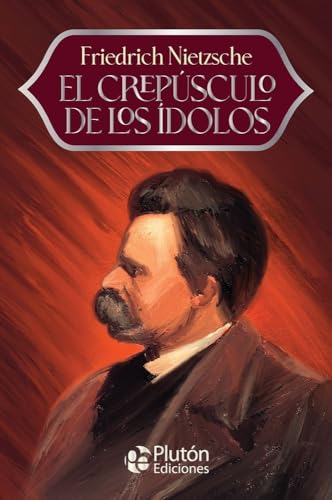
El crepúsculo de los ídolos
1930
First Published
3.75
Average Rating
128
Number of Pages
En el último periodo de su vida lúcida, Nietzsche resume su lucha contra las falsas concepciones que conforman la tradición de la filosofía, la moral y la religión de Occidente. Para llevar a cabo tal ataque, el filósofo decide analizar aquellos ídolos que han aparecido a lo largo de esa tradición como valores supremos que guían y regulan un tipo de comportamiento que se corresponde con un modo de vida. Esos ídolos, cuando se les toca con el martillo, suenan a hueco, no son nada más que fuegos fatuos que el propio hombre ha introducido en la realidad y que se desvanecen ante la sola mirada atenta de quien los contempla con atención y sensatez. El crepúsculo de los ídolos es el ocaso de los grandes valores “eternos” que han dominado una civilización y una forma de vida, un ocaso que tal vez preceda a una nueva aurora llena de promesas, a un cambio de todos los valores.

Avg Rating
3.75
Number of Ratings
12
5 STARS
25%
4 STARS
25%
3 STARS
50%
2 STARS
0%
1 STARS
0%
goodreads
Author

Friedrich Nietzsche
Author · 110 books
Friedrich Wilhelm Nietzsche (Ph.D., Philology, Leipzig University, 1869) was a German philosopher of the late 19th century who challenged the foundations of Christianity and traditional morality. He was interested in the enhancement of individual and cultural health, and believed in life, creativity, power, and the realities of the world we live in, rather than those situated in a world beyond. Central to his philosophy is the idea of “life-affirmation,” which involves a questioning of all doctrines that drain life's expansive energies, however socially prevalent those views might be. Often referred to as one of the first existentialist philosophers along with Søren Kierkegaard (1813–1855). From the Stanford Encyclopedia of Philosophy