Margins




548 Market St PMB 65688, San Francisco California 94104-5401 USA
© 2026 Paratext Inc. All rights reserved
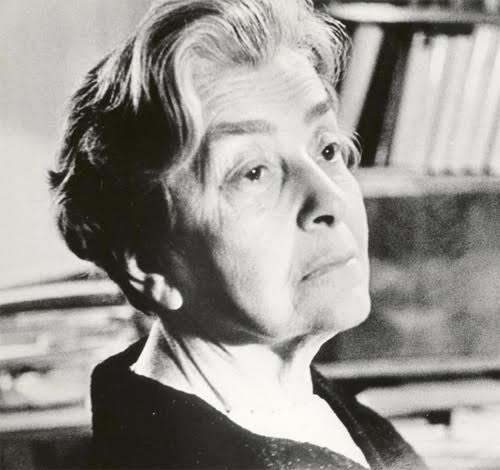
Drabkina Elizaveta Yakovlevna was a Soviet writer. Until 1905 she lived in Belgium. Father Gusev Sergei Ivanovich, in 1886 joined the Union of Struggle for the Liberation of the Working Class. Participated in the preparation of the 2nd Congress of the RSDLP in Brussels, an unshakable Bolshevik. In 1917, secretary of the military revolutionary committee of the Petrograd Soviet. During the civil war, in leading positions in the Red Army. He died in 1933. Mother Theodosia Ilyinichna Drabkina, an old Bolshevik woman, more than once performed Lenin's tasks. Party nickname - Natasha, in the party since 1902, the prototype of the propagandist Natasha in M. Gorky's novel "Mother". In 1905 he was a member of the militant organization of the Bolshevik Party. In the days of the December armed uprising, she carried the fuses of bombs and fuses to Moscow. She worked at the Foreign Literature publishing house. Elizaveta graduated from high school in 1917, in April 1917 she joined the Bolshevik Party. Machine gunner in the Red Army. She took part in the storming of the Winter Palace. She fought on the southern front and was awarded a gold watch. She worked as Sverdlov's secretary until his death. Participated in the suppression of the Kronstadt uprising. 1923-1927 graduated from the history department of the Institute of the Red Professors. In 1925-1926 she visited Germany and France. In 1926 she joined the Trotskyist opposition. In March 1928 in Kiev expelled from the party. In January 1929 she left for her husband (Babenets Alexander Ivanovich). She was sentenced to 3 years of exile, in fact she did not serve. In August 1929 she broke with the Trotskyist opposition. In 1930 she was reinstated in the party, again expelled in August 1936. In December 1936 she was arrested for participating in the Trotskyist organization. She was sentenced to 5 years in prison, then on revision under Art. 17-58-8, 7, 10, 11 of the Criminal Code a new term of 15 years in labor camps and 5 years of deprivation of political rights. The Supreme Court of Art. 58-7 removed. She was serving a sentence in the Norillag. She worked at a coal mine, then as a translator, proofreader, and legal adviser. She was repeatedly awarded. Together with A. Agranovsky and Milchakov, she organized a secret circle in the camp to study Marxism-Leninism. In the camp they beat her so badly that she almost went deaf. Released, went to the mainland. Did not work. She returned to Norilsk, where she returned in September 1948. She worked as an economist in the office "Thermal insulation". She worked together with N.P. Vsesvyatskaya. When she was talking, she put a tube from a newspaper to her ear to hear. Arrested in January 1949. Convicted on 20.04.1949 by the OSO MGB of the USSR for exile in Norilsk. After her release, she returned to Moscow. She was engaged in literary work, wrote pro-communist works. In works of fiction and memoir (Black Crackers, 1957-60; Winter Pass, 1968; Reflections in Gorki, Kronstadt, 1921, both published in 1987), some facts that were hushed up are first reported about the post-revolutionary years official historiography.