


La « Critique de la raison pure » est sans nul doute l’œuvre maitresse d’Emmanuel Kant et l’un des ouvrages les plus respectés du domaine philosophique car il traite du mode d’acquisition du savoir. Le philosophe explique sa démarche en introduisant un raisonnement analogue à celui de Copernic qui inversa les repères astronomiques pour proposer un modèle hélio centré en lieu et place d’un système géo centré. Pour mettre un terme à la foire à empoigne entre théories philosophiques, Kant propose de son côté un mode d’acquisition de connaissances non centré sur des concepts transcendants par nature invérifiables mais sur l’homme. Ainsi en mathématique ou en physique, l’homme doit il construire de solides raisonnements a priori purement théoriques à l’aide de son intellect et de son intuition pour ensuite les vérifier par l’expérimentation et non l’inverse. CONTENU DU VOLUME : ŒUVRES PRINCIPALES HISTOIRE NATURELLE GÉNÉRALE ET THÉORIE DU CIEL, 1755 CRITIQUE DE LA RAISON PURE, 1781 ÉCLAIRCISSEMENTS SUR LA CRITIQUE DE LA RAISON PURE, PROLÉGOMÈNES A TOUTE MÉTAPHYSIQUE FUTURE, 1783 FONDEMENTS DE LA MÉTAPHYSIQUE DES MŒURS, 1785 CRITIQUE DE LA RAISON PRATIQUE, 1788 EXAMEN DES FONDEMENTS DE LA MÉTAPHYSIQUE DES MŒURS ET DE CRITIQUE DE LA RAISON PRATIQUE, CRITIQUE DU JUGEMENT, 1790 EXAMEN DE LA CRITIQUE DU JUGEMENT., LA RELIGION DANS LES LIMITES DE LA SIMPLE RAISON., 1793 THÉORIE DE KANT SUR LA RELIGION DANS LES LIMITES DE LA RAISON., ÉLÉMENTS MÉTAPHYSIQUES DE LA DOCTRINE DU DROIT, 1796 ÉLÉMENTS MÉTAPHYSIQUES DE LA DOCTRINE DE LA VERTU, 1797 ANTHROPOLOGIE, 1798 LOGIQUE, 1800 LEÇONS DE MÉTAPHYSIQUE, 1821 OPUSCULES, TRAITÉS, lettres Explication nouvelle des premiers principes de la connaissance métaphysique, 1755 Sur Swedenborg, 1758 Consolation adressée à une mère au sujet de la mort de son fils, 1760 La fausse subtilité des quatre figures du syllogisme démontrée., 1762 Recherche sur la clarté des principes de la théologie naturelle et de la morale., 1763 Essai...
Author

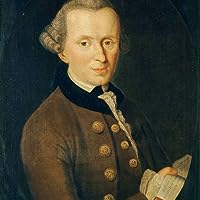
Immanuel Kant was an 18th-century philosopher from Königsberg, Prussia (now Kaliningrad, Russia). He's regarded as one of the most influential thinkers of modern Europe & of the late Enlightenment. His most important work is The Critique of Pure Reason, an investigation of reason itself. It encompasses an attack on traditional metaphysics & epistemology, & highlights his own contribution to these areas. Other main works of his maturity are The Critique of Practical Reason, which is about ethics, & The Critique of Judgment, about esthetics & teleology. Pursuing metaphysics involves asking questions about the ultimate nature of reality. Kant suggested that metaphysics can be reformed thru epistemology. He suggested that by understanding the sources & limits of human knowledge we can ask fruitful metaphysical questions. He asked if an object can be known to have certain properties prior to the experience of that object. He concluded that all objects that the mind can think about must conform to its manner of thought. Therefore if the mind can think only in terms of causality–which he concluded that it does–then we can know prior to experiencing them that all objects we experience must either be a cause or an effect. However, it follows from this that it's possible that there are objects of such a nature that the mind cannot think of them, & so the principle of causality, for instance, cannot be applied outside experience: hence we cannot know, for example, whether the world always existed or if it had a cause. So the grand questions of speculative metaphysics are off limits, but the sciences are firmly grounded in laws of the mind. Kant believed himself to be creating a compromise between the empiricists & the rationalists. The empiricists believed that knowledge is acquired thru experience alone, but the rationalists maintained that such knowledge is open to Cartesian doubt and that reason alone provides us with knowledge. Kant argues, however, that using reason without applying it to experience will only lead to illusions, while experience will be purely subjective without first being subsumed under pure reason. Kant’s thought was very influential in Germany during his lifetime, moving philosophy beyond the debate between the rationalists & empiricists. The philosophers Fichte, Schelling, Hegel and Schopenhauer saw themselves as correcting and expanding Kant's system, thus bringing about various forms of German Idealism. Kant continues to be a major influence on philosophy to this day, influencing both Analytic and Continental philosophy.