Margins
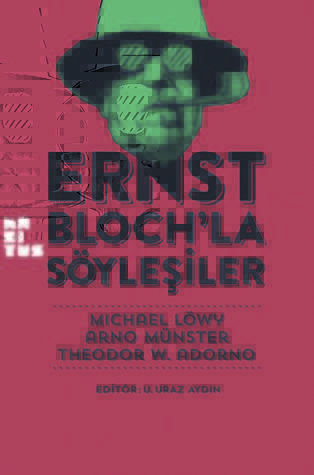
Ernst Bloch'la Söyleşiler book cover
Ernst Bloch'la Söyleşiler
2015
First Published
4.00
Average Rating
88
Number of Pages
Ütopyanın maddeci teorisyeni, militan optimizmin filozofu Ernst Bloch Marksist felsefenin yenilenmesinde oynadığı rol itibariyle eşsiz, yirminci yüzyıl entelektüel manzarasındaki konumu açısından nevi şahsına münhasır bir düşünürdür. Mit ve pozitivizm, ölüm kaygısı ve ütopya, Marksizm ve bilinç, inanç ve teknoloji, ahlak ve estetik, Umut İlkesi’nin yazarının Michael Löwy, Arno Münster ve Theodor W. Adorno’yla bu kitapta derlenmiş söyleşilerinin başlıca temalarıdır. Georg Lukacs’ın ve Max Weber’in, Hegel’in ve Dostoyevski’nin, Thomas Münzer’in ve Rudi Dutschke’nin misafir edildiği bu tartışmalar Ernst Bloch’un diyalektik fikriyatına nüfuz edebilmek için önemli bir kapı aralar.

Avg Rating
4.00
Number of Ratings
6
5 STARS
33%
4 STARS
33%
3 STARS
33%
2 STARS
0%
1 STARS
0%
goodreads

Authors

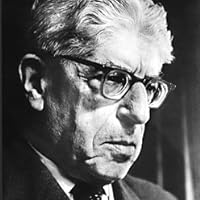
Ernst Bloch
Ernst Bloch
Author · 16 books
Ernst Bloch was one of the great philosophers and political intellectuals of twentieth-century Germany. Among his works to have appeared in English are The Spirit of Utopia (Stanford University Press, 2000), Literary Essays (Stanford University Press, 1998), The Utopian Function of Art and Literature: Selected Essays (1987), and The Principle of Hope (1986).
Michael Lowy
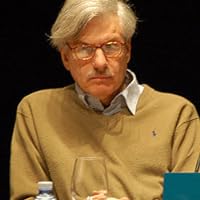
Michael Lowy
Author · 20 books
French-Brazilian Marxist sociologist and philosopher. He is presently the emerited research director in social sciences at the CNRS (French National Center of Scientific Research) and lectures at the Ecole des Hautes Etudes en Sciences Sociales (EHESS; Paris, France). Author of books on Karl Marx, Che Guevara, Liberation Theology, György Lukács, Walter Benjamin and Franz Kafka, he received the Silver Medal of the CNRS in 1994.
Theodor W. Adorno
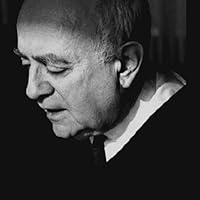
Theodor W. Adorno
Author · 54 books

Theodor Wiesengrund Adorno was one of the most important philosophers and social critics in Germany after World War II. Although less well known among anglophone philosophers than his contemporary Hans-Georg Gadamer, Adorno had even greater influence on scholars and intellectuals in postwar Germany. In the 1960s he was the most prominent challenger to both Sir Karl Popper's philosophy of science and Martin Heidegger's philosophy of existence. Jürgen Habermas, Germany's foremost social philosopher after 1970, was Adorno's student and assistant. The scope of Adorno's influence stems from the interdisciplinary character of his research and of the Frankfurt School to which he belonged. It also stems from the thoroughness with which he examined Western philosophical traditions, especially from Kant onward, and the radicalness to his critique of contemporary Western society. He was a seminal social philosopher and a leading member of the first generation of Critical Theory. Unreliable translations hampered the initial reception of Adorno's published work in English speaking countries. Since the 1990s, however, better translations have appeared, along with newly translated lectures and other posthumous works that are still being published. These materials not only facilitate an emerging assessment of his work in epistemology and ethics but also strengthen an already advanced reception of his work in aesthetics and cultural theory.

548 Market St PMB 65688, San Francisco California 94104-5401 USA
© 2026 Paratext Inc. All rights reserved