Margins
Estuche Penguin Clásicos Vintage book cover
Estuche Penguin Clásicos Vintage
Ediciones icónicas de 12 libros imprescindibles de la literatura universal
2025
First Published
1
Number of Pages

Authors

Hermann Hesse
Hermann Hesse
Author · 173 books

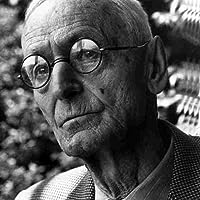
Many works, including Siddhartha (1922) and Steppenwolf (1927), of German-born Swiss writer Hermann Hesse concern the struggle of the individual to find wholeness and meaning in life; he won the Nobel Prize for literature in 1946. Other best-known works of this poet, novelist, and painter include The Glass Bead Game , which, also known as Magister Ludi, explore a search of an individual for spirituality outside society. In his time, Hesse was a popular and influential author in the German-speaking world; worldwide fame only came later. Young Germans desiring a different and more "natural" way of life at the time of great economic and technological progress in the country, received enthusiastically Peter Camenzind , first great novel of Hesse. Throughout Germany, people named many schools. In 1964, people founded the Calwer Hermann-Hesse-Preis, awarded biennially, alternately to a German-language literary journal or to the translator of work of Hesse to a foreign language. The city of Karlsruhe, Germany, also associates a Hermann Hesse prize.

Emily Bronte
Emily Bronte
Author · 115 books

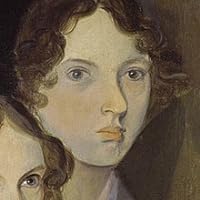
Emily Jane Brontë was an English novelist and poet, now best remembered for her only novel Wuthering Heights, a classic of English literature. Emily was the second eldest of the three surviving Brontë sisters, being younger than Charlotte Brontë and older than Anne Brontë. She published under the masculine pen name Ellis Bell. Emily was born in Thornton, near Bradford in Yorkshire to Patrick Brontë and Maria Branwell. She was the younger sister of Charlotte Brontë and the fifth of six children. In 1824, the family moved to Haworth, where Emily's father was perpetual curate, and it was in these surroundings that their literary oddities flourished. In childhood, after the death of their mother, the three sisters and their brother Patrick Branwell Brontë created imaginary lands (Angria, Gondal, Gaaldine, Oceania), which were featured in stories they wrote. Little of Emily's work from this period survived, except for poems spoken by characters (The Brontës' Web of Childhood, Fannie Ratchford, 1941). In 1842, Emily commenced work as a governess at Miss Patchett's Ladies Academy at Law Hill School, near Halifax, leaving after about six months due to homesickness. Later, with her sister Charlotte, she attended a private school in Brussels. They later tried to open up a school at their home, but had no pupils. It was the discovery of Emily's poetic talent by Charlotte that led her and her sisters, Charlotte and Anne, to publish a joint collection of their poetry in 1846, Poems by Currer, Ellis, and Acton Bell. To evade contemporary prejudice against female writers, the Brontë sisters adopted androgynous first names. All three retained the first letter of their first names: Charlotte became Currer Bell, Anne became Acton Bell, and Emily became Ellis Bell. In 1847, she published her only novel, Wuthering Heights, as two volumes of a three volume set (the last volume being Agnes Grey by her sister Anne). Its innovative structure somewhat puzzled critics. Although it received mixed reviews when it first came out, the book subsequently became an English literary classic. In 1850, Charlotte edited and published Wuthering Heights as a stand-alone novel and under Emily's real name. Like her sisters, Emily's health had been weakened by the harsh local climate at home and at school. She caught a chill during the funeral of her brother in September, and, having refused all medical help, died on December 19, 1848 of tuberculosis, possibly caught from nursing her brother. She was interred in the Church of St. Michael and All Angels family capsule, Haworth, West Yorkshire, England.

Virginia Woolf
Virginia Woolf
Author · 303 books

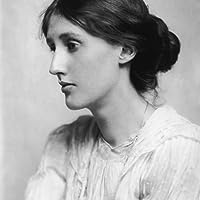
(Adeline) Virginia Woolf was an English novelist and essayist regarded as one of the foremost modernist literary figures of the twentieth century. During the interwar period, Woolf was a significant figure in London literary society and a member of the Bloomsbury Group. Her most famous works include the novels Mrs. Dalloway (1925), To the Lighthouse (1927), and Orlando (1928), and the book-length essay A Room of One's Own (1929) with its famous dictum, "a woman must have money and a room of her own if she is to write fiction."

Jorge Luis Borges
Jorge Luis Borges
Author · 226 books

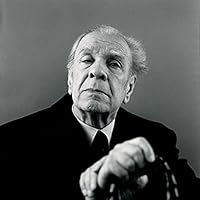
Jorge Francisco Isidoro Luis Borges Acevedo, usually referred to as Jorge Luis Borges (Spanish pronunciation: [xoɾxe lwis boɾxes]), was an Argentine writer and poet born in Buenos Aires. In 1914, his family moved to Switzerland where he attended school and traveled to Spain. On his return to Argentina in 1921, Borges began publishing his poems and essays in Surrealist literary journals. He also worked as a librarian and public lecturer. Borges was fluent in several languages. He was a target of political persecution during the Peron regime, and supported the military juntas that overthrew it. Due to a hereditary condition, Borges became blind in his late fifties. In 1955, he was appointed director of the National Public Library (Biblioteca Nacional) and professor of Literature at the University of Buenos Aires. In 1961, he came to international attention when he received the first International Publishers' Prize Prix Formentor. His work was translated and published widely in the United States and in Europe. He died in Geneva, Switzerland, in 1986. J. M. Coetzee said of Borges: "He, more than anyone, renovated the language of fiction and thus opened the way to a remarkable generation of Spanish American novelists."

Stefan Zweig
Stefan Zweig
Author · 257 books

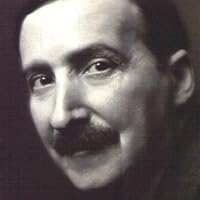
Stefan Zweig was one of the world's most famous writers during the 1920s and 1930s, especially in the U.S., South America, and Europe. He produced novels, plays, biographies, and journalist pieces. Among his most famous works are Beware of Pity, Letter from an Unknown Woman, and Mary, Queen of Scotland and the Isles. He and his second wife committed suicide in 1942. Zweig studied in Austria, France, and Germany before settling in Salzburg in 1913. In 1934, driven into exile by the Nazis, he emigrated to England and then, in 1940, to Brazil by way of New York. Finding only growing loneliness and disillusionment in their new surroundings, he and his second wife committed suicide. Zweig's interest in psychology and the teachings of Sigmund Freud led to his most characteristic work, the subtle portrayal of character. Zweig's essays include studies of Honoré de Balzac, Charles Dickens, and Fyodor Dostoevsky (Drei Meister, 1920; Three Masters) and of Friedrich Hölderlin, Heinrich von Kleist, and Friedrich Nietzsche (Der Kampf mit dem Dämon, 1925; Master Builders). He achieved popularity with Sternstunden der Menschheit (1928; The Tide of Fortune), five historical portraits in miniature. He wrote full-scale, intuitive rather than objective, biographies of the French statesman Joseph Fouché (1929), Mary Stuart (1935), and others. His stories include those in Verwirrung der Gefühle (1925; Conflicts). He also wrote a psychological novel, Ungeduld des Herzens (1938; Beware of Pity), and translated works of Charles Baudelaire, Paul Verlaine, and Emile Verhaeren. Most recently, his works provided the inspiration for 2014 film The Grand Budapest Hotel.

Anne Frank
Anne Frank
Author · 25 books

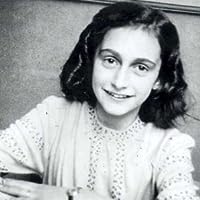
Librarian Note: There is more than one author in the Goodreads database with this name. See this thread for more information. Annelies Marie "Anne" Frank was a Jewish girl born in the city of Frankfurt, Germany. Her father moved to the Netherlands in 1933 and the rest of the family followed later. Anne was the last of the family to come to the Netherlands, in February 1934. She wrote a diary while in hiding with her family and four friends in Amsterdam during the German occupation of the Netherlands in World War II. She lived in Amsterdam with her parents and sister. During the Holocaust, Anne and her family hid in the attic of her father's office to escape the Nazis. It was during that time period that she had recorded her life in her diary. Anne died in Bergen-Belsen, in February 1945, at the age of 15.

Sun Tzu
Sun Tzu
Author · 35 books

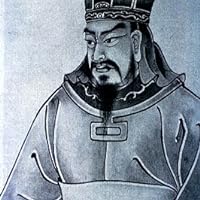
Sun Tzu (孫子; pinyin: Sūnzǐ) is a honorific title bestowed upon Sūn Wu (孫武 c. 544-496 BC), the author of The Art of War (孫子兵法), an immensely influential ancient Chinese book on military strategy. Sun Tzu believed in the use of the military sciences to effect outcomes that would result in peace. In the author's name, Sūn Wu, the character wu, meaning "military", is the same as the character in wu shu, or martial art. Sun Wu also has a courtesy name, Chang Qing (Cháng Qīng).

548 Market St PMB 65688, San Francisco California 94104-5401 USA
© 2026 Paratext Inc. All rights reserved