Margins




548 Market St PMB 65688, San Francisco California 94104-5401 USA
© 2026 Paratext Inc. All rights reserved
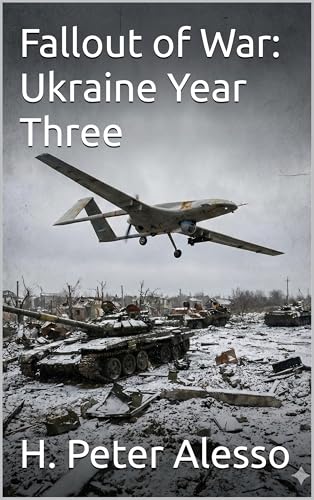
The third year of Russia's invasion opens with Ukraine facing its darkest hour since the defense of Kyiv. Lieutenant Commander James Fairbanks, now operating with expanded authority from the Pentagon, watches helplessly as catastrophic ammunition shortages transform battlefield dynamics he's spent two years understanding. The "shell hunger" created by months of congressional deadlock in Washington allows Russian artillery to fire at ratios of ten to one against Ukrainian batteries, methodically grinding forward across the Donbas. James' carefully developed drone warfare tactics become increasingly ineffective when Ukrainian forces lack the artillery support to exploit the intelligence his teams provide. In February 2024, two seismic events reshape the conflict. President Zelenskyy replaces Commander-in-Chief Zaluzhnyi with General Syrskyi, driven by strategic disagreements and the need for fresh approaches. The leadership change reverberates through Ukrainian military circles where Zaluzhnyi commanded fierce loyalty. James finds himself navigating new command relationships while mourning the departure of a general whose trust he'd spent two years earning. Nine days later, Russian forces capture Avdiivka after months of brutal attritional combat. The heavily fortified city's fall represents Russia's most significant battlefield victory since Bakhmut and signals a fundamental shift in momentum. James, embedded with Ukrainian forces during the withdrawal, experiences the chaos of a retreat under fire, watching soldiers fight to save equipment and comrades while abandoning positions they'd held for months. The Avdiivka defeat forces James to confront the limits of tactical innovation against overwhelming material disadvantage. His after-action reports to the Pentagon carry a new edge of frustration, documenting how Ukrainian forces used drones and asymmetric tactics brilliantly but ultimately couldn't compensate for artillery shortfalls. The experience marks a turning point in his evolution from tactical advisor to strategic advocate, as he begins making the case not just for better weapons but for sustained, predictable support that doesn't leave Ukrainian forces vulnerable to American political cycles. Lucy Fairbanks, promoted to Special Advisor for Ukraine Security Assistance, spends early 2024 in a desperate race against congressional paralysis. Operating from Brussels and Washington, she coordinates with European allies trying to compensate for frozen American aid while privately warning Ukrainian officials that the pipeline is running dry. The $61 billion aid package sits stalled in the House of Representatives, hostage to political infighting that seems incomprehensible from the perspective of Ukrainian soldiers rationing ammunition. Her conversations with Ukrainian officials become increasingly difficult as she struggles to explain how American democracy cannot muster the political will to pass legislation its own military leadership insists is essential.