Margins
1808
First Published
3.90
Average Rating
325
Number of Pages

Part of Series

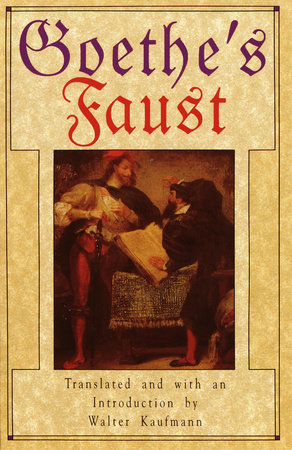
Goethe’s Faust reworks the late medieval myth of a brilliant scholar so disillusioned he resolves to make a contract with Mephistopheles. The devil will do all he asks on Earth and seeks to grant him a moment in life so glorious that he will wish it to last forever. But if Faust does bid the moment stay, he falls to Mephistopheles and must serve him after death. In this first part of Goethe’s great work, the embittered thinker and Mephistopheles enter into their agreement, and soon Faust is living a rejuvenated life and winning the love of the beautiful Gretchen. But in this compelling tragedy of arrogance, unfulfilled desire, and self-delusion, Faust heads inexorably toward an infernal destruction.

Avg Rating
3.90
Number of Ratings
50,032
5 STARS
33%
4 STARS
34%
3 STARS
23%
2 STARS
7%
1 STARS
3%
goodreads

Authors

Bayard Taylor
Bayard Taylor
Author · 10 books

Bayard Taylor was a poet, literary critic, translator, fiction and travel author. His interest in poetry was coached by the influential critic and editor Rufus Wilmot Griswold, who encouraged him to write a volume of poetry. Published at Philadelphia in 1844, Ximena, or the Battle of the Sierra Morena, and other Poems was dedicated to Griswold. It made little income, but indirectly was a means of his introduction to The New York Tribune. With the money from his poetry and an advance for some journalistic work to be done in Europe, Taylor set sail for Europe. The young poet spent a happy time in roaming on foot through certain districts of England, France, Germany and Italy; this tour of almost two years cost him only £100. The accounts which he sent from Europe to The New York Tribune, The Saturday Evening Post, and The United States Gazette were so highly appreciated that on Taylor's return to America, he was advised to compile his articles into book form. In 1846, he published Views Afoot, or Europe seen with Knapsack and Staff (2 vols, New York). This book's success brought Taylor recognition as an author. He was asked to serve as an editorial assistant for Graham's Magazine for a few months in 1848. That same year, Horace Greeley, then editor of the Tribune, placed Taylor on his staff, thus securing Taylor a certain if moderate income. His poem "Greetings to America" was set to music by Julius Benedict and performed by the singer at numerous concerts on her tour of the United States.

Johann Wolfgang von Goethe
Author · 55 books

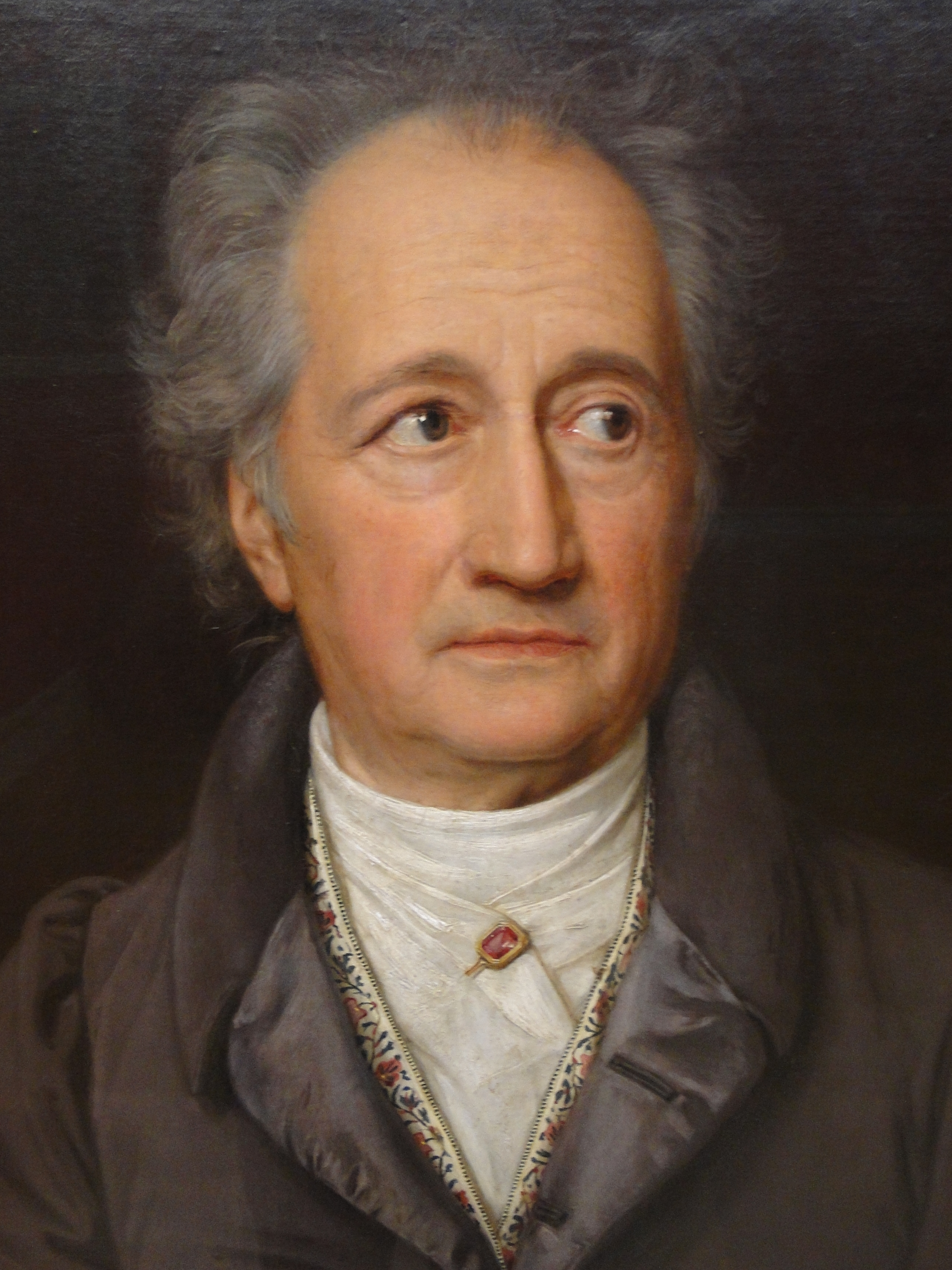
A master of poetry, drama, and the novel, German writer and scientist Johann Wolfgang von Goethe spent 50 years on his two-part dramatic poem Faust, published in 1808 and 1832, also conducted scientific research in various fields, notably botany, and held several governmental positions. George Eliot called him "Germany's greatest man of letters... and the last true polymath to walk the earth." Works span the fields of literature, theology, and humanism. People laud this magnum opus as one of the peaks of world literature. Other well-known literary works include his numerous poems, the Bildungsroman Wilhelm Meister's Apprenticeship and the epistolary novel The Sorrows of Young Werther . With this key figure of German literature, the movement of Weimar classicism in the late 18th and early 19th centuries coincided with Enlightenment, sentimentality (Empfindsamkeit), Sturm und Drang, and Romanticism. The author of the scientific text Theory of Colours, he influenced Darwin with his focus on plant morphology. He also long served as the privy councilor ("Geheimrat") of the duchy of Weimar. Goethe took great interest in the literatures of England, France, Italy, classical Greece, Persia, and Arabia and originated the concept of Weltliteratur ("world literature"). Despite his major, virtually immeasurable influence on German philosophy especially on the generation of Georg Wilhelm Friedrich Hegel and Friedrich Wilhelm Joseph von Schelling, he expressly and decidedly refrained from practicing philosophy in the rarefied sense. Influence spread across Europe, and for the next century, his works inspired much music, drama, poetry and philosophy. Many persons consider Goethe the most important writer in the German language and one of the most important thinkers in western culture as well. Early in his career, however, he wondered about painting, perhaps his true vocation; late in his life, he expressed the expectation that people ultimately would remember his work in optics.

548 Market St PMB 65688, San Francisco California 94104-5401 USA
© 2025 Paratext Inc. All rights reserved