Margins
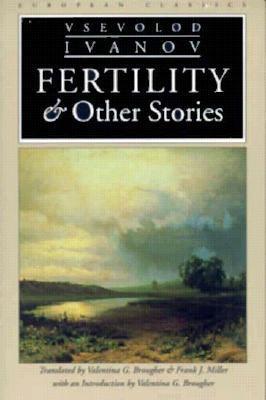
Fertility and Other Stories book cover
Fertility and Other Stories
1998
First Published
4.12
Average Rating
263
Number of Pages
Vsevolod Ivanov's personal experiences in Siberia and Central Asia during the Revolution and Civil War, set against a childhood and youth wandering that vast expanse, infuse his writing. Combining traditional elements with the fantastic and the surreal, Ivanov's stories address not only the themes of the Revolution—the dehumanizing effects of famine; the ferment, energy, and uncertainty of the tempestuous times—but also the the quiet world of man and nature, and the elemental bond that tied peasants to their native land. Fertility and Other Stories makes available for the first time in English some of the best stories of one of the most talented twentieth-century Russian writers.

Avg Rating
4.12
Number of Ratings
17
5 STARS
35%
4 STARS
47%
3 STARS
12%
2 STARS
6%
1 STARS
0%
goodreads

Author

Vsevolod Ivanov
Vsevolod Ivanov
Author · 4 books

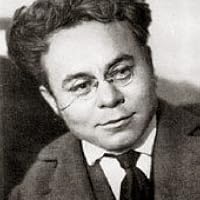
Vsevolod Vyacheslavovich Ivanov (Russian: Всеволод Вячеславович Иванов; February 24, 1895 in Lebyazhye, now in Pavlodar Oblast – August 15, 1963, Moscow) was a notable Soviet writer praised for the colourful adventure tales set in the Asiatic part of Russia during the Civil War. Ivanov was born in Northern Kazakhstan to a teacher's family. When he was a child Vsevolod ran away to become a clown in a travelling circus. His first story, published in 1915, caught the attention of Maxim Gorky, who advised Vsevolod throughout his career. Ivanov joined the Red Army during the Civil War and fought in Siberia. This inspired his short stories, Partisans (1921) and Armoured Train (1922). In 1922 Ivanov joined the literary group Serapion Brothers. Other members included Nikolay Tikhonov, Mikhail Zoshchenko, Victor Shklovsky, Veniamin Kaverin, and Konstantin Fedin. Ivanov's first novels, Colored Winds (1922) and Azure Sands (1923), were set in Asiatic part of Russia and gave rise to the genre of ostern in Soviet literature. His novella Baby was acclaimed by Edmund Wilson as the finest Soviet short story ever. Later, Ivanov came under fire from Bolshevik critics who claimed his works were too pessimistic and that it was not clear whether the Reds or Whites were the heroes. In 1927 Ivanov rewrote his short story, the Armoured Train 14-69 into a play. This time, the play highlighted the role of the Bolsheviks in the Civil War. After that, his writings saw a marked decline in quality, and he never managed to produce anything equal to his early efforts. Among his later works, which conformed to the requirements of Socialist Realism, are the Adventures of a Fakir (1935) and The Taking of Berlin (1945). During the Second World War, Ivanov worked as a war correspondent for Izvestia. Vsevolod's son Vyacheslav Vsevolodovich Ivanov became one of the leading philologists and Indo-Europeanists of the late 20th century. Vsevolod adopted Isaak Babel's illegitimate child Emmanuil when he married Babel's one time mistress Tamara Kashirina. Emmanuil's name was changed to "Mikhail Ivanov" and he later became a noted artist.

548 Market St PMB 65688, San Francisco California 94104-5401 USA
© 2026 Paratext Inc. All rights reserved