Including 20 books united by the abundant theme of love, the Great Loves Collection features the glorious works of writers such as Virgil, Leo Tolstoy and Sigmund Freud. From innocent youthfulness to tainted, embittered infatuation, this collection covers love in its myriad forms. Full of hope and inspiration as well as tragedy and heartbreak, this passionate set makes for compelling reading. Titles in this collection Bodily Secrets - William Trevor Doomed Love - Virgil The Women Who Got Away - John Updike First Love - Ivan Turgenev Eros Unbound - Anais Nin The Virgin and the Gypsy - D.H. Lawrence Magnetism - F.Scott Fitzgerald The Kreutzer Sonata - Leo Tolstoy The Seducer's Diary - Soren Kierkegaard Of Mistresses, Tigresses & Other Conquests - Giacomo Cures for Love - Stendhal Bonjour Tristesse - Francoise Sagan Forbidden Fruit - From the Letters of Abelard & Heloise The Eaten Heart - Unlikely Tales of Love - Giovanni Boccaccio A Mere Interlude - Thomas Hardy Giovanni's Room - James Baldwin Mary - Vladmir Nabokov A Russian Affair - Anton Chekhov Deviant Love - Sigmund Freud Something Childish but Very Natural - Katherine Mansfield
Authors

French-born novelist, passionate eroticist and short story writer, who gained international fame with her journals. Spanning the years from 1931 to 1974, they give an account of one woman's voyage of self-discovery. "It's all right for a woman to be, above all, human. I am a woman first of all." (from The Diary of Anaïs Nin, vol. I, 1966) Anaïs Nin was largely ignored until the 1960s. Today she is regarded as one of the leading female writers of the 20th century and a source of inspiration for women challenging conventionally defined gender roles.

Librarian Note: There is more than one author in the Goodreads database with this name. See this thread for more information. James Arthur Baldwin was an American novelist, essayist, playwright, poet, and social critic. James Baldwin offered a vital literary voice during the era of civil rights activism in the 1950s and '60s. He was the eldest of nine children; his stepfather was a minister. At age 14, Baldwin became a preacher at the small Fireside Pentecostal Church in Harlem. In the early 1940s, he transferred his faith from religion to literature. Critics, however, note the impassioned cadences of Black churches are still evident in his writing. Go Tell It on the Mountain, his first novel, is a partially autobiographical account of his youth. His essay collections Notes of a Native Son, Nobody Knows My Name, and The Fire Next Time were influential in informing a large white audience. From 1948, Baldwin made his home primarily in the south of France, but often returned to the USA to lecture or teach. In 1957, he began spending half of each year in New York City. His novels include Giovanni's Room, about a white American expatriate who must come to terms with his homosexuality, and Another Country, about racial and gay sexual tensions among New York intellectuals. His inclusion of gay themes resulted in a lot of savage criticism from the Black community. Eldridge Cleaver, of the Black Panthers, stated the Baldwin's writing displayed an "agonizing, total hatred of blacks." Baldwin's play, Blues for Mister Charlie, was produced in 1964. Going to Meet the Man and Tell Me How Long the Train's Been Gone provided powerful descriptions of American racism. As an openly gay man, he became increasingly outspoken in condemning discrimination against lesbian and gay people. On November 30, 1987 Baldwin died from stomach cancer in Saint-Paul-de-Vence, France. He was buried at the Ferncliff Cemetery in Hartsdale, near New York City.


Publius Vergilius Maro (October 15, 70 BCE – September 21, 19 BCE), usually called Virgil or Vergil /ˈvɜrdʒəl/ in English, was an ancient Roman poet of the Augustan period. He is known for three major works of Latin literature, the Eclogues (or Bucolics), the Georgics, and the epic Aeneid. A number of minor poems, collected in the Appendix Vergiliana, are sometimes attributed to him. Virgil is traditionally ranked as one of Rome's greatest poets. His Aeneid has been considered the national epic of ancient Rome from the time of its composition to the present day. Modeled after Homer's Iliad and Odyssey, the Aeneid follows the Trojan refugee Aeneas as he struggles to fulfill his destiny and arrive on the shores of Italy—in Roman mythology the founding act of Rome. Virgil's work has had wide and deep influence on Western literature, most notably the Divine Comedy of Dante, in which Virgil appears as Dante's guide through hell and purgatory.

Nominalist application of French theologian, philosopher, and composer Peter Abelard or Pierre Abélard of the principles of ancient Greek logic to the doctrines of the medieval Catholic Church led to charges of heresy; after his pupil Héloise, his pupil and the object of his lust affair, bore him a child, he secretly married her, whose angered family castrated him, after which he served as a monk. The equally famous preeminent and perhaps the greatest of the Middle Ages during his life as a poet perhaps also ranked of his day, his ideas earned more converts and less condemnation. In all areas, brilliant, innovative, and controversial Abélard, a genius, knew and made no apologies. His vast knowledge, wit, charm, and even arrogance drew a generation of finest minds of Europe to Paris to learn. https://en.wikipedia.org/wiki/Peter\_A...

David Herbert Richards Lawrence was an English writer of the 20th century, whose prolific and diverse output included novels, short stories, poems, plays, essays, travel books, paintings, translations, literary criticism, and personal letters. His collected works represent an extended reflection upon the dehumanizing effects of modernity and industrialisation. In them, Lawrence confronts issues relating to emotional health and vitality, spontaneity, human sexuality and instinct. Lawrence's opinions earned him many enemies and he endured official persecution, censorship, and misrepresentation of his creative work throughout the second half of his life, much of which he spent in a voluntary exile he called his "savage pilgrimage." At the time of his death, his public reputation was that of a pornographer who had wasted his considerable talents. E. M. Forster, in an obituary notice, challenged this widely held view, describing him as "the greatest imaginative novelist of our generation." Later, the influential Cambridge critic F. R. Leavis championed both his artistic integrity and his moral seriousness, placing much of Lawrence's fiction within the canonical "great tradition" of the English novel. He is now generally valued as a visionary thinker and a significant representative of modernism in English literature. http://en.wikipedia.org/wiki/D.H.\_Law...

Giacomo Girolamo Casanova de Seingalt was a Venetian adventurer and author. His main book Histoire de ma vie (Story of My Life), part autobiography and part memoir, is regarded as one of the most authentic sources of the customs and norms of European social life during the 18th century. He was so famous as a womanizer that his name remains synonymous with the art of seduction and he is sometimes called "the world's greatest lover". He associated with European royalty, popes and cardinals, along with men such as Voltaire, Goethe and Mozart; but if he had not been obliged to spend some years as a librarian in the household of Count Waldstein of Bohemia (where he relieved his boredom by writing the story of his life), it is possible that he would be forgotten today

Kathleen Mansfield Murry (née Beauchamp) was a prominent New Zealand modernist writer of short fiction who wrote under the pen name of Katherine Mansfield. Katherine Mansfield is widely considered one of the best short story writers of her period. A number of her works, including "Miss Brill", "Prelude", "The Garden Party", "The Doll's House", and later works such as "The Fly", are frequently collected in short story anthologies. Mansfield also proved ahead of her time in her adoration of Russian playwright and short story writer Anton Chekhov, and incorporated some of his themes and techniques into her writing. Katherine Mansfield was part of a "new dawn" in English literature with T.S. Eliot, James Joyce and Virginia Woolf. She was associated with the brilliant group of writers who made the London of the period the centre of the literary world. Nevertheless, Mansfield was a New Zealand writer - she could not have written as she did had she not gone to live in England and France, but she could not have done her best work if she had not had firm roots in her native land. She used her memories in her writing from the beginning, people, the places, even the colloquial speech of the country form the fabric of much of her best work. Mansfield's stories were the first of significance in English to be written without a conventional plot. Supplanting the strictly structured plots of her predecessors in the genre (Edgar Allan Poe, Rudyard Kipling, H. G. Wells), Mansfield concentrated on one moment, a crisis or a turning point, rather than on a sequence of events. The plot is secondary to mood and characters. The stories are innovative in many other ways. They feature simple things - a doll's house or a charwoman. Her imagery, frequently from nature, flowers, wind and colours, set the scene with which readers can identify easily. Themes too are universal: human isolation, the questioning of traditional roles of men and women in society, the conflict between love and disillusionment, idealism and reality, beauty and ugliness, joy and suffering, and the inevitability of these paradoxes. Oblique narration (influenced by Chekhov but certainly developed by Mansfield) includes the use of symbolism - the doll's house lamp, the fly, the pear tree - hinting at the hidden layers of meaning. Suggestion and implication replace direct detail.

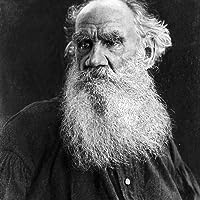
Lev Nikolayevich Tolstoy (Russian: Лев Николаевич Толстой; most appropriately used Liev Tolstoy; commonly Leo Tolstoy in Anglophone countries) was a Russian writer who primarily wrote novels and short stories. Later in life, he also wrote plays and essays. His two most famous works, the novels War and Peace and Anna Karenina, are acknowledged as two of the greatest novels of all time and a pinnacle of realist fiction. Many consider Tolstoy to have been one of the world's greatest novelists. Tolstoy is equally known for his complicated and paradoxical persona and for his extreme moralistic and ascetic views, which he adopted after a moral crisis and spiritual awakening in the 1870s, after which he also became noted as a moral thinker and social reformer. His literal interpretation of the ethical teachings of Jesus, centering on the Sermon on the Mount, caused him in later life to become a fervent Christian anarchist and anarcho-pacifist. His ideas on nonviolent resistance, expressed in such works as The Kingdom of God Is Within You, were to have a profound impact on such pivotal twentieth-century figures as Mohandas Gandhi and Martin Luther King, Jr.

French scholar and religious figure Héloise secretly married Peter Abelard and later served as abbess of a convent that he founded; after their deaths, people discovered their letters, noted for their eloquence and emotional intensity. born in perhaps 1098 The French logician and philosopher eventually then prevailed upon this lady of great learning, mistress, and later wife to wear a habit of a postulant. She rose to prioress eventually of the Paraclete.

Russian: Владимир Владимирович Набоков . Vladimir Vladimirovich Nabokov, also known by the pen name Vladimir Sirin, was a Russian-American novelist. Nabokov wrote his first nine novels in Russian, then rose to international prominence as a master English prose stylist. He also made significant contributions to lepidoptery, and had a big interest in chess problems. Nabokov's Lolita (1955) is frequently cited as his most important novel, and is at any rate his most widely known one, exhibiting the love of intricate wordplay and descriptive detail that characterized all his works. Lolita was ranked fourth in the list of the Modern Library 100 Best Novels; Pale Fire (1962) was ranked 53rd on the same list, and his memoir, Speak, Memory (1951), was listed eighth on the publisher's list of the 20th century's greatest nonfiction. He was also a finalist for the National Book Award for Fiction seven times.

Born Françoise Quoirez, Sagan grew up in a French Catholic, bourgeois family. She was an independent thinker and avid reader as a young girl, and upon failing her examinations for continuing at the Sorbonne, she became a writer. She went to her family's home in the south of France and wrote her first novel, Bonjour Tristesse, at age 18. She submitted it to Editions Juillard in January 1954 and it was published that March. Later that year, She won the Prix des Critiques for Bonjour Tristesse. She chose "Sagan" as her pen name because she liked the sound of it and also liked the reference to the Prince and Princesse de Sagan, 19th century Parisians, who are said to be the basis of some of Marcel Proust's characters. She was known for her love of drinking, gambling, and fast driving. Her habit of driving fast was moderated after a serious car accident in 1957 involving her Aston Martin while she was living in Milly, France. Sagan was twice married and divorced, and subsequently maintained several long-term lesbian relationships. First married in 1958 to Guy Schoeller, a publisher, they divorced in 1960, and she was then married to Robert James Westhoff, an American ceramicist and sculptor, from 1962 to 63. She had one son, Denis, from her second marriage. She won the Prix de Monaco in 1984 in recognition of all of her work.

Anton Pavlovich Chekhov (Russian: Антон Павлович Чехов ) was born in the small seaport of Taganrog, southern Russia, the son of a grocer. Chekhov's grandfather was a serf, who had bought his own freedom and that of his three sons in 1841. He also taught himself to read and write. Yevgenia Morozova, Chekhov's mother, was the daughter of a cloth merchant. "When I think back on my childhood," Chekhov recalled, "it all seems quite gloomy to me." His early years were shadowed by his father's tyranny, religious fanaticism, and long nights in the store, which was open from five in the morning till midnight. He attended a school for Greek boys in Taganrog (1867-68) and Taganrog grammar school (1868-79). The family was forced to move to Moscow following his father's bankruptcy. At the age of 16, Chekhov became independent and remained for some time alone in his native town, supporting himself through private tutoring. In 1879 Chekhov entered the Moscow University Medical School. While in the school, he began to publish hundreds of comic short stories to support himself and his mother, sisters and brothers. His publisher at this period was Nicholas Leikin, owner of the St. Petersburg journal Oskolki (splinters). His subjects were silly social situations, marital problems, farcical encounters between husbands, wives, mistresses, and lovers, whims of young women, of whom Chekhov had not much knowledge – the author was shy with women even after his marriage. His works appeared in St. Petersburg daily papers, Peterburskaia gazeta from 1885, and Novoe vremia from 1886. Chekhov's first novel, Nenunzhaya pobeda (1882), set in Hungary, parodied the novels of the popular Hungarian writer Mór Jókai. As a politician Jókai was also mocked for his ideological optimism. By 1886 Chekhov had gained a wide fame as a writer. His second full-length novel, The Shooting Party, was translated into English in 1926. Agatha Christie used its characters and atmosphere in her mystery novel The Murder of Roger Ackroyd (1926). Chekhov graduated in 1884, and practiced medicine until 1892. In 1886 Chekhov met H.S. Suvorin, who invited him to become a regular contributor for the St. Petersburg daily Novoe vremya. His friendship with Suvorin ended in 1898 because of his objections to the anti-Dreyfus campaign conducted by paper. But during these years Chechov developed his concept of the dispassionate, non-judgmental author. He outlined his program in a letter to his brother Aleksandr: "1. Absence of lengthy verbiage of political-social-economic nature; 2. total objectivity; 3. truthful descriptions of persons and objects; 4. extreme brevity; 5. audacity and originality; flee the stereotype; 6. compassion." Chekhov's first book of stories (1886) was a success, and gradually he became a full-time writer. The author's refusal to join the ranks of social critics arose the wrath of liberal and radical intelligentsia and he was criticized for dealing with serious social and moral questions, but avoiding giving answers. However, he was defended by such leading writers as Leo Tolstoy and Nikolai Leskov. "I'm not a liberal, or a conservative, or a gradualist, or a monk, or an indifferentist. I should like to be a free artist and that's all..." Chekhov said in 1888. The failure of his play The Wood Demon (1889) and problems with his novel made Chekhov to withdraw from literature for a period. In 1890 he travelled across Siberia to remote prison island, Sakhalin. There he conducted a detailed census of some 10,000 convicts and settlers condemned to live their lives on that harsh island. Chekhov hoped to use the results of his research for his doctoral dissertation. It is probable that hard conditions on the island also weakened his own physical condition. From this journey was born his famous travel book T


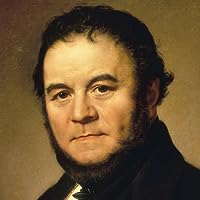
Henri-Marie Beyle, better known by his pen name Stendhal, was a 19th-century French writer. Known for his acute analysis of his characters' psychology, he is considered one of the earliest and foremost practitioners of realism in his two novels Le Rouge et le Noir (The Red and the Black, 1830) and La Chartreuse de Parme (The Charterhouse of Parma, 1839).

John Hoyer Updike was an American writer. Updike's most famous work is his Rabbit series (Rabbit, Run; Rabbit Redux; Rabbit Is Rich; Rabbit At Rest; and Rabbit Remembered). Rabbit is Rich and Rabbit at Rest both won Pulitzer Prizes for Updike. Describing his subject as "the American small town, Protestant middle class," Updike is well known for his careful craftsmanship and prolific writing, having published 22 novels and more than a dozen short story collections as well as poetry, literary criticism and children's books. Hundreds of his stories, reviews, and poems have appeared in The New Yorker since the 1950s. His works often explore sex, faith, and death, and their inter-relationships. He died of lung cancer at age 76.

Dr. Sigismund Freud (later changed to Sigmund) was a neurologist and the founder of psychoanalysis, who created an entirely new approach to the understanding of the human personality. He is regarded as one of the most influential—and controversial—minds of the 20th century. In 1873, Freud began to study medicine at the University of Vienna. After graduating, he worked at the Vienna General Hospital. He collaborated with Josef Breuer in treating hysteria by the recall of painful experiences under hypnosis. In 1885, Freud went to Paris as a student of the neurologist Jean Charcot. On his return to Vienna the following year, Freud set up in private practice, specialising in nervous and brain disorders. The same year he married Martha Bernays, with whom he had six children. Freud developed the theory that humans have an unconscious in which sexual and aggressive impulses are in perpetual conflict for supremacy with the defences against them. In 1897, he began an intensive analysis of himself. In 1900, his major work 'The Interpretation of Dreams' was published in which Freud analysed dreams in terms of unconscious desires and experiences. In 1902, Freud was appointed Professor of Neuropathology at the University of Vienna, a post he held until 1938. Although the medical establishment disagreed with many of his theories, a group of pupils and followers began to gather around Freud. In 1910, the International Psychoanalytic Association was founded with Carl Jung, a close associate of Freud's, as the president. Jung later broke with Freud and developed his own theories. After World War One, Freud spent less time in clinical observation and concentrated on the application of his theories to history, art, literature and anthropology. In 1923, he published 'The Ego and the Id', which suggested a new structural model of the mind, divided into the 'id, the 'ego' and the 'superego'. In 1933, the Nazis publicly burnt a number of Freud's books. In 1938, shortly after the Nazis annexed Austria, Freud left Vienna for London with his wife and daughter Anna. Freud had been diagnosed with cancer of the jaw in 1923, and underwent more than 30 operations. He died of cancer on 23 September 1939.

William Trevor, KBE grew up in various provincial towns and attended a number of schools, graduating from Trinity College, in Dublin, with a degree in history. He first exercised his artistry as a sculptor, working as a teacher in Northern Ireland and then emigrated to England in search of work when the school went bankrupt. He could have returned to Ireland once he became a successful writer, he said, "but by then I had become a wanderer, and one way and another, I just stayed in England ... I hated leaving Ireland. I was very bitter at the time. But, had it not happened, I think I might never have written at all." In 1958 Trevor published his first novel, A Standard of Behaviour, to little critical success. Two years later, he abandoned sculpting completely, feeling his work had become too abstract, and found a job writing copy for a London advertising agency. 'This was absurd,' he said. 'They would give me four lines or so to write and four or five days to write it in. It was so boring. But they had given me this typewriter to work on, so I just started writing stories. I sometimes think all the people who were missing in my sculpture gushed out into the stories.' He published several short stories, then his second and third novels, which both won the Hawthornden Prize (established in 1919 by Alice Warrender and named after William Drummond of Hawthornden, the Hawthornden Prize is one of the UK's oldest literary awards). A number of other prizes followed, and Trevor began working full-time as a writer in 1965. Since then, Trevor has published nearly 40 novels, short story collections, plays, and collections of nonfiction. He has won three Whitbread Awards, a PEN/Macmillan Silver Pen Award, and was shortlisted for the Booker Prize. In 1977 Trevor was appointed an honorary (he holds Irish, not British, citizenship) Commander of the Most Excellent Order of the British Empire (CBE) for his services to literature and in 2002 he was elevated to honorary Knight Commander of the Most Excellent Order of the British Empire (KBE). Since he began writing, William Trevor regularly spends half the year in Italy or Switzerland, often visiting Ireland in the other half. He lived in Devon, in South West England, on an old mill surrounded by 40 acres of land.