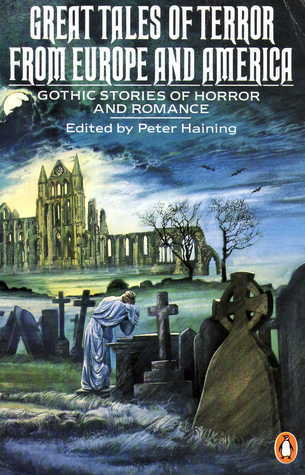



Excellent...chills the blood of the toughest reader. The parade of great names from Goethe to Poe testifies to the quality of the writing - Sunday Times Introduction (Gothic Tales of Terror: Volume Two; Classic Horror Stories from Europe and the United States) • (1972) • essay by Peter Haining The New Melusina • (1816) • novelette by Johann Wolfgang von Goethe (trans. of Die neue Melusine) [as by Johann von Goethe] The Ghost-Seer, or The Apparitionist • non-genre • [Der Geisterseher • 1] • (1972) • novel by Friedrich von Schiller (trans. of Der Geisterseher 1789) [as by J. F. von Schiller] The Harp • (1811) • short story by Karl Theodor Körner (trans. of Die Harfe) The Wild Huntsman! Or The Demon's Skeleton Chase • [Baron Munchausen / Münchhausen] • (1972) • short fiction by Gottfried August Bürger (trans. of Der wilde Jäger? 1786) [as by Gottfried August Burger] The Bride of the Grave • (1972) • novelette by Ernst Raupach (trans. of Laßt die Todten ruhen? 1822) [as by Johann Ludwig Tieck (in error)] The Field of Terror • (1972) • short story by Baron Friedrich de La Motte Fouqué? (trans. of Das Schauerfeld 1814) [as by Baron de La Motte Fouqué] The Bottle-Imp • (1972) • novelette by Baron Friedrich de La Motte Fouqué? (trans. of Das Galgenmännlein? 1814) [as by Johann Karl August Musäus (in error)?] The Spectre Barber • (1972) • novella by Johann Karl August Musäus (trans. of Stumme Liebe 1782) [as by Anonymous] The Cremona Violin • (1946) • novelette by E. T. A. Hoffmann (trans. of Rath Krespel 1818) The Fatal Marksman • (1972) • short story by A. Apel (trans. of Der Freischütz? 1810) [as by Johann August Apel] The Devil's Ladder • (1972) • short story by Alois Wilhelm Schreiber (trans. of Die Teufelsleiter 1829) The Hall of Blood • (1972) • short story by Julia Pardoe (variant of The Hall of Blood: A Hungarian Tradition 1844) [as by Professor von Kramer (in error)] The Witch of Eye • (1972) • short story by Henry Neele [as by Francois Baculard d'Arnaud (in error)] The Unholy Compact Abjured • (1825) • short story by uncredited (variant of The Heroism of Love 1826) [as by Charles Pigault-Lebrun] The Wandering Jew's Sentence • (1972) • short story by Eugène Sue? The Parracide Punished • (unknown) • short story by Anonymous Louise, or Living Spectre • (unknown) • short story by Anonymous Jan Schalken's Three Wishes • (1972) • short story by H. S. Van Dyk [as by Anonymous] Maredata and Giulio, or The Ocean Spirit • (1972) • short story by N. G. (variant of Maredata 1824) [as by Anonymous] Valdrwulf, or The Fiend of the Moor • (unknown) • short story by J. Fitzgerald Pennie [as by Anonymous] Rip Van Winkle • (unknown) • short story by Legend Memoirs of Carwin, the Biloquist • (1803) • novella by Charles Brockden Brown The Adventure of the German Student • [Strange Stories by a Nervous Gentleman] • (1824) • short story by Washington Irving The Christmas Banquet • (1843) • short story by Nathaniel Hawthorne The Strange Guests • (1837) • short story by Henry Rowe Schoolcraft (variant of The Two Ghosts, or Hospitality Rewarded 1825) [as by Anonymous] Hugues, the Wer-Wolf • (1838) • short story by Sutherland Menzies The Possessed One • (1972) • short story by uncredited [as by Anonymous] Ben Blower's Story • (1842) • short story by Charles Hoffman The Cask of Amontillado • [Fortunato] • (1846) • short story by Edgar Allan Poe Shadow—A Parable • [Tales of the Folio Club] • (1850) • short story by Edgar Allan Poe (variant of Shadow: A Fable 1835)
Authors


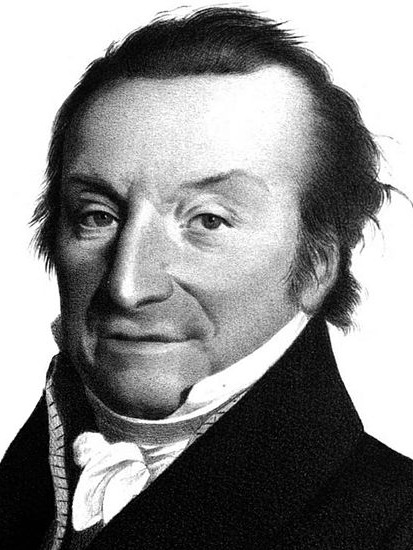
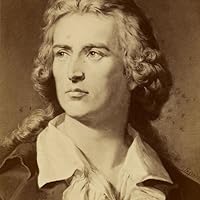
People best know long didactic poems and historical plays, such as Don Carlos (1787) and William Tell (1804), of leading romanticist German poet, dramatist, and historian Johann Christoph Friedrich von Schiller. This philosopher and dramatist struck up a productive if complicated friendship with already famous and influential Johann Wolfgang von Goethe during the last eighteen years of his life and encouraged Goethe to finish works that he left merely as sketches; they greatly discussed issues concerning aesthetics and thus gave way to a period, now referred to as classicism of Weimar. They also worked together on Die Xenien ( The Xenies ), a collection of short but harsh satires that verbally attacked perceived enemies of their aesthetic agenda. https://en.wikipedia.org/wiki/Friedri...

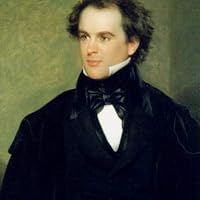
Nathaniel Hawthorne was a 19th century American novelist and short story writer. He is seen as a key figure in the development of American literature for his tales of the nation's colonial history. Shortly after graduating from Bowdoin College, Hathorne changed his name to Hawthorne. Hawthorne anonymously published his first work, a novel titled Fanshawe, in 1828. In 1837, he published Twice-Told Tales and became engaged to painter and illustrator Sophia Peabody the next year. He worked at a Custom House and joined a Transcendentalist Utopian community, before marrying Peabody in 1842. The couple moved to The Old Manse in Concord, Massachusetts, later moving to Salem, the Berkshires, then to The Wayside in Concord. The Scarlet Letter was published in 1850, followed by a succession of other novels. A political appointment took Hawthorne and family to Europe before returning to The Wayside in 1860. Hawthorne died on May 19, 1864, leaving behind his wife and their three children. Much of Hawthorne's writing centers around New England and many feature moral allegories with a Puritan inspiration. His work is considered part of the Romantic movement and includes novels, short stories, and a biography of his friend, the United States President Franklin Pierce.

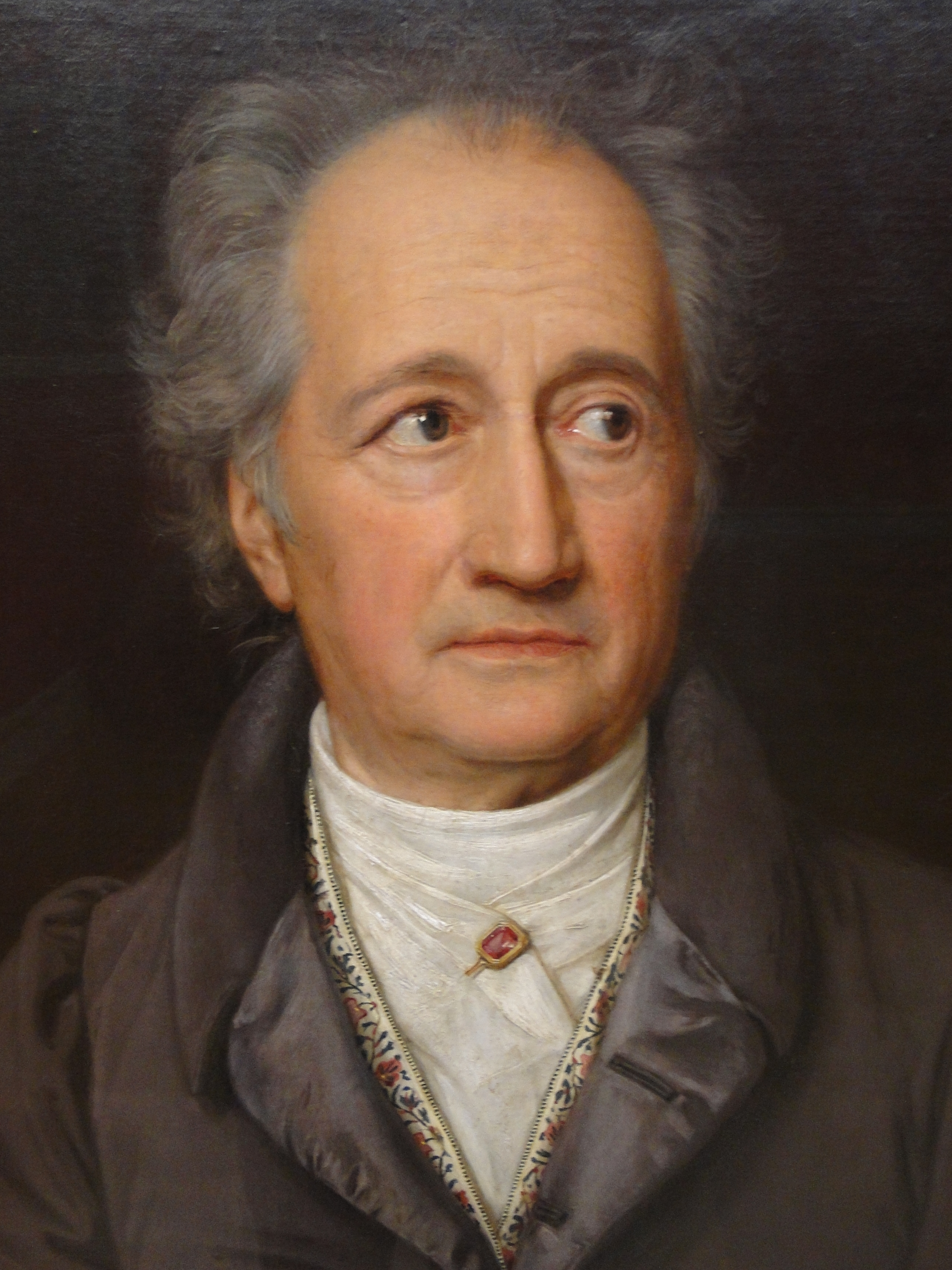
A master of poetry, drama, and the novel, German writer and scientist Johann Wolfgang von Goethe spent 50 years on his two-part dramatic poem Faust, published in 1808 and 1832, also conducted scientific research in various fields, notably botany, and held several governmental positions. George Eliot called him "Germany's greatest man of letters... and the last true polymath to walk the earth." Works span the fields of literature, theology, and humanism. People laud this magnum opus as one of the peaks of world literature. Other well-known literary works include his numerous poems, the Bildungsroman Wilhelm Meister's Apprenticeship and the epistolary novel The Sorrows of Young Werther . With this key figure of German literature, the movement of Weimar classicism in the late 18th and early 19th centuries coincided with Enlightenment, sentimentality (Empfindsamkeit), Sturm und Drang, and Romanticism. The author of the scientific text Theory of Colours, he influenced Darwin with his focus on plant morphology. He also long served as the privy councilor ("Geheimrat") of the duchy of Weimar. Goethe took great interest in the literatures of England, France, Italy, classical Greece, Persia, and Arabia and originated the concept of Weltliteratur ("world literature"). Despite his major, virtually immeasurable influence on German philosophy especially on the generation of Georg Wilhelm Friedrich Hegel and Friedrich Wilhelm Joseph von Schelling, he expressly and decidedly refrained from practicing philosophy in the rarefied sense. Influence spread across Europe, and for the next century, his works inspired much music, drama, poetry and philosophy. Many persons consider Goethe the most important writer in the German language and one of the most important thinkers in western culture as well. Early in his career, however, he wondered about painting, perhaps his true vocation; late in his life, he expressed the expectation that people ultimately would remember his work in optics.

From Wikipedia: Joseph Marie Eugène Sue (20 January 1804 – 3 August 1857) was a French novelist. He was born in Paris, the son of a distinguished surgeon in Napoleon's army, and is said to have had the Empress Joséphine for godmother. Sue himself acted as surgeon both in the Spanish campaign undertaken by France in 1823 and at the Battle of Navarino (1828). In 1829 his father's death put him in possession of a considerable fortune, and he settled in Paris. A street in Paris is named for Eugene Sue, in the 18th Arrondissement: Rue Eugene Sue is located near the Poissonnière Metro station, and is not far from Montmartre and the Basilica of the Sacré Coeur.

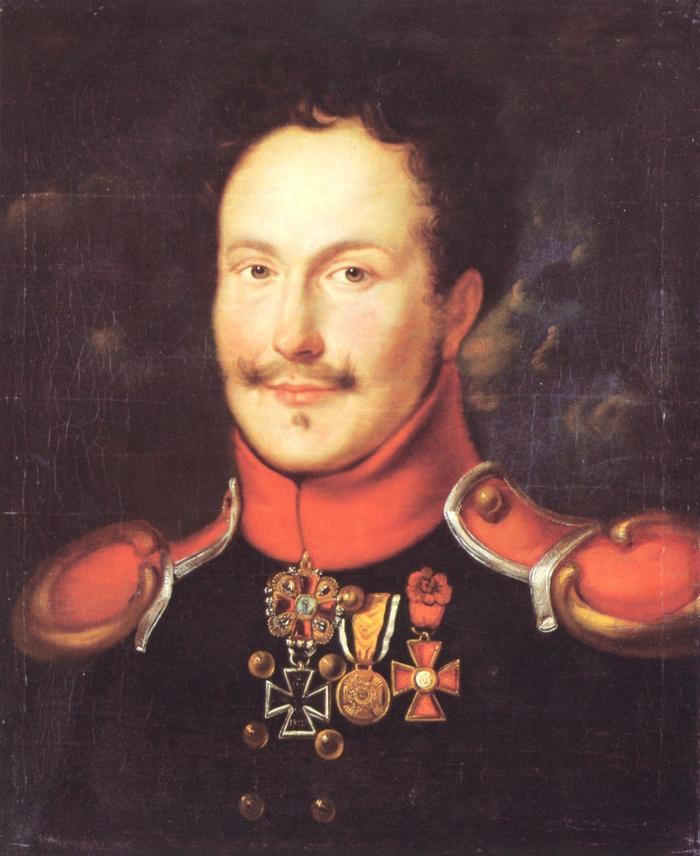
Friedrich Heinrich Karl de la Motte, Baron Fouqué was a German writer of the romantic style. He was born at Brandenburg an der Havel, of a family of French Huguenot origin, as evidenced in his family name. His grandfather, Heinrich August de la Motte Fouqué, had been one of Frederick the Great's generals and his father was a Prussian officer. Although not originally intended for a military career, Friedrich de la Motte Fouqué ultimately gave up his university studies at Halle to join the army, and he took part in the Rhine campaign of 1794. The rest of his life was devoted mainly to literary pursuits. He was introduced to August Wilhelm Schlegel, who deeply influenced him as a poet (mich gelehret Maß und Regel | Meister August Wilhelm Schlegel) and who published Fouqué's first book, Dramatische Spiele von Pellegrin, in 1804. Fouqué's first marriage was unhappy and soon ended in divorce. His second wife, Caroline Philippine von Briest (1773-1831), enjoyed some reputation as a novelist in her day. After her death Fouqué married a third time. Some consolation for the ebbing tide of popular favour was afforded him by the munificence of Frederick William IV of Prussia, who granted him a pension which allowed him to spend his later years in comfort. He died in Berlin in 1843.

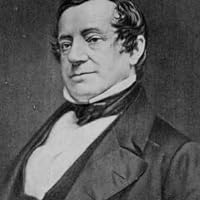
People remember American writer Washington Irving for the stories " Rip Van Winkle " and " The Legend of Sleepy Hollow ," contained in The Sketch Book (1820). This author, essayist, biographer and historian of the early 19th century wrote newspaper articles under the pseudonym Jonathan Oldstyle to begin his literary career at the age of nineteen years. In 1809, he published The History of New York under his most popular public persona, Diedrich Knickerbocker. Historical works of Irving include a five volume biography of George Washington (after whom he was named) as well as biographies of Oliver Goldsmith, Muhammad, and several histories, dealing with subjects, such as Christopher Columbus, the Moors, and the Alhambra, of 15th-century Spain. John Tyler, president, appointed Irving to serve as the first Spanish speaking United States minister to Spain from 1842 to 1846.